Tag: voice AI

  • Best AI Voice Agents in 2026: How to Choose the Right One for Your Business

    Best AI Voice Agents in 2026: How to Choose the Right One for Your Business

    The criteria for selecting the Best AI Voice Agents have moved beyond simple automation in 2026. We are now operating in a reasoning-first world where businesses require software that acts as an intelligent teammate. The market has shifted away from scripted interactive voice response systems toward agentic workflows that can handle the unpredictability of human conversation. Selecting the right partner for your voice strategy is no longer a technical choice: it is a strategic decision that affects every customer touchpoint.

    The organizations that successfully scale their operations in 2026 are those that prioritize cognitive speed and adaptability. To find the Best AI Voice Agents for your specific needs, you must evaluate how these systems reason, integrate, and evolve.

    Real-Time Reasoning and Adaptability

    The most critical differentiator in 2026 is the ability of a voice agent to reason through complex scenarios in real-time. Traditional systems often fail when a customer deviates from a pre-defined path. The Best AI Voice Agents utilize an adaptive prompting engine to maintain the flow of conversation even when the dialogue becomes non-linear.

    When evaluating a platform, look for its ability to handle “unstructured intent.” This means the AI can understand a customer who is thinking out loud, correcting themselves, or providing multiple pieces of information at once. A reasoning-based agent does not require the user to speak in a specific way: it adapts its own logic to match the customer’s natural communication style.

    Integration and Voice-to-Action Capabilities

    A voice agent that only talks is a liability in a modern enterprise. The Best AI Voice Agents must possess a robust Voice-to-Action engine. This allows the system to execute tasks within your existing enterprise stack, such as updating a CRM, triggering a service request, or processing a payment, while the conversation is still happening.

    Integration should be seamless and secure. The system must act as a bridge between the customer’s verbal request and the backend operational workflow. This capability eliminates the need for human intervention in routine tasks, allowing your team to focus on high-stakes strategic initiatives that require a human touch.

    A person holding a small robot in their hand with a laptop in the background

    Cognitive Orchestration and Multi-Agent Frameworks

    Individual agents are no longer sufficient for complex business processes. The current standard involves cognitive orchestration, where multiple specialized agents work together to solve a single problem. When searching for the Best AI Voice Agents, evaluate if the platform supports a multi-agent framework.

    In this model, different agents handle different parts of the customer journey. One agent might specialize in sentiment detection and empathy, while another handles technical discovery, and a third manages compliance and documentation. This coordinated effort ensures that every interaction is handled by a specialist, providing a level of service quality that a single, general-purpose bot cannot achieve.

    Scalability and Global Linguistic Support

    Global businesses require a solution that can speak to their customers in their native tongue without losing the nuances of local dialects. The Best AI Voice Agents are those that provide native-level support for a wide array of languages and regional accents. This is essential for maintaining a localized brand identity while operating at a national or international scale.

    Scalability also refers to the ability to handle varying call volumes without a drop in performance. A truly agentic system remains consistent whether it is handling ten calls or ten thousand calls simultaneously. This reliability is the foundation of customer trust in a conversational economy.

    Security, Ethics, and Compliance

    In a world driven by data, security is a non-negotiable requirement. The Best AI Voice Agents must adhere to the highest global standards for data protection, including SOC 2 and HIPAA-level compliance. This ensures that every voice interaction is encrypted and that customer privacy is maintained throughout the Voice-to-Action loop.

    Furthermore, ethical AI use involves transparency. The system should clearly identify itself as an AI and provide a seamless handoff to a human teammate when the complexity of a situation exceeds its reasoning guardrails. This balance between automation and human oversight is a hallmark of a mature voice strategy.

    The Ello Advantage: Our Proprietary Agentic Voice Platform

    As an independent, proprietary platform, Ello provides the answer for businesses looking to deploy the Best AI Voice Agents in 2026. Built on advanced agentic frameworks, Ello functions as a reasoning teammate that integrates directly into your business operations.

    Ello specifically supports 30 different languages and various regional accents: ensuring your brand speaks the language of your customer with native-level fluency. Its Adaptive Prompting Engine allows for deep, non-scripted conversations that feel natural and helpful.

    One of the most innovative features of Ello is its self-evolving architecture. The system features an autonomous learning loop that analyzes every interaction. After approximately 200 calls, Ello rebuilds its own prompts to address common struggle points, which often leads to a 30 percent boost in operational efficiency without any manual intervention. By providing a secure, SOC 2-compliant environment, Ello ensures that your voice strategy is built on a foundation of trust and performance.

    Two women wearing headsets working at a computer

    FAQ: Best AI Voice Agents

    1. What defines the Best AI Voice Agents in 2026?

    The top agents are defined by their ability to reason in real-time, their integration with enterprise workflows through Voice-to-Action engines, and their ability to operate within multi-agent frameworks.

    2. How does Ello handle different languages?

    Ello supports 30 different languages and regional accents, allowing businesses to provide a localized and inclusive experience across global markets.

    3. Can AI voice agents learn from their mistakes?

    Yes, proprietary platforms like Ello use self-evolving systems that analyze performance data and rebuild their own prompts autonomously after a set number of interactions.

    4. Are these voice agents secure for enterprise use?

    Leading platforms maintain SOC 2 and HIPAA-level compliance to ensure that all customer data and interactions remain private and protected.

    5. How do I integrate a voice agent into my current CRM?

    The Best AI Voice Agents are designed for cognitive orchestration, meaning they can connect directly to your CRM through standardized APIs to update records and trigger actions.

    Conclusion: Setting the Standard for Voice Excellence

    Choosing the right technology is the first step toward a successful conversational strategy. By focusing on reasoning, integration, and evolution, you can identify the Best AI Voice Agents that will drive your business forward. The future belongs to organizations that treat their software as a partner in growth, using voice intelligence to build stronger, more efficient customer relationships.


  • Conversational AI Chatbot vs. Traditional Chatbots: Key Differences

    Conversational AI Chatbot vs. Traditional Chatbots: Key Differences

    The digital landscape in 2026 has clearly separated the tools that merely automate from those that actually reason.

    In the early years of digital support, businesses relied on basic automated systems that followed rigid flowcharts. These legacy systems often left users frustrated due to their inability to handle nuances or deviations.

    Today, the emergence of the Conversational AI Chatbot has fundamentally changed the customer experience. By moving toward agentic workflows and multi-agent frameworks, organizations are replacing brittle decision trees with intelligent, reasoning-based teammates.

    Understanding the distinction between these technologies is critical for any enterprise looking to thrive in the current AI-first economy.

    The difference is found in how these systems process information, handle intent, and evolve over time.

    Reasoning-Based Logic vs. Rigid Decision Trees

    Traditional chatbots are built on “if-then” logic. They operate like a digital filing cabinet: if a user asks a specific question, the bot provides a pre-scripted answer.

    If the user’s query does not match the exact keyword or path, the bot fails. This creates a linear, restrictive experience that often forces the user to restart the conversation.

    In contrast, a modern Conversational AI Chatbot utilizes an agentic reasoning engine. Instead of following a fixed path, the system evaluates the user’s input against a comprehensive knowledge base.

    It understands the context and intent behind the words. This allows the AI to handle non-linear conversations, where a user might jump between topics or ask complex, multi-part questions. The system reasons through the best logical response in real-time, providing a fluid and natural interaction.

    A person in a suit holding a smartphone with holographic chat interface elements floating above it, next to a laptop.

    Semantic Intent vs. Simple Keyword Matching

    Legacy bots rely heavily on keyword triggers. If a user does not use the exact terminology programmed into the system, the bot cannot provide help. This puts the burden of communication on the customer, who must guess the “right” words to get a response.

    A Conversational AI Chatbot uses natural language understanding to grasp semantic meaning. It recognizes that “I want to change my plan” and “Can I update my subscription level” carry the same intent.

    This capability allows for a much broader range of interactions, as the AI can interpret slang, regional variations, and complex sentence structures. By focusing on intent rather than keywords, the system ensures that the customer feels understood rather than managed.

    Cognitive Orchestration and Multi-Agent Frameworks

    Traditional chatbots are usually isolated tools that handle one task at a time. They lack the ability to coordinate with other systems or agents to resolve a problem. This often results in the bot eventually telling the user to “call a representative,” which defeats the purpose of automation.

    The 2026 standard for a Conversational AI Chatbot involves cognitive orchestration through multi-agent frameworks.

    In this model, several specialized agents work together to fulfill a request. For example, one agent might handle the initial discovery, another retrieves data from a CRM, and a third executes the necessary operational tasks. This coordinated effort allows the AI to resolve complex issues from start to finish without human intervention, creating a true voice-to-action or text-to-action loop.

    Self-Evolving Systems vs. Manual Updates

    One of the highest hidden costs of traditional chatbots is the need for constant manual updates.

    Whenever a product changes or a new customer pain point emerges, a developer must manually reprogram the decision trees and scripts.

    This keeps the system in a state of constant lag behind the actual needs of the business.

    Modern Conversational AI Chatbot platforms feature a self-evolving architecture. These systems possess an autonomous learning loop that analyzes every interaction to identify areas for improvement.

    As the system gathers more data, it identifies common struggle points and rebuilds its own prompts to be more effective. This ensures that the technology improves at the speed of business, reducing administrative overhead while increasing performance over time.

    Sentiment Awareness and Emotional Intelligence

    Traditional bots are emotionally flat. They deliver the same scripted response regardless of whether a customer is happy, confused, or angry.

    This lack of empathy often escalates customer frustration, especially in high-stakes industries like insurance or healthcare.

    A sophisticated Conversational AI Chatbot monitors sentiment and vocal tone in real-time. It can detect frustration and adjust its persona accordingly, using a more empathetic or professional tone as needed.

    If the system detects that a situation is escalating beyond its reasoning capabilities, it can execute a warm handoff to a human teammate, providing them with a full transcript and context of the interaction.

    The Ello Advantage: Our Proprietary Agentic Solution

    As an independent, proprietary agentic voice and text platform, Ello provides the answer for enterprises looking to move beyond the limitations of traditional bots.

    Built on 2026-standard frameworks, Ello functions as a reasoning teammate that integrates directly into your existing enterprise stack.

    Ello features an Adaptive Prompting Engine that allows for deep, intent-driven conversations across 30 different languages and various regional accents.

    Its self-evolving architecture is a core differentiator: after approximately 200 interactions, Ello analyzes the data to rebuild its own prompts autonomously.

    This capability often drives a 30 percent boost in operational efficiency without requiring manual developer intervention. By providing a secure, SOC 2-compliant environment, Ello ensures that your Conversational AI Chatbot is not just a tool, but a strategic asset for growth.

    A person holding a smartphone with a holographic AI chatbot interface floating above it

    FAQ: Conversational AI Chatbot

    What makes a Conversational AI Chatbot different from a traditional bot?

    The primary difference is reasoning. Traditional bots follow rigid scripts and keywords, while a Conversational AI Chatbot uses agentic logic to understand intent and handle complex, non-linear dialogues.

    Can Conversational AI Chatbots learn on their own?

    Yes, proprietary systems like Ello use self-evolving architectures that analyze performance data and rebuild their own prompts to improve accuracy and efficiency over time.

    How many languages does Ello support?

    Ello supports 30 different languages and regional accents, allowing for a localized and inclusive customer experience globally.

    Does a Conversational AI Chatbot integrate with CRMs?

    Yes, modern platforms are designed for cognitive orchestration, meaning they can trigger actions and update records directly within enterprise CRMs and ERPs.

    Is the data shared with these chatbots secure?

    Enterprise-ready platforms maintain rigorous security standards, including SOC 2 and HIPAA-level compliance, to ensure all customer data is encrypted and protected.

    Conclusion: Embracing the Reasoning Economy

    The era of the “frustrating chatbot” is ending. By adopting a Conversational AI Chatbot, businesses are moving toward a future where software acts as an intelligent partner. The ability to reason, adapt, and execute tasks in real-time is the new standard for excellence in the 2026 marketplace.

  • How Conversational AI in Healthcare is Transforming Patient Engagement

    How Conversational AI in Healthcare is Transforming Patient Engagement

    Imagine calling your doctor’s office at 2 a.m. with a throbbing headache and a rising fever, and actually getting a helpful, intelligent response. No hold music. No voicemail. No waiting until Monday.

    That’s no longer a fantasy. Conversational AI in healthcare is making it a reality for millions of patients worldwide, reshaping how people access information, schedule care, manage chronic conditions, and engage with their health journey.

    From AI-powered voice agents that triage symptoms in real time to intelligent virtual health assistants that remind patients to take their medications, conversational AI is quietly becoming one of the most impactful forces in modern medicine.

    This article explores how conversational AI is transforming patient engagement, the real-world use cases driving adoption, the challenges healthcare providers must navigate, and what the future holds for this rapidly evolving technology.

    What Is Conversational AI in Healthcare?

    Conversational AI refers to technologies that enable machines to simulate human-like dialogue through text or voice. In healthcare, this includes voice AI agents, virtual health assistants, voice-enabled interfaces, and natural language processing tools integrated into patient-facing platforms.

    Unlike simple FAQ bots that match keywords, modern conversational AI in healthcare leverages machine learning, NLP, and large language models(LLMS) to understand context, intent, and nuance, enabling genuinely helpful conversations at scale.

    These systems can be deployed across websites, mobile health apps, electronic health record (EHR) portals, messaging platforms, and even phone lines, making them one of the most versatile patient engagement tools available today.

    Key Ways Conversational AI Is Transforming Patient Engagement

    24/7 Symptom Checking and Triage

    One of the most immediate applications of conversational AI in healthcare is symptom triage. Voice AI agents can ask patients structured questions, evaluate responses, and guide them toward the appropriate level of care, whether that’s home management, a telehealth visit, or an emergency room.

    Real-world example: Babylon Health’s AI symptom checker has been used by millions of patients across the UK and Africa. In a published study, it matched or outperformed general practitioners in diagnostic accuracy for common conditions.

    The tool empowers patients to make informed decisions about their care, without unnecessarily flooding emergency departments.

    This kind of intelligent, always-on triage dramatically reduces the burden on call centers and clinical staff while giving patients faster, more confident guidance.

    Appointment Scheduling and Administrative Automation

    Scheduling friction is one of the biggest barriers to care. Phone tag, long hold times, and limited office hours cause patients to delay or abandon appointments entirely. Conversational AI eliminates that friction.

    Voice AI agents can book, reschedule, and cancel appointments through natural conversation via chatbot, voice, integrating directly with EHR and practice management systems.

    Healthcare organizations that deploy AI scheduling tools report a 30–50% reduction in no-show rates, largely due to automated reminders and frictionless rescheduling.

    Beyond scheduling, conversational AI handles insurance verification, pre-visit paperwork, and post-visit follow-ups, freeing clinical staff to focus on what they do best: caring for patients.

    A medical professional speaking on the phone at a desk

    Medication Adherence and Chronic Disease Management

    Non-adherence to medication is one of healthcare’s most expensive and preventable problems. The WHO estimates that medication non-adherence causes approximately 125,000 deaths per year in the U.S. alone and costs the system up to $300 billion annually.

    Conversational AI addresses this through personalized, ongoing patient engagement. AI health assistants send timely reminders, answer medication-related questions, track side effects, and escalate concerns to care teams when needed.

    Mental Health Support and Crisis Intervention

    Mental health is one of the most significant gaps in healthcare access. With therapist waitlists stretching months and stigma still preventing many people from seeking help, conversational AI offers a private, accessible, judgment-free first point of contact.

    Mental health companies can use evidence-based techniques from cognitive behavioral therapy (CBT) to help users identify negative thought patterns, manage anxiety, and build coping strategies. While they don’t replace human therapists, they provide meaningful support, especially for mild to moderate conditions.

    Post-Discharge Monitoring and Care Transitions

    Hospital readmissions cost the U.S. healthcare system over $26 billion annually, and a significant portion of these are preventable with timely follow-up. Conversational AI enables continuous monitoring after discharge, a period when patients are often lost to follow-up.

    Voice AI agents can check in with patients daily via calls or messaging apps to ask about symptoms, pain levels, wound healing, and medication adherence. Abnormal responses trigger alerts to care coordinators, enabling early intervention before a complication becomes a crisis.

    Patient Education and Health Literacy

    A significant portion of healthcare outcomes depends on patient understanding of diagnoses, treatment plans, and lifestyle changes. But time-pressed physicians often can’t provide the depth of education patients need.

    Conversational AI fills this gap by delivering personalized, plain-language health education. Patients can ask questions about their diagnosis, understand complex medical terms, and receive tailored guidance, all through a natural conversation interface.

    This approach is particularly transformative for health literacy gaps. Patients who don’t fully understand their care plans are less likely to follow them. AI that explains information conversationally, and can repeat, rephrase, and clarify, dramatically improves comprehension and engagement.

    Multilingual and Inclusive Communication

    Language barriers are a silent but devastating driver of health inequity. Patients who cannot communicate fluently with their providers are more likely to receive incorrect diagnoses, misunderstand treatment instructions, and disengage from care altogether. Conversational AI in healthcare is one of the most powerful tools available to close this gap.

    Modern AI-powered health assistants can conduct natural, medically accurate conversations in multiple languages without a human interpreter being physically present. More importantly, they can do so around the clock, at scale, and at a fraction of the cost of traditional translation services.

    The Future of Conversational AI in Healthcare

    The next frontier of conversational AI in healthcare will be defined by deeper integration, greater personalization, and proactive care.

    We’re moving toward AI health assistants that don’t just respond to patients, they anticipate needs. Integrated with wearable devices, EHRs, and genomic data, future AI systems will detect early warning signs, recommend preventive interventions, and seamlessly coordinate care across providers.

    Voice AI is maturing rapidly. In hospitals, voice-enabled AI assistants are being embedded directly into patient rooms, enabling patients to control their environment, request information, and communicate with staff, thereby improving comfort and safety.

    Conversational AI in healthcare will become as foundational as the telephone once was, a standard, expected, indispensable layer of patient engagement.

    Two doctors looking at a laptop and clipboard with AI interface overlay

    The Conversation Has Already Started

    The transformation of patient engagement through conversational AI isn’t coming, it’s already here. Across symptom triage, scheduling, chronic disease management, mental health support, and post-discharge monitoring, AI-powered conversations are making healthcare more accessible, more responsive, and more human in many unexpected ways.

    Conversational AI in healthcare is not merely a feature upgrade to existing systems. It is the connective tissue of a new kind of health infrastructure, one that is proactive rather than reactive, continuous rather than episodic, and deeply personal rather than one-size-fits-all.

    Strategic Implementation: The Role of Ello

    While the potential of these technologies is vast, successful implementation requires a bridge between digital intelligence and physical execution. This is where Ello provides a definitive advantage.

    As a Voice-to-Action engine built for 2026 standards, Ello moves beyond mere conversation to provide true operational orchestration.

    Its Adaptive Prompting Engine allows businesses to deploy intelligent agents that understand sentiment and linguistic variety while maintaining native-level fluency in over 100 languages.

    By integrating directly with existing enterprise stacks, Ello ensures that Voice AI Technology is a practical, enterprise-ready solution that drives 20 to 30 percent gains in efficiency through its self-evolving architecture.

    FAQs

    1. What is conversational AI in healthcare?

    Conversational AI in healthcare uses NLP and ML to enable automated, human-like interactions between patients and healthcare systems.

    2. How does conversational AI improve patient engagement?

    It provides instant, personalized, and accessible communication, making it easier for patients to interact with healthcare providers.

    3. Are AI chatbots safe for healthcare use?

    Yes, when designed with proper data security and compliance standards, they are safe and effective.

    4. How does conversational AI improve patient engagement?

    By making healthcare interactions faster, more accessible, and available 24/7, conversational AI reduces barriers to engagement. Patients are more likely to seek help, follow care plans, and stay connected with their providers.

    5. How do patients feel about using AI in healthcare?

    Adoption is growing rapidly. A 2023 survey by Salesforce found that 63% of patients are open to AI-powered health services, particularly for scheduling, triage, and follow-up, as long as human support remains accessible.

  • AI Outbound Calling- Benefits & Use Cases

    AI Outbound Calling- Benefits & Use Cases

    Businesses have always depended on phone calls. From prospecting leads to collecting payments, voice communication carries a personal quality that email and text simply cannot replicate.

    But traditional outbound calling has long been constrained by one stubborn bottleneck: the need for human agents on the other end of the line.

    That bottleneck is disappearing. AI outbound calling, the use of artificial intelligence to autonomously initiate, manage, and complete phone conversations at scale, has emerged as one of the most consequential innovations in modern business operations.

    Fueled by advances in natural language processing (NLP), real-time speech synthesis, and large language models, AI-powered calling systems can now hold nuanced, context-aware conversations that are increasingly indistinguishable from those of humans.

    This article explores what AI outbound calling is, why enterprises are adopting it so rapidly, the measurable benefits it delivers, and the wide spectrum of use cases it enables.

    What Is AI Outbound Calling?

    AI outbound calling refers to the use of autonomous voice agents to initiate phone conversations with customers or prospects.

    These systems commonly deployed as an outbound AI calling agent or an AI outbound calling bot are powered by advanced Natural Language Processing (NLP) and Generative AI, enabling them to understand context, handle objections, navigate nuances, and pivot conversations in real time.

    Unlike traditional Interactive Voice Response (IVR) systems, which force users to navigate clunky “press 1 for X” menus, AI outbound calling agents can hold full-duplex conversations. They sound human, respond instantly, and, most importantly, can execute complex tasks such as scheduling appointments, updating account details, or qualifying leads without a human supervisor on the line.

    Critically, AI outbound calling differs from chatbots and messaging automation. It operates in the voice channel, which remains the highest-trust medium for many demographics and transaction types.

    The psychological immediacy of a phone call, combined with the scalability of software, is what gives AI outbound calling its unique commercial value.

    Two people looking at a laptop screen with AI-themed graphics in the background

    The Core Benefits of AI Outbound Calling

    For enterprises managing thousands of daily interactions, particularly in sectors such as BFSI, BPO, and customer support, the advantages of shifting to an to an AI outbound calling strategy are profound.

    1. Unmatched Scalability and Speed

    Human agents have a finite capacity. They require breaks, sleep, and time off. An AI outbound calling agent, however, can initiate thousands of concurrent calls within seconds.

    Whether you are running a flash sale, conducting a massive collections drive, or sending time-sensitive reminders, AI outbound calling enables you to reach your entire database instantly. This eliminates the “waiting period” inherent in manual dialing.

    2. Radical Consistency and Brand Compliance

    One of the biggest risks in human-led calling is “off-script” behavior. An exhausted or frustrated agent might forget a compliance disclosure, miss a key value proposition, or convey the wrong tone.

    Voice AI agents are programmed to adhere strictly to your brand guidelines. Every call is delivered with the exact tone, information, and regulatory compliance required, ensuring a uniform brand experience across every touchpoint.

    3. Data-Driven Insights and Analytics

    Every second of an AI outbound calling interaction is logged, transcribed, and analyzed.

    Unlike human calls, where tracking is limited to notes entered in a CRM, outbound AI calling systems provide deep metadata, including sentiment analysis, objection-handling statistics, talk-to-listen ratios, and intent identification.

    This creates a feedback loop, allowing businesses to refine their calling scripts and strategies based on empirical data rather than anecdotes.

    4. Operational Cost Optimization

    The overhead of maintaining a large outbound call center, including office space, salaries, training, and turnover costs, is significant. AI outbound calling shifts this cost structure toward a scalable technology expense.

    Enterprises can handle massive volumes of routine, high-frequency calling tasks at a fraction of the cost of a human-staffed operation, allowing human agents to focus on high-value, complex, and empathetic human-to-human interactions.

    Key Use Cases for AI Outbound Calling

    The versatility of AI outbound calling makes it applicable across virtually every industry. However, its impact is most visible in high-volume, transactional sectors.

    1. BFSI: Collections and Payment Reminders

    In the banking and finance sector, recovering late payments requires balancing revenue recovery with maintaining a positive customer relationship. voice AI agents can be programmed to use empathetic tones and access the customer’s specific payment history. They can negotiate payment timelines, provide automated repayment links via SMS or email in real time, and address questions about account standing, all without making the customer feel pressured by a human collector.

    2. Lead Qualification and Sales Acceleration

    One of the most commercially valuable applications of AI outbound calling is in the sales funnel.

    Voice AI agents can be deployed to contact thousands of inbound leads within seconds of their inquiry, qualify interest with structured questions, handle common objections, and book meetings directly into a sales rep’s calendar. This dramatically shortens the sales cycle and ensures human reps spend their time only on prospects who have already demonstrated intent.

    For outbound prospecting campaigns, AI can personalize scripts based on CRM data, referencing a prospect’s industry, company size, or previous interactions, creating a more relevant opening conversation that improves engagement rates.

    3. Healthcare: Appointment Management

    Missed appointments are a significant financial drain for clinics and hospitals. Voice AI agents can proactively call patients to confirm upcoming appointments, provide preparation instructions (such as fasting or medication), and reschedule appointments if the patient is unavailable. This proactive outreach significantly reduces no-show rates and improves operational efficiency.

    4. Retail and E-commerce

    Retailers deploy AI for outbound calling to confirm orders, provide delivery updates, follow up on post-purchase satisfaction, and run winback campaigns targeting lapsed customers. When a high-value customer hasn’t purchased in several months, a personalized AI call with a tailored offer can re-engage them in ways that email marketing rarely achieves.

    5. Real Estate and Property Management

    Real estate agents use voice AI to follow up on property inquiry forms, qualify buyers by budget and timeline, and schedule viewings. An outbound AI calling agent handles lease renewal outreach, maintenance notifications, and tenant satisfaction surveys at the scale these operations demand, making AI outbound calling particularly well-suited to the industry.

    6. Service and Maintenance Reminders

    For automotive, appliance, or SaaS companies, AI outbound calling for service, maintenance, or subscription renewal reminders is a powerful retention tool. A well-timed, polite call from an AI outbound calling bot reminding a user about a pending service or expiring subscription is often perceived as a value-add rather than an interruption.

    Two people working at computers with headsets

    The “Agentic AI” Evolution

    Modern AI outbound calling goes far beyond standard automation. We are entering the era of “Agentic AI.”

    In the past, automated calls were scripted, the AI was a glorified recorder that played pre-recorded clips based on input. Today, an Agentic AI system acts as a digital worker. It has access to tools (API integrations) and can reason.

    For instance, if an AI agent is calling to update a customer’s address:

    1. Understanding: It parses the user’s new address from natural speech.
    2. Reasoning: It checks if the address is within a service-eligible zip code.
    3. Action: If yes, it updates the CRM database via an API call in the background.
    4. Completion: It confirms the change to the user before ending the call.

    This shift from “call automation” to “call execution” is what makes the technology so potent for modern enterprises.

    Conclusion

    AI outbound calling has moved well past the experimental stage; it is a mature, results-driven technology actively reshaping how businesses communicate with their customers.

    Whether the goal is reducing no-shows, qualifying leads faster, collecting payments, or improving post-sale engagement, the technology delivers measurable outcomes without the overhead of scaling a human workforce.

    What makes AI outbound calling genuinely powerful is not just its efficiency, but its ability to make every customer feel reached at the right moment.

    Personalized, timely, and consistent outreach, delivered simultaneously to thousands of contacts, was simply not possible before this technology matured.

    Businesses that implement it thoughtfully, with proper compliance guardrails and clear human escalation paths, find that it strengthens rather than weakens the customer relationship.

    Strategic Implementation: The Role of Ello

    While the potential of these technologies is vast, successful implementation requires a bridge between digital intelligence and physical execution. This is where Ello provides a definitive advantage.

    As a Voice-to-Action engine built for 2026 standards, Ello moves beyond mere conversation to provide true operational orchestration.

    Its Adaptive Prompting Engine allows businesses to deploy intelligent agents that understand sentiment and linguistic variety while maintaining native-level fluency in over 100 languages.

    By integrating directly with existing enterprise stacks, Ello ensures that Voice AI Technology is a practical, enterprise-ready solution that drives 20 to 30 percent gains in efficiency through its self-evolving architecture.

    FAQs

    1. What is AI outbound calling?

    AI outbound calling is the use of artificial intelligence to automatically make outbound calls, engage in conversations, and complete tasks such as lead qualification or sending reminders without human intervention.

    2. What are the main benefits of AI outbound calling?

    It improves efficiency, reduces operational costs, enables 24/7 outreach, and ensures consistent communication while handling large call volumes at scale.

    3. What industries can benefit from AI outbound calling?

    Industries like healthcare, finance, real estate, e-commerce, and telecom widely use AI outbound calling for reminders, lead generation, and customer engagement.

    4. How does AI outbound calling improve lead conversion?

    AI outbound calling agents quickly reaches out to leads, qualifies them based on their responses, and connects high-intent prospects to sales teams, improving conversion rates.

    5. Can AI outbound calling handle multiple languages?

    Yes, most AI outbound calling systems including those powered by an outbound AI calling agent support multiple languages, allowing businesses to engage with diverse customer bases and expand globally.

  • Intelligent Automation in Insurance: How Voice AI Is Streamlining Claims and Customer Experience

    Intelligent Automation in Insurance: How Voice AI Is Streamlining Claims and Customer Experience

    The insurance industry in 2026 is defined by its ability to process complexity at the speed of conversation. In previous years, policyholders faced long wait times and rigid, department-heavy structures that made filing a claim a source of significant friction.

    Today, the widespread adoption of Intelligent Automation in Insurance has moved the sector toward a model of instant, reasoning-based service.

    By replacing manual workflows with agentic voice technology, insurers are providing a level of empathy and efficiency that was previously impossible to achieve at scale.

    This transformation is driven by a shift toward cognitive orchestration. Modern insurance platforms no longer just store data: they reason through it.

    When a customer interacts with an intelligent system, they are engaging with a specialized teammate that understands policy nuances, local regulations, and the urgency of the situation.

    The Evolution of Claims Processing through Agentic Voice

    Claims management has historically been the most significant point of friction for both the insurer and the insured. Intelligent Automation in Insurance has solved this by deploying voice agents that can handle the entire first notice of loss process autonomously.

    When a policyholder calls to report an incident, the AI conducts a cognitive discovery session.

    It does not just record facts: it identifies the sentiment of the caller, recognizes the severity of the damage through descriptive reasoning, and initiates the necessary next steps immediately.

    This zero-latency response ensures that the claim is registered and the validation process begins the moment the call ends.

    By automating these initial stages, insurance firms are reducing their claim cycle times by days, leading to higher trust and better customer retention.

    A man in a blue shirt showing something on a tablet to another person across a table

    Multi-Agent Frameworks for Policy Management

    A defining trend of 2026 is the use of multi-agent frameworks to manage the lifecycle of a policy. This approach utilizes several specialized agents working in coordination to provide a seamless experience for the employee and the customer.

    • The Underwriting Agent: This agent evaluates real-time data and risk profiles to provide instant quotes for policy adjustments.
    • The Compliance Agent: This specialist monitors every interaction to ensure that all voice-based agreements meet the latest regulatory and data privacy standards.
    • The Documentation Agent: As the conversation progresses, this agent structures the dialogue into detailed reports and updates the enterprise CRM automatically.

    This coordinated effort ensures that no information is lost between departments. For the insurance professional, this means moving away from administrative data entry and toward high-value decision-making.

    Enhancing Transparency in the Customer Journey

    Transparency is the foundation of the insurance relationship.

    Intelligent Automation in Insurance provides this by offering real-time status updates through natural, voice-led interactions.

    Instead of navigating a complex portal or waiting for a callback, a customer can simply ask for an update on their claim or policy status.

    The reasoning engine accesses the backend systems to provide a detailed, contextual answer. It can explain why a specific document is needed or provide a precise timeline for a settlement.

    This level of clarity reduces customer anxiety and eliminates the need for repetitive status-check calls, allowing the support team to focus on resolving more complex edge cases that require human empathy and judgment.

    The Ello Advantage for the Insurance Sector

    As an independent, proprietary agentic voice platform, Ello provides the critical infrastructure required for modern insurance operations.

    Built on 2026-standard frameworks, Ello goes beyond simple automation to provide a Voice-to-Action engine that integrates directly with existing insurance stacks.

    Ello features an Adaptive Prompting Engine that allows insurers to deploy intelligent, reasoning agents capable of handling complex policy questions in real-time.

    For global or regional operations, Ello specifically supports 30 different languages and various regional accents, ensuring that policyholders receive clear, native-level support regardless of their location.

    The platform is designed with a self-evolving architecture that learns from every interaction. After approximately 200 calls, Ello analyzes performance data to rebuild its own prompts autonomously, which often results in a 30 percent boost in operational efficiency.

    By providing an enterprise-ready, SOC 2-compliant platform, Ello allows insurance organizations to scale their claims and support services while maintaining a secure, empathetic, and localized touch.

    AI Assist meeting mode interface

    FAQ: Intelligent Automation in Insurance

    What is the primary benefit of Intelligent Automation in Insurance for claims?

    The primary benefit is the immediate, zero-latency registration of claims through reasoning-based voice agents, which reduces processing times and improves customer trust.

    How does voice AI handle complex policy questions?

    Voice AI uses a reasoning engine to access a company’s entire policy knowledge base, allowing it to provide contextual and accurate answers rather than following a rigid script.

    How many languages does Ello support for insurance clients?

    Ello supports 30 different languages and various regional accents, allowing insurers to provide localized service to a diverse global customer base.

    Can Intelligent Automation in Insurance help with fraud detection?

    Yes, modern systems use sentiment analysis and real-time data cross-referencing to identify inconsistencies in claims during the initial conversation.

    Does Ello integrate with existing insurance CRMs?

    Yes, Ello is a proprietary platform designed to integrate directly with enterprise CRMs and ERPs to ensure a seamless flow of data between the AI and the core business systems.

    Conclusion: Driving Human-Centric Innovation

    The shift toward intelligent automation is not about replacing human experts: it is about empowering them.

    By embracing Intelligent Automation in Insurance, companies are removing the technical and administrative barriers that have long slowed down the industry.

    The result is an insurance experience that is faster, more transparent, and ultimately more human. Modernize your claims process. Visit https://getello.ai/in

  • How Voice-Based Conversational AI is Redefining Customer Support in India

    How Voice-Based Conversational AI is Redefining Customer Support in India

    India has always been a nation of voices. From the bustling chai stalls of Chandni Chowk to the digital-first startup corridors, conversations drive commerce.

    It was inevitable, then, that artificial intelligence would eventually learn to listen and respond in every accent, dialect, and regional tongue that defines this vast subcontinent.

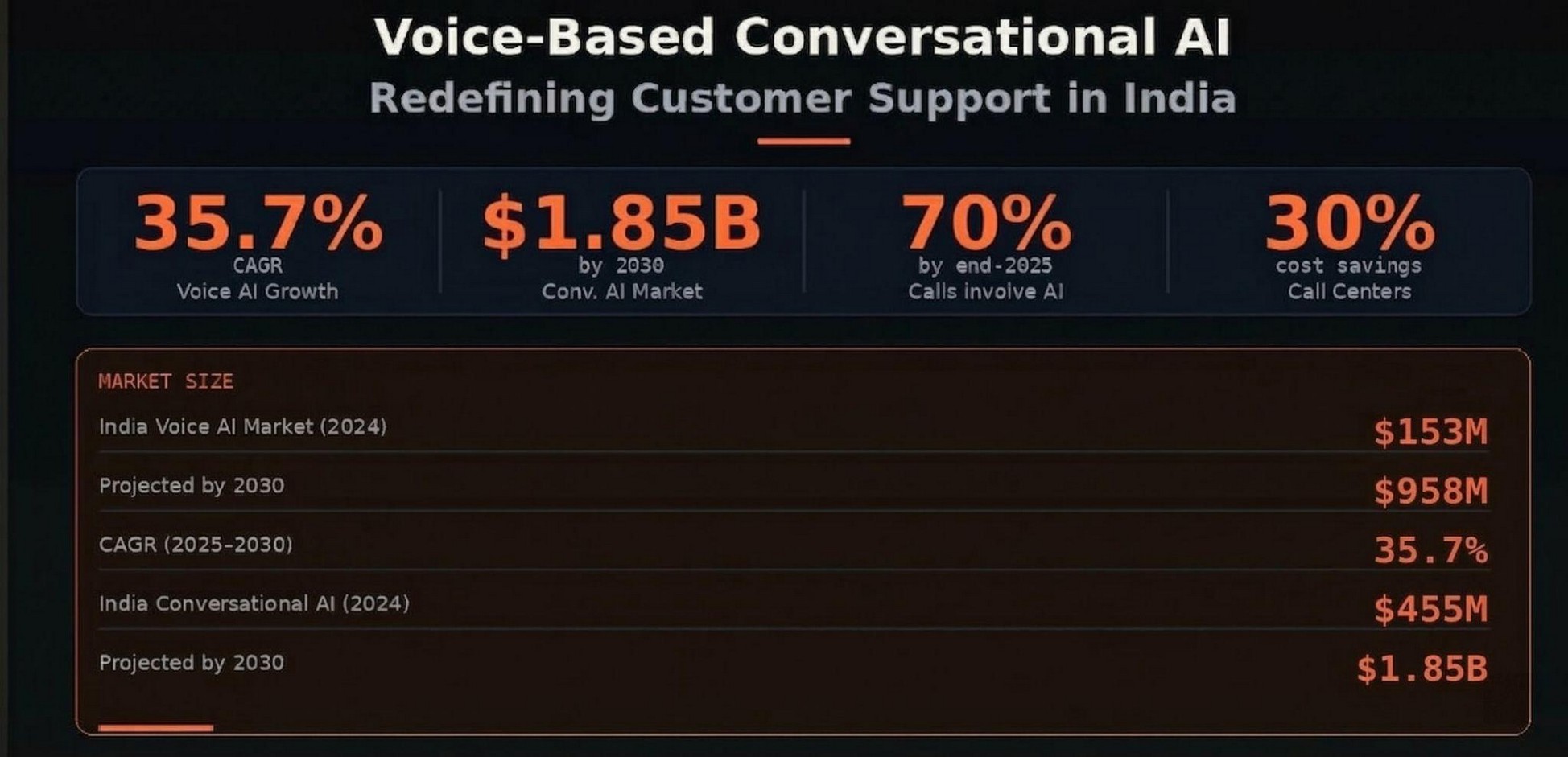
    Today, voice-based conversational AI is rapidly becoming the bridge between technology and accessibility in India. With millions of users more comfortable speaking than typing, especially in regional languages, voice interfaces are helping businesses reach customers who were previously underserved by digital platforms.

    The Indian Customer Support Problem

    Before understanding the solution, it is essential to appreciate the scale and complexity of the problem. India’s customer support landscape is one of the most demanding in the world. With a population of 1.4 billion spanning rural villages and metropolitan megacities, companies must serve customers across wildly different literacy levels, digital comfort zones, and linguistic preferences.

    Traditional customer support in India relied on massive call centres, and for good reason. Many Indian consumers, particularly those in semi-urban and rural areas, trust voice-based interaction far more than text-based alternatives. They find typing in English cumbersome and typing in regional scripts even harder on smartphones. Speaking, however, feels natural and immediate.

    But human-led call centres come with enormous operational costs, high attrition rates, and an inability to scale during sudden demand spikes, think festivals, IPL seasons, or government scheme launches that trigger millions of simultaneous queries. The industry needed a smarter solution, and voice-based conversational AI arrived at precisely the right moment.

    What is Voice-based Conversational AI?

    Voice-based conversational AI refers to technology that enables machines to understand spoken natural language, process it intelligently, and reply in a way that feels human. Unlike the robotic IVR systems of the early 2000s that frustrated callers into pressing “0” desperately to reach a human agent, today’s voice AI can hold nuanced, context-aware dialogues.

    And in India, where over 19,500 languages and dialects coexist, this technology is not merely a convenience, it is rapidly becoming a necessity.

    Why Voice-Based Conversational AI Fits India Perfectly?

    The Oral Communication Preference

    India has deep oral traditions. Storytelling, instructions, transactions, much of everyday life, especially outside metros, still flow through verbal exchange. When WhatsApp voice notes overtook typed messages in rural India long before they did in Western markets, it signalled something important: Indian users prefer speaking. Voice-based conversational AI aligns perfectly with this cultural reality, meeting users where they naturally are.

    Low Literacy Barriers Are Dissolved

    According to census estimates, India has hundreds of millions of citizens with limited literacy or low digital literacy. For these users, text-based chatbots are essentially inaccessible. Voice-based conversational AI dramatically lowers the barrier to accessing services, whether it is checking a bank balance, filing a complaint about a car service, or inquiring about an insurance plan. The technology democratises access in ways no text interface ever could.

    The Multilingual Imperative

    Perhaps nowhere else in the world does language diversity present as acute a challenge as it does in India. A telecom company serving customers across Gujarat, Tamil Nadu, West Bengal, and Punjab is essentially serving four entirely different linguistic communities. Modern voice-based conversational AI platforms are being trained on massive multilingual datasets to handle not just formal language but colloquial mixing, “Hinglish” (Hindi-English blend), “Tanglish” (Tamil-English blend), and dozens of other combinations that are simply how Indians speak in practice.

    Voice-Based Conversational AI Redefining Customer Support in India

    Sectors Leading the Voice AI Revolution in India

    Banking, Financial Services, and Insurance (BFSI)

    The BFSI sector has become one of the most aggressive adopters of voice-based conversational AI in India.

    Large public and private sector banks are deploying voice AI agents capable of handling account queries, loan status checks, fraud alerts, and even preliminary loan eligibility assessments.

    For a first-time bank account holder in a small town in Jharkhand with little familiarity with app navigation, simply saying “mera balance batao” (tell me my balance) in Hindi and receiving an instant, accurate response is transformative.

    Insurance companies use voice AI to help customers file claims in local languages. This reduces drop-off rates and dependence on human agents for routine tasks.

    As a result, the key benefits are faster claim resolutions, lower operational costs, and customers who feel acknowledged and supported.

    Telecom

    India’s telecom giants handle hundreds of millions of support calls each year. Voice-based conversational AI is now autonomously managing a growing share of queries, including recharge requests, plan comparisons, SIM requests, and complaints, without human intervention. Key takeaway: Voice AI enables telecoms to scale support and improve customer self-service.

    Ecommerce and Quick Commerce

    As ecommerce expands in Tier 2, 3, and 4 cities, supporting customers in their preferred language around the clock is essential. Voice-based AI enables personalized, instant resolution without navigating complex interfaces. For many first-time online shoppers, a voice-first approach reduces anxiety and builds trust.

    Telemarketing

    Telemarketing in India has long relied on thousands of agents making scripted calls, hoping for conversions. Voice-based conversational AI is changing this model. Companies deploy AI-powered outbound voice agents that initiate contextual, personalized conversations at scale, without the fatigue or inconsistency of human teams.

    Beyond outbound selling, voice AI transforms inbound telemarketing, handling product enquiries, eligibility checks, and upselling with a naturalness that keeps prospects engaged. In sectors such as mutual funds, credit cards, insurance, and real estate, where a well-timed conversation can convert a customer, AI-assisted telemarketing is becoming a competitive advantage.

    The Human-AI Partnership Model

    Contrary to fears of mass replacement, the most successful deployments of voice-based conversational AI in India operate on a human-AI collaboration model.

    The Human-AI Partnership in Customer Support

    The AI handles high volumes of routine, repetitive queries autonomously, freeing human agents to focus on complex, emotionally sensitive, or high-value interactions that genuinely benefit from human empathy and judgment.

    Key takeaway: The human-AI partnership increases both operational efficiency and agent job satisfaction.

    When a customer’s voice signals rising frustration or the query involves a sensitive personal situation, such as a bereavement affecting an insurance claim, or a disputed transaction causing financial distress, a well-designed voice AI system recognises the emotional cues and seamlessly transfers the interaction to a human agent, preserving full context.

    This orchestration of AI efficiency and human warmth is where Indian customer support is heading.

    The result is better outcomes across multiple dimensions: faster resolution for most customers, more meaningful work for human agents, lower operational costs for businesses, and a customer support experience that actually feels respectful of the customer’s time and dignity.

    Conclusion

    Voice-based conversational AI is transforming customer support in India, redefining who can access services, in which language, at what hour, and at what cost. For a country that values spoken dialogue, AI that truly listens feels like technology aligning with the people’s needs.

    For businesses in India, the challenge is to deploy voice-based conversational AI quickly and thoughtfully. For millions who struggled due to language barriers or unfamiliar digital interfaces, voice AI offers the promise of being heard.

    How Ello Powers Customer Support?

    Adaptive Prompt Technology: Our agents don’t just follow a script; they rewrite their own playbook in real-time to optimize outcomes, embodying the true spirit of Agentic AI.

    Multi-Agent Networks: Ello utilizes specialized sub-agents to audit and improve conversations at machine speed, ensuring accuracy and continuous learning.

    Low-Latency Infrastructure: We understand that in a voice-first world, speed is trust. Our infrastructure is built for sub-second responses, ensuring conversations feel natural and human.

    Enterprise-Grade Security: With SOC 2 and HIPAA compliance, Ello provides the governance and safety required for the next generation of AI deployment.

    True Multilingual & Dialect Mastery: In a linguistically diverse market like India, businesses traditionally had to hire separate support teams for regional languages. With Ello, you don’t need that. Our agents can switch naturally between languages mid-conversation (e.g., from Hindi to English) just as a native speaker.

    This massive consolidation significantly reduces hiring effort and operational costs, allowing a single AI workforce to serve the entire country.

    FAQs

    1. What is voice-based conversational AI?

    Voice-based conversational AI enables users to interact with systems via spoken language. It uses speech recognition and natural language processing to understand and respond to customer queries.

    2. Why is voice AI important for customer support in India?

    India has diverse languages, and many users prefer speaking over typing. Voice AI helps businesses serve customers in their preferred language and improves accessibility.

    3. How does voice AI improve customer service efficiency?

    Voice AI automates routine queries, gives instant responses, and works 24/7. This reduces wait times and allows human agents to handle complex issues.

    4. Can voice-based AI understand regional languages in India?

    Yes. Modern voice AI systems are trained on multiple Indian languages and dialects, enabling natural interactions across regions.

    5. Which industries benefit the most from voice-based AI in India?

    Banking, healthcare, telecom, e-commerce, and travel benefit most. These industries manage high volumes of customer queries that voice AI can automate.

  • How Voice AI Agents are Modernizing India’s Digital Insurance Ecosystem

    How Voice AI Agents are Modernizing India’s Digital Insurance Ecosystem

    India is currently navigating a pivotal era in its financial history. As we move through 2026, the Insurance Regulatory and Development Authority of India (IRDAI) has set ambitious goals for “Insurance for All” by 2047.

    Achieving this vision requires more than just policy reform; it requires a radical leap in how insurers interact with a population of 1.4 billion people.

    The traditional barriers to insurance adoption in India, such as complex jargon, linguistic diversity, and slow claims processing, are being systematically dismantled by Voice AI for Insurance.

    The ecosystem is shifting from a mobile-first approach to a voice-first paradigm. This transition is driven by the realization that while digital literacy is rising, the most natural way for the Indian consumer to manage their financial security is through conversation.

    Today, agentic voice AI is not just a customer service tool; it is becoming the primary operational engine for India’s digital insurance renaissance.

    The Indian Context: Beyond Traditional Automation

    The Indian insurance market presents unique challenges that legacy automation could never fully address. High linguistic diversity, varying levels of financial literacy, and a deep-seated preference for human-like reassurance have often made static chatbots feel inadequate.

    Bridging the Language Gap

    In 2026, the most significant modernization in India’s insurance sector is the mastery of vernacular speech.

    Voice AI for Insurance has evolved to understand not just the 22 scheduled languages of India, but hundreds of regional dialects.

    This is crucial for penetration into Tier 2 and Tier 3 cities, where consumers may be comfortable with digital payments but prefer discussing life or health coverage in their native tongue.

    Voice AI Bridging the Language Gap in India

    Modern voice agents now utilize advanced Natural Language Understanding (NLU) to handle code-switching, a common practice in India where speakers switch between languages mid-sentence.

    By providing a “human-level” understanding of these nuances, insurers are building the trust necessary to close the protection gap in rural and semi-urban markets.

    The Move to Agentic Reasoning

    Previous iterations of voice technology relied on rigid scripts that often left customers frustrated. In the current 2026 landscape, the industry has transitioned to agentic workflows.

    An agentic system does not just follow a path; it reasons through a problem. If a farmer in Maharashtra calls to inquire about crop insurance after a weather event, the AI understands the context, queries live weather data, and initiates the claim process without needing a human to intervene.

    This ability to reason and execute makes Voice AI for Insurance a formidable tool for operational scale.

    Multi-Agent Frameworks in Policy Management

    One of the most profound shifts in the digital ecosystem is the deployment of multi-agent frameworks. Instead of a single bot trying to do everything, insurance companies now use a coordinated fleet of specialized AI agents.

    The Claims Coordination Agent

    Claims are the “moment of truth” in insurance. A specialized claims agent can now handle the First Notice of Loss (FNOL) via voice, capturing emotional cues and urgent needs. It then coordinates with an evidence-gathering agent that might send the customer a secure link for photo uploads or even pull data from IoT sensors in a connected vehicle or smart home.

    The Underwriting and Risk Agent

    During a voice interaction for a new policy, a specialized risk agent can analyze the data provided by the customer in real-time.

    By the time the conversation ends, the AI has already cross-referenced the customer’s history and external risk databases to provide a personalized premium quote.

    This synergy between different AI agents ensures that the customer experience is seamless while the internal business logic remains rigorous.

    Industry Projections and Economic Impact

    The economic case for Voice AI for Insurance in India is supported by compelling market data. Projections for late 2026 suggest that AI-driven interactions will reduce the cost of customer acquisition for Indian insurers by up to 30%.

    • Increased Penetration: Voice-enabled agents are expected to contribute to a 15% increase in insurance density across rural India by 2027.
    • Reduction in TAT: The Turnaround Time (TAT) for simple health and motor claims has been reduced from days to minutes in organizations that have fully integrated voice-to-action workflows.
    • Fraud Mitigation: AI-driven voice analysis is now a standard part of the Indian fraud detection toolkit, identifying inconsistencies in verbal reports that might be missed in written forms.

    Trust, Transparency, and Regulation

    As the technology becomes more prevalent, the focus has shifted toward ethical AI and data sovereignty. The Indian government’s focus on Digital Public Infrastructure (DPI) has paved the way for secure, interoperable AI systems.

    In 2026, transparency is a mandate. Voice agents are required to be clear about their nature, and data privacy frameworks ensure that the voice biometrics and personal details of Indian citizens are protected under the latest Digital Personal Data Protection (DPDP) standards.

    This regulatory clarity has given insurers the confidence to deploy Voice AI for Insurance at a massive scale, knowing that the guardrails are firmly in place.

    Trust, Transparency and Regulation in Voice AI Insurance

    The Ello Advantage in the Indian Market

    While the broader industry moves toward automation, Ello provides the specific cognitive infrastructure required to excel in India’s complex environment.

    Built on 2026-standard agentic frameworks, Ello goes beyond conversation to provide a Voice-to-Action engine that integrates directly with India’s emerging digital insurance platforms and Bima Sugam portals.

    Its Adaptive Prompting Engine is specifically designed to handle the linguistic diversity and cultural nuances of the Indian consumer, allowing insurers to deploy intelligent agents that don’t just talk, but execute tasks: from real-time policy modifications to complex claims orchestration.

    By providing an enterprise-ready, SOC 2 compliant platform, Ello allows Indian insurers to scale their operations globally while maintaining a local, empathetic touch.

    FAQ: Voice AI for Insurance

    Q1: Can Voice AI for Insurance handle the wide variety of Indian accents?

    Yes. In 2026, advanced speech-to-text engines are trained on massive datasets representing India’s diverse linguistic landscape. This ensures that a speaker from Kerala and a speaker from Punjab receive the same high level of comprehension.

    Q2: Is it possible to file a claim entirely through a voice agent?

    For many routine claims, such as motor glass or certain health benefits, the entire process can be completed via voice. The AI gathers the details, verifies the policy, and triggers the payout workflow autonomously.

    Q3: How does this technology help with the “Bima Sugam” initiative?

    Bima Sugam aims to be a one-stop shop for all insurance needs in India. Voice AI acts as the natural interface for this platform, allowing users to query, compare, and buy policies using simple voice commands in their preferred language.

    Q4: Will voice AI replace local insurance agents in India?

    No. Voice AI for Insurance is a tool for augmentation. It handles the high-volume, routine queries, allowing human agents and advisors to focus on providing deep financial advice and building long-term relationships with their clients.

    Q5: Is voice data secure under the new Indian data laws?

    Yes. Leading platforms utilize end-to-end encryption and adhere to the Digital Personal Data Protection (DPDP) Act, ensuring that voice recordings and transcripts are processed securely and deleted or anonymized according to strict compliance rules.

    Conclusion: A Conversational Future for Indian Insurance

    The modernization of India’s insurance ecosystem is inextricably linked to the evolution of voice technology.

    By moving away from the friction of digital forms and rigid menus, the industry is finally speaking the language of its customers.

    The goal for 2026 and beyond is to make insurance as accessible as a simple conversation, ensuring that every citizen has the protection they need through the power of agentic Voice AI for Insurance.

    Transform your insurance operations today. Visit Ello

  • Ello: The Voice AI for Customer Support of the Future

    Ello: The Voice AI for Customer Support of the Future

    Talking of enterprise operations, scalability has always been limited by the “human bottleneck.” As call volumes spike and customer expectations for 24/7 service become non-negotiable, traditional call centers are hitting a breaking point.

    Voice AI for customer support is no longer a futuristic “nice-to-have”, it is the primary driver of operational resilience in 2026. With the ability to handle thousands of concurrent queries with zero latency and at a fraction of the cost of traditional systems, AI voice agents for customer support are redefining the bottom line.

    It’s time to move past the era of “automated responses” and embrace a future where voice agents execute complex tasks, resolve issues in seconds, and free your human talent for the work that truly requires a heartbeat.

    Let’s take an in-depth look at why voice AI for customer support is positioned as the future of service operations, the measurable impact it delivers, and real-world applications.

    What is Voice AI?

    Voice AI, or Voice Artificial Intelligence, refers to intelligent systems that understand, interpret, and respond to human speech using natural language processing (NLP), machine learning, and speech recognition technologies.

    Unlike traditional automated voice menus or IVR (Interactive Voice Response), modern voice AI can carry out conversations, detect user intent, and even recognize emotional cues.

    When we talk about voice AI for customer support, we mean using voice-enabled AI to handle customer queries, resolve issues, or guide users through conversational interactions that feel natural and human.

    Today, businesses increasingly rely on AI voice agents for customer support to manage large call volumes, automate routine conversations, and deliver faster responses without increasing operational costs.

    How Voice AI Works in Customer Support

    Voice AI in customer support usually uses three main technologies to function effectively:

    Automatic Speech Recognition (ASR)

    ASR converts a customer’s spoken words into text as they are spoken. This allows the voice AI system to understand exactly what the user is saying.

    Modern ASR technology is also the backbone of top AI voice transcription for customer support, enabling businesses to generate precise transcripts for analytics, compliance, and training.

    Natural Language Understanding (NLU)

    NLU helps the system understand the meaning and purpose behind what a customer is saying. It enables the AI to accurately grasp the customer’s request, even when the language is informal or conversational.

    This capability powers a highly responsive AI voice agent for customer support, enabling it to interpret context, intent, and conversational nuance.

    Text-to-Speech (TTS)

    After the AI has understood the customer’s intent, TTS transforms its response back into spoken words that sound natural and close to what a human would say.

    Together, these technologies enable voice AI to have smooth and intelligent conversations, making it a great choice for customer support that values both efficiency and a personal touch.

    Why Voice AI Is the Future of Customer Support?

    The reasons Voice AI is poised to become the future of customer support are multifaceted. From elevated customer experience to business scalability, Voice AI offers advantages that traditional support systems cannot match.

    Why Voice AI Is the Future of Customer Support

    24/7 Availability

    One of the most significant limitations of human-only support is availability. Customers expect answers immediately, regardless of time zones or business hours.

    Voice AI systems operate around the clock, ensuring customers can access support anytime. With AI voice agents for customer support, businesses can deliver instant assistance even during peak demand or outside working hours.

    This continuous availability significantly improves customer satisfaction and trust.

    Scale Without Additional Costs

    Traditionally, scaling customer support requires hiring more agents, increasing infrastructure costs, and managing growing queues. Voice AI eliminates this dependency.

    Whether a business receives 100 or 10,000 calls a day, Voice AI systems can scale automatically without requiring a proportional increase in staffing or resources. It’s this cost-efficient scalability that positions Voice AI as the future of support operations.

    Faster Resolution Times

    Customers don’t want to be kept waiting, nor do they want to repeat themselves to multiple agents. Voice AI can process queries quickly and provide instant or near-instant answers.

    As AI models learn from interactions, the system continuously improves. Over time, AI voice agents for customer support become more capable of handling complex conversations, further reducing resolution times.

    Personalized Conversations at Scale

    Voice AI systems can access customer history, preferences, and account context in real time. This means they can deliver personalized support experiences to new customers as well.

    Voice AI doesn’t just provide scripted responses; it adapts its answers to the customer’s context, creating a personalized experience that traditional automated systems cannot match.

    Reduced Human Error and Consistency

    Human agents are valuable, but they are also prone to fatigue, miscommunication, or inconsistency. Voice AI adheres to the highest standards of accuracy, delivering consistent responses every time.

    Furthermore, voice AI stays up to date with product changes, policy updates, and new service offerings, ensuring customers always receive the latest information.

    Better Data, Better Insights

    Every interaction with Voice AI generates valuable data. Businesses can analyze trends, customer pain points, language patterns, and feedback to optimize products and services.

    Traditional call center data is often unstructured and difficult to interpret. With voice AI for customer support, insights become structured, searchable, and actionable, accelerating business intelligence and decision-making.

    Multilingual Support Without Extra Staff

    Global companies often face language barriers in customer support. Hiring multilingual agents can be expensive and limited in reach.

    Voice AI systems can communicate in multiple languages, dialects, and accents. This allows businesses to expand globally without operational complexity.

    For global brands, AI voice agents for customer support make multilingual service both efficient and cost-effective.

    Real-World Applications of Voice AI in Customer Support

    Voice AI agents are already transforming customer support across industries. Here are some powerful, real-world use cases:

    eCommerce and Retail

    Voice AI handles order tracking, shipping status, return requests, and product recommendations, offering a conversational experience that mimics speaking with a support agent.

    Banking and Financial Services

    In financial support, Voice AI authenticates users, answers balance inquiries, assists with payments, and supports fraud detection, all while maintaining security and compliance.

    Healthcare

    Healthcare providers leverage voice AI to offer appointment scheduling, basic symptom checks, prescription refill reminders, and patient follow-ups, thereby improving patient engagement while reducing staffing burden.

    Telecommunications

    Voice AI resolves network issues, handles bill inquiries, handles plan changes, and resolves service outages, enhancing the customer experience while reducing call center load.

    Travel and Hospitality

    From flight updates to hotel booking queries, Voice AI supports customers at every step of their journey, making travel navigation smoother and more efficient.

    Best AI Voice Agents for Customer Support 2026

    As voice AI adoption accelerates, several platforms are emerging as leaders in the space. Businesses looking to implement intelligent support solutions often evaluate the best AI voice agents for customer support in 2026 based on scalability, conversational accuracy, and integration capabilities.

    Among the leading companies in voice AI customer support, platforms like Ello are gaining strong recognition for their ability to automate complex conversations while maintaining a natural, human-like experience.

    Ello’s voice AI agents are designed to manage inbound and outbound calls, qualify leads, handle support queries, and integrate seamlessly with existing CRM and business systems. By combining conversational intelligence with automation, Ello enables organizations to transform customer support into a scalable and efficient operation.

    The Future: AI and Humans as a “Unified Team”

    The narrative that AI will replace humans is shifting toward one of augmentation. In 2026, we see the rise of the “Super Agent.”When a Voice AI encounters a situation it cannot handle, perhaps a distraught customer or a highly technical legal query, it doesn’t just “drop” the call. It performs a “warm handoff” to a human agent.

    AI and Humans as a Unified Team

    The human receives a real-time transcript and a summary of what has already happened, allowing them to step in with full context. This collaboration ensures that the customer experience remains seamless while empowering human workers to do what they do best: connect emotionally.

    Conclusion

    Voice AI for customer support is more than an upgrade to automated support, it’s a paradigm shift. It improves response times, delivers personalized experiences, and empowers businesses to scale with intelligence.

    As consumers seek faster, smarter, and more conversational support, voice AI will become an essential differentiator for brands. Organizations that adopt solutions from leading companies for voice AI customer support, such as Ello, will gain a competitive edge by delivering faster, smarter, and more efficient customer experiences. Organizations that adopt solutions from leading companies for voice AI customer support, such as Ello, will gain a competitive edge by delivering faster, smarter, and more efficient customer experiences.

    The future of customer support isn’t human-only or robot-only; it’s intelligent, conversational, and powered by voice AI agents.

    How Ello Powers Customer Support?

    Adaptive Prompt Technology

    Our agents don’t just follow a script; they rewrite their own playbook in real-time to optimize outcomes, embodying the true spirit of Agentic AI.

    Multi-Agent Networks

    Ello utilizes specialized sub-agents to audit and improve conversations at machine speed, ensuring accuracy and continuous learning.

    Low-Latency Infrastructure

    We understand that in a voice-first world, speed is trust. Our infrastructure is built for sub-second responses, ensuring conversations feel natural and human.

    Enterprise-Grade Security

    With SOC 2 and HIPAA compliance, Ello provides the governance and safety required for the next generation of AI deployment.

    True Multilingual & Dialect Mastery

    In a linguistically diverse market like India, businesses traditionally had to hire separate support teams for regional languages. With Ello, you don’t need that. Our agents can switch naturally between languages mid-conversation (e.g., from Hindi to English) just as a native speaker.

    This massive consolidation significantly reduces hiring effort and operational costs, allowing a single AI workforce to serve the entire country.

    FAQs

    1. What is Voice AI for Customer Support?

    Voice AI for customer support is an AI-powered system that understands and responds to customer queries via natural-language conversations. It uses speech recognition and natural language processing to deliver real-time assistance.

    2. How is Voice AI different from traditional IVR systems?

    Unlike traditional IVR, which relies on fixed menus and keypad inputs, Unlike traditional IVR, which relies on fixed menus and keypad inputs, voice AI agents understand natural speech and context. It enables dynamic, human-like conversations instead of scripted responses.

    3. Can Voice AI handle complex customer queries?

    Yes, modern voice AI agents can handle multi-step, context-aware conversations. For highly complex issues, they can seamlessly transfer the call to a human agent with full context.

    4. Can Voice AI provide multilingual support?

    Yes, Voice AI systems can support multiple languages and accents. This makes it easier for businesses to serve global customers without expanding large multilingual teams.

    5. How does Voice AI improve customer satisfaction?

    Voice AI reduces wait times, provides instant responses, and delivers consistent service. Faster resolution and personalization significantly enhance the customer experience.

  • Voice AI for Lead Generation: Converting Calls into Qualified Leads in 2026

    Voice AI for Lead Generation: Converting Calls into Qualified Leads in 2026

    Voice AI for Lead Generation: Converting Calls into Qualified Leads in 2026

    Looking at the sales landscape today, the “leaky funnel” has become the primary adversary of the enterprise sales organization.

    For decades, the methodology for capturing interest remained largely static: a prospect would discover a solution, fill out a web form, and wait for a human Sales Development Representative (SDR) to initiate a callback.

    However, as we navigate 2026, this friction-heavy model has become unsustainable.

    The modern consumer, both in B2B and B2C sectors, now operates with an “instant-gratification” mindset.

    The delay between an inquiry and a response, often referred to as “lead decay,” has reached a critical threshold.

    Organizations are no longer fighting just for market share; they are fighting for the rapidly diminishing window of prospect attention.

    This environment has catalyzed the rise of Voice AI for lead generation. By shifting from passive capture to active, intelligent engagement, businesses are finally able to achieve “Zero-Latency Funnels.”

    This article explores the industry research, psychological shifts, and technological projections defining the future of AI-driven lead qualification.

    Voice AI Lead Generation Psychology

    The Psychology of the “Zero-Latency” Consumer

    Industry studies from late 2025 indicate a profound shift in how prospects perceive digital interactions.

    Research by the Global Institute of Sales Innovation suggests that the “expectation of response” has dropped from 24 hours in 2020 to under 90 seconds in 2026.

    The Cognitive Load of Forms

    Psychological research into “Form Friction” has shown that the abandonment rate of web forms increases by 15% for every additional field required.

    Prospects view forms as a “promise of future work” rather than a solution. In contrast, a voice interaction is perceived as a “service event.”

    When a prospect uses Voice AI for lead generation, they are engaging in a low-friction, high-reward activity.

    The cognitive load required to speak a requirement is significantly lower than the effort required to type it into a structured form.

    This shift in the “input method” is driving a 30% increase in initial engagement rates for top-of-funnel inquiries.

    The “Always-On” Global Expectation

    With the globalization of mid-market SMEs, the 9-to-5 operating model is no longer viable.

    Projections for 2026 suggest that over 40% of leads are generated outside of standard business hours in the prospect’s local time zone.

    Businesses relying on human-only SDR teams for initial qualification are essentially “turning off” their revenue engine for 16 hours a day.

    How Voice AI for Lead Generation is Redefining Qualification

    In 2026, lead generation is no longer synonymous with “contact collection.” It is now defined by “Intent Verification.”

    The technological evolution of Natural Language Understanding (NLU) has moved Voice AI for lead generation from simple transcription to complex reasoning.

    Beyond BANT: The Rise of Contextual Qualification

    Historically, qualification followed the BANT (Budget, Authority, Need, Timeline) framework. However, modern sales cycles are more nuanced. Voice AI agents are now capable of conducting Contextual Discovery.

    • Sentiment Analysis: AI can now detect the “urgency” in a prospect’s voice, prioritizing leads not just by their budget, but by the severity of the pain point they are describing.
    • Latent Intent Detection: Through advanced NLU, AI can identify when a prospect mentions a competitor or a specific integration requirement, flagging these as “High-Value Intent” markers that a standard form would miss.

    Closing the “Speed-to-Lead” Gap

    Data from 2025 demonstrates that the odds of qualifying a lead drop by 80% if the first contact occurs more than five minutes after the inquiry.

    In the current 2026 landscape, that window is frequently cited as the “Golden Minute.” Voice AI for lead generation allows for an instantaneous transition from a web-based click to a verbal conversation, ensuring that the lead is engaged at the peak of their interest.

    Market Projections: The Economic Impact of AI-Driven Sales

    The economic shift toward AI-mediated sales development is significant. Financial analysts project that by 2028, the market for AI-led sales agents will exceed $15 billion globally.

    Reduction in Customer Acquisition Cost (CAC)

    For the average mid-market enterprise, the cost of a human-led SDR team accounts for a significant portion of the CAC.

    By automating the “discovery” and “qualification” phases, organizations are reporting a 25-40% reduction in CAC. This allows businesses to reallocate their high-value human talent toward the “closing” and “relationship management” phases of the cycle.

    Revenue Recovery

    It is estimated that the average enterprise loses 20% of its potential revenue to “unresponsive leads.” Voice AI for lead generation acts as a safety net. Projections suggest that “Automated Persistence”, where AI agents follow up with non-responsive leads at optimal times, could recover billions in lost revenue across the SaaS, Insurance, and Real Estate sectors by the end of 2026.

    Best Practices for Implementing Voice AI in the Sales Funnel

    As the technology matures, industry leaders have identified three core pillars for successful implementation.

    Seamless Multi-Channel Continuity

    A lead might start on a mobile ad, move to a WhatsApp chat, and end in a voice call. In 2026, the AI must maintain “Shared Context.” If the prospect has already provided their company name in a chat, the voice AI should not ask for it again. This continuity is the difference between a “robotic” interaction and an “intelligent” one.

    The “Warm Handoff” Protocol

    The most successful AI deployments are those that recognize their limits. When a lead is identified as “High-Potential” or “High-Urgency,” the Voice AI agent must execute a seamless escalation to a human Account Executive. This requires real-time integration with team calendars and VOIP systems to ensure the transition is frictionless for the prospect.

    Data-Driven Feedback Loops

    The data generated by Voice AI for lead generation is a goldmine for marketing teams. By analyzing the common questions and objections raised during AI-led qualification calls, marketing can adjust their messaging in real-time to address prospect concerns before they even pick up the phone.

    Compliance, Ethics, and the Trust Factor

    In today’s regulatory environment, trust is a non-negotiable asset. The rise of AI-driven outreach has been met with stricter TCPA (Telephone Consumer Protection Act) and GDPR guidelines.

    Transparency

    Leading practices dictate that AI agents must identify themselves as such when asked, or proactively disclose their nature in the introduction.

    Data Sovereignty

    Prospects are increasingly sensitive about where their voice data is stored. Secure AI implementations now utilize “Zero-Retention” models for sensitive audio data, processing the intent and then deleting the raw recording to ensure privacy compliance.

    Solving the Implementation Gap with Ello

    While the theoretical advantages of AI-driven lead generation are clear, the challenge for most SMEs is the technical barrier to entry.

    This is where Ello.ai provides a critical advantage. As an agentic voice platform built for 2026 standards, Ello bridges the gap between digital marketing and physical sales execution.

    Its Adaptive Prompting Engine allows businesses to deploy intelligent, multilingual agents that don’t just read scripts, but conduct genuine discovery calls.

    By integrating directly with existing CRM stacks, Ello ensures that Voice AI for lead generation is a “plug-and-play” reality for organizations that handle high call volumes but lack the resources to scale a 24/7 human SDR team.

    Voice AI FAQ

    FAQ: Voice AI for Lead Generation

    1. How does Voice AI handle prospects who are reluctant to talk to a “bot”?

    The key is value. In 2026, the sentiment has shifted; prospects are generally willing to interact with an AI if it results in an immediate solution or a faster booking. If the AI is helpful and reduces the prospect’s wait time, satisfaction scores remain high.

    2. Can Voice AI for lead generation distinguish between a “tire-kicker” and a serious buyer?

    Yes. Through “Scoring Algorithms,” the AI evaluates the prospect’s answers against historical “ideal customer” data. Factors like specific pain point descriptions, timeline mentions, and budget ranges allow the AI to assign a “Lead Score” in real-time.

    3. Is it possible to maintain brand voice with an AI agent?

    Absolutely. Advanced platforms allow for the customization of the AI’s “Persona”, from the tone and vocabulary to the actual vocal characteristics, ensuring that every interaction feels like a natural extension of the company’s brand.

    4. What is the average “Speed-to-Lead” for an AI-powered system?

    In most implementations, the speed-to-lead is under 10 seconds. As soon as a digital trigger is fired (e.g., a form submission or an inbound call), the AI can initiate the engagement.

    5. How does this technology integrate with traditional CRMs like Salesforce or HubSpot?

    2026-era Voice AI is API-first. It doesn’t just “log” a call; it extracts the key data points from the conversation and populates the CRM fields automatically, ensuring the human sales team has a perfectly structured lead profile for their follow-up.

    The Strategic Path Forward

    The adoption of Voice AI for lead generation is no longer a matter of “if,” but “when.” As the technology moves into the mainstream, the competitive divide will grow between those who offer instant, intelligent engagement and those who cling to the friction-heavy methods of the past. The goal of the modern sales organization is to be “always-on, always-intelligent, and always-human-ready.”

    Experience the future of sales engagement. Visit https://getello.ai/in

  • Conversational AI in Insurance: Transforming Customer Engagement End to End

    Conversational AI in Insurance: Transforming Customer Engagement End to End

    The insurance industry has always been built on trust, timely communication, and accurate information.

    Yet for decades, insurers have struggled with slow response times, complex processes, and fragmented customer experiences.

    Policyholders often find themselves navigating IVRs, waiting on hold, repeating information across touchpoints, and struggling to get simple answers when they need them most.

    This is where Conversational AI is fundamentally changing the game.

    From policy discovery and onboarding to claims processing and renewals, Conversational AI is enabling insurers to deliver faster, smarter, and more human-like interactions at scale.

    Banking, Financial Services, and Insurance (BFSI) was the top voice AI adopter in 2025, accounting for over 35% of the total market share.

    Let’s explore how Conversational AI is transforming end-to-end customer engagement in insurance.

    What Is Conversational AI in Insurance?

    Conversational AI refers to the use of AI-powered systems, such as voice AI agents and virtual agents, that can understand natural language, interpret intent, maintain context, and respond intelligently through text or voice.

    In insurance, Conversational AI goes far beyond basic chatbots that answer FAQs. Modern solutions combine:

    • Natural Language Processing (NLP)
    • Speech recognition and voice AI
    • Machine learning and intent detection
    • Backend integrations with policy, CRM, and claims systems

    The result is an intelligent conversational layer that can engage customers in real time, resolve queries autonomously, and seamlessly hand off to human agents when required.
    Conversational AI in Insurance

    Why Traditional Insurance Engagement Falls Short

    Insurance interactions are often high-stakes and emotionally charged, especially during claims or emergencies. However, traditional engagement models suffer from key limitations:

    • Long call wait times and IVR frustration
    • Manual data collection and verification
    • Siloed systems leading to repeated questions
    • Limited availability outside business hours
    • High operational costs for support teams

    These gaps directly impact customer satisfaction, retention, and operational efficiency.

    End-to-End Customer Engagement: Where Conversational AI in Insurance Makes an Impact

    Policy Discovery and Pre-Sales Engagement

    The customer journey often begins with questions:

    • What policy suits my needs?
    • How much coverage do I need?
    • What’s included and excluded?

    Conversational AI acts as a digital insurance advisor, guiding prospects through policy options based on their inputs, preferences, and risk profile. Key capabilities include:

    • Interactive policy comparisons
    • Personalized recommendations
    • Instant premium calculations
    • Lead qualification and routing

    Instead of static forms or long brochures, customers get conversational guidance, increasing conversion rates and reducing drop-offs.

    Seamless Onboarding and Policy Issuance

    Once a customer decides to buy, onboarding becomes critical. Traditional onboarding often involves paperwork, follow-up calls, and delays.

    Conversational AI simplifies this by:

    • Collecting customer information conversationally
    • Guiding users through KYC and documentation
    • Answering questions in real time
    • Providing instant status updates

    Voice AI-based onboarding reduces friction and ensures customers complete the process without confusion, while insurers benefit from cleaner data and faster policy issuance.

    24/7 Policy Servicing and Support

    After onboarding, customers expect quick answers to everyday questions:

    • What does my policy cover?
    • When is my renewal due?
    • How can I update nominee details?

    Conversational AI Policy Servicing

    Conversational AI enables always-available self-service, allowing customers to get instant responses without waiting for an agent.

    Common servicing use cases include:

    • Policy details retrieval
    • Coverage explanations
    • Address or contact updates
    • Premium payment reminders
    • Renewal notifications

    Because Conversational AI maintains context, customers don’t have to start from scratch each time they interact, leading to smoother, more satisfying experiences.

    Claims Initiation and Processing

    Claims are the most critical moment of truth for insurers. Customers expect empathy, clarity, and speed, yet claims are often slow and stressful.

    Conversational AI transforms claims engagement by:

    • Guiding customers through the claim initiation step-by-step
    • Collecting incident details via voice or chat
    • Uploading documents and photos seamlessly
    • Providing real-time claim status updates

    Fraud Detection and Risk Signals

    Conversational AI also plays a role behind the scenes. By analyzing language patterns, inconsistencies, and behavioral signals during conversations, AI can flag potential fraud risks early.

    While human investigators make final decisions, AI-driven conversations help:

    • Identify suspicious claims faster
    • Reduce false positives
    • Improve overall risk assessment

    This enhances both customer fairness and insurer profitability.

    Proactive Engagement and Customer Retention

    Engagement shouldn’t be reactive. Conversational AI enables insurers to proactively reach out to customers with timely, relevant messages such as:

    • Renewal reminders
    • Missed payment alerts
    • Coverage gap notifications
    • Personalized upsell or cross-sell suggestions

    Instead of generic blasts, conversations are contextual and personalized, making customers feel understood rather than sold to.

    The Role of Voice AI in Insurance Conversations

    While chat-based AI is powerful, voice AI is particularly impactful in insurance, especially in regions where voice is preferred over text or during emotionally sensitive moments.

    Voice AI enables:

    • Natural, human-like phone conversations
    • Faster issue resolution without IVRs
    • Multilingual support across regions
    • Accessibility for elderly or less tech-savvy users

    Voice-based Conversational AI can handle complex insurance conversations end-to-end without sounding robotic, making it ideal for support, claims, and renewals.

    Human + AI: Not Replacement, but Augmentation

    A common misconception is that Conversational AI replaces human agents. In reality, it augments human teams.

    AI handles repetitive, high-volume interactions, while human agents focus on:

    • Complex cases
    • Emotional conversations
    • High-value customers

    With intelligent handoffs and shared context, agents are better equipped to resolve issues quickly, improving both productivity and job satisfaction.

    The Future of Conversational AI in Insurance

    The future is moving toward agentic AI systems, where Conversational AI doesn’t just respond but takes action autonomously.

    Emerging capabilities include:

    • End-to-end automated claims settlement
    • AI-driven policy recommendations based on life events
    • Multimodal conversations (voice, chat, documents, images)

    As AI becomes more contextual and emotionally aware, insurance interactions will feel less transactional and more relationship-driven.

    Why Ello.ai is Built for 2026

    While many platforms are playing catch-up, Ello.ai was architected with these 2026 trends as foundational pillars.

    • Adaptive Prompt Technology: Our agents don’t just follow a script; they rewrite their own playbook in real-time to optimize outcomes, embodying the true spirit of Agentic AI.
    • Multi-Agent Networks: Ello utilizes specialized sub-agents to audit and improve conversations at machine speed, ensuring accuracy and continuous learning.
    • Low-Latency Infrastructure: We understand that in a voice-first world, speed is trust. Our infrastructure is built for sub-second responses, ensuring conversations feel natural and human.
    • Enterprise-Grade Security: With SOC 2 and HIPAA compliance, Ello provides the governance and safety required for the next generation of AI deployment.
    • True Multilingual & Dialect Mastery: In a linguistically diverse market like India, businesses traditionally had to hire separate support teams for regional languages. With Ello.ai, you don’t need that. Our agents can switch naturally between languages mid-conversation (e.g., from Hindi to English) just as a native speaker.

    This massive consolidation significantly reduces hiring effort and operational costs, allowing a single AI workforce to serve the entire country.

    FAQs

    What is Conversational AI in insurance?

    Conversational AI in insurance uses voice AI agents to interact with customers in natural language. It automates conversations across policy queries, onboarding, claims, and support.

    How does Conversational AI improve customer engagement for insurers?

    It provides 24/7 support, instant responses, personalized recommendations, and proactive reminders.

    Can Conversational AI handle insurance claims processing?

    Yes. It can guide customers through claim initiation, collect details, assist with document uploads, and share status updates, while escalating complex cases to human agents when needed.

    Will Conversational AI replace human insurance agents?

    No. It handles repetitive queries and routine interactions, allowing human agents to focus on complex, sensitive, and high-value customer conversations.

    Empower Your Policyholders with Agentic Service

    If your insurance firm handles thousands of calls a month, the traditional manual model is likely your biggest bottleneck. AI in insurance is the key to unlocking speed, accuracy, and customer loyalty.

    Ello.ai is the partner you need to navigate this transition. From FNOL automation to proactive risk management, we help you build AI agents that align perfectly with your brand and regulatory requirements.

    Get a FREE DEMO. Visit https://getello.ai/in