Tag: AI voice agents

  • AI Cold Calling and the Future of Outbound Sales

    AI Cold Calling and the Future of Outbound Sales

    Outbound revenue generation faces a mathematical ceiling. Sales development representatives spend countless hours dialing, leaving voicemails, and navigating gatekeepers, which depletes morale and slows pipeline velocity. Enterprise sales cycles require precision at scale. Manual dialing and static scripts fail to meet the dynamic demands of modern procurement teams. As organizations enter 2026, they’re replacing these bottlenecks with AI Cold Calling. This shift replaces human repetition with autonomous agentic systems that handle initial outreach, overcome objections, and qualify leads with zero human fatigue.

    Overcoming the Limits of Legacy Infrastructure

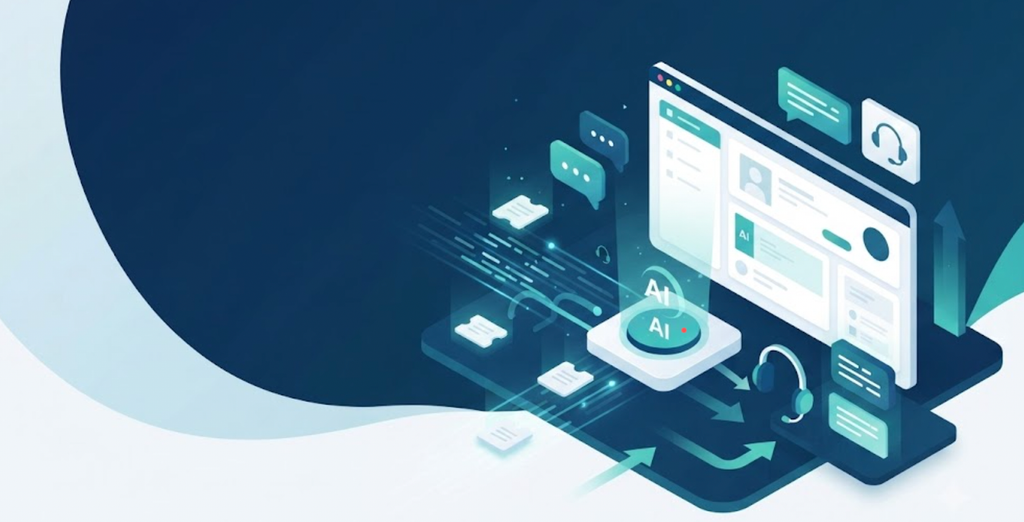
    Manual cold calling transitioning to AI-powered voice analysis

    Traditional outbound methods rely on volume over cognitive adaptation. Sales teams historically depended on a standard AI sales dialer to increase call volume, but these systems only accelerated how quickly human agents burned through lead lists. True cold calling automation requires more than predictive dialing. It demands a system that can reason contextually during the live conversation. Modern cognitive frameworks analyze the prospect’s tone, urgency, and specific objections in real time. For a broader introduction to how these systems work, see our voice AI agent guide.

    Architectural Shifts in Outbound Sales

    Deploying autonomous agents for revenue generation requires a sophisticated underlying architecture. Early iterations of automated cold calling relied on decision trees that broke down the moment a prospect interrupted or asked an unscripted question. In 2026, agentic voice AI systems utilize dynamic prompting engines. When a prospect deviates from the expected conversational path, the system instantly recalculates the optimal response. These AI outbound sales calls execute logic sequences simultaneously, ensuring that the prospect receives accurate product information, pricing context, or technical validation without awkward pauses.

    Seamless Workflow Integration
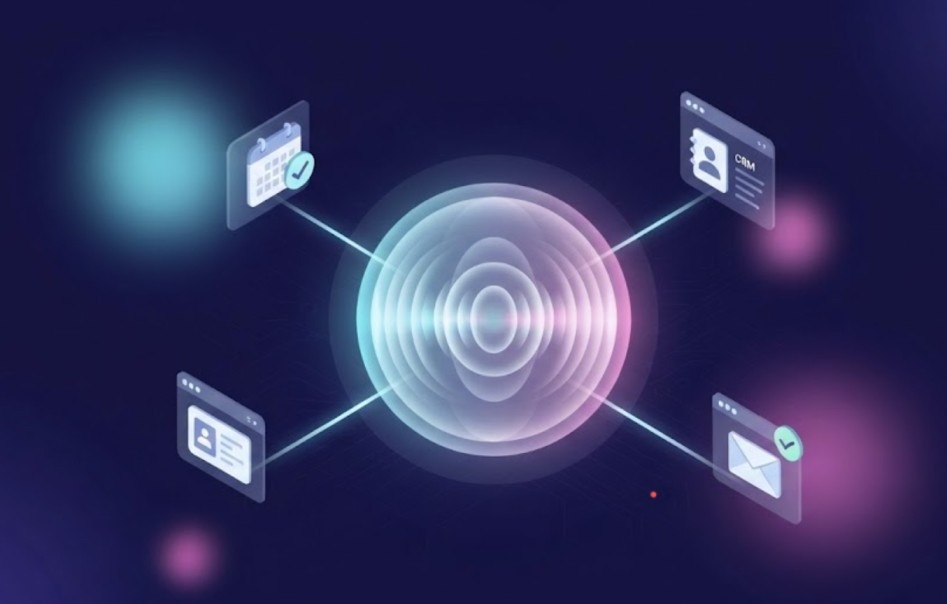
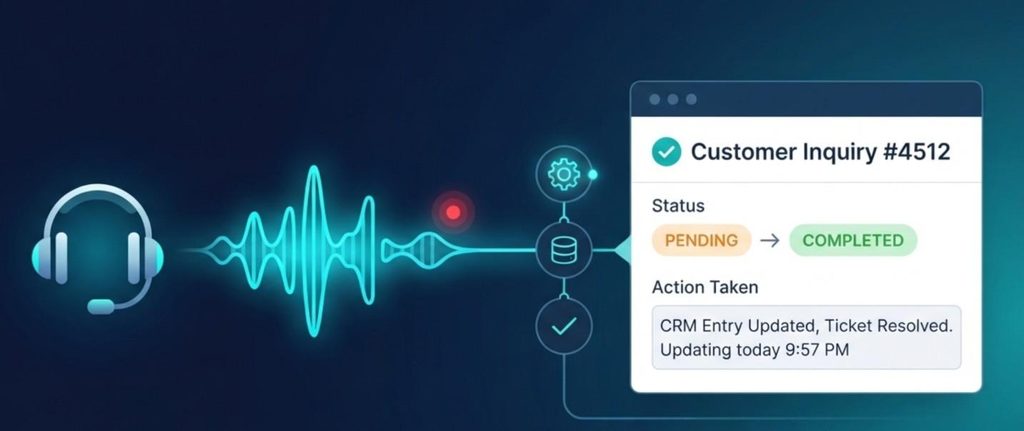
    AI voice agent connected to CRM, calendar, and email

    An isolated calling system creates fragmented data. Effective AI cold calling software must integrate directly into the enterprise technology stack. Agentic voice systems now feature voice-to-action engines that trigger background workflows while the call is still active. If a prospect agrees to a discovery meeting, the system autonomously queries the calendar, secures the time slot, updates the CRM record, and dispatches a confirmation email before the call concludes. To see how enterprises are applying this in practice, explore our breakdown of high-ROI voice AI use cases.

    Regulatory Adherence at Enterprise Scale

    Scaling outbound outreach introduces significant compliance risks. Revenue leaders must navigate complex regulatory environments across different regions. Autonomous compliance guardrails reduce regulatory audit exposure compared to manual outbound processes. Advanced systems manage these variables autonomously. Built-in guardrails ensure strict adherence to regional calling hour restrictions, DND (Do Not Disturb) registries, and local telemarketing frameworks like TRAI. Coupled with enterprise-grade SOC 2 compliance and robust data encryption, these platforms protect organizational liability while executing thousands of concurrent outbound connections.

    The Ello Advantage: Autonomous Outbound Execution

    Ello provides a proprietary, 2026-standard agentic framework engineered specifically for enterprise revenue operations. The platform operates through a multi-agent cognitive orchestration model that eliminates static scripts.

    Ello’s Adaptive Prompting Engine handles interruptions and understands caller sentiment in real time, enabling fluid, non-scripted dialogues. Ello’s Voice-to-Action Engine executes complex tasks autonomously within enterprise CRMs and ERPs while remaining live on the call. Its self-evolving architecture continuously analyzes conversational data and periodically rebuilds its own prompts, driving measurable gains in operational efficiency without requiring manual developer intervention. Furthermore, Ello natively supports 30 languages and diverse regional accents. The system seamlessly handles colloquial code-switching and code-mixing, which is highly critical for regional markets like India. Ello operates with strict guardrails against hallucinations, maintaining SOC 2 compliance and automated regulatory adherence for secure enterprise deployment.

    Frequently Asked Questions

    1) What exactly is AI Cold Calling?

    AI Cold Calling involves using autonomous voice agents to initiate outbound sales interactions. These systems converse naturally, handle objections, and qualify prospects without human intervention.

    2) How does AI cold calling software handle prospect interruptions?

    Modern software utilizes adaptive prompting and real-time cognitive processing to pause, listen, and recalculate its response. This allows the system to address the interruption naturally and guide the conversation back on track.

    3) Can automated cold calling integrate with existing CRM platforms?

    Yes. Modern agentic voice systems offer direct integrations that let them read CRM data before a call and write updates, book meetings, or log notes during the conversation.

    4) What prevents AI outbound sales calls from sounding robotic?

    Advanced generative voice models in 2026 utilize deep contextual understanding and dynamic sentiment analysis. They adjust their pacing, tone, and inflection based on the prospect’s reactions to simulate a highly realistic human interaction.

    5) Is cold calling automation compliant with telemarketing regulations?

    Enterprise-grade platforms include automated compliance guardrails. They autonomously cross-reference DND lists, follow legal calling hours, and maintain strict data privacy standards to reduce regulatory risk.

    Conclusion

    The era of manual outbound dialing is over. Enterprises leveraging autonomous agentic workflows are experiencing unprecedented pipeline velocity and operational efficiency. By adopting cognitive voice systems, revenue organizations can redirect human capital to high-value closing activities while AI handles the friction of top-of-funnel outreach.

    Ready to deploy autonomous revenue agents for your enterprise? Get Started with Ello

  • How Helpdesk Automation Is Reshaping Enterprise Support

    How Helpdesk Automation Is Reshaping Enterprise Support

    Modern enterprise support operations face a persistent paradox: ticket volumes scale faster than headcount. Traditional support tiers are buckling under repetitive Tier-0 and Tier-1 requests, causing resolution times to balloon and operational costs to surge. Organizations can no longer scale their support teams by simply adding more human agents to the queue. Intelligent helpdesk automation provides the structural remedy needed to absorb unbounded ticket volume while protecting gross margins and maintaining high service level agreements.

    The transition from reactive ticketing systems to proactive automation marks a fundamental shift in how organizations manage internal IT service desks and external customer operations. Legacy macros and rigid, rule-based routing trees fail when faced with nuanced customer queries or complex, multi-step technical troubleshooting. Modern support infrastructures require systems that can handle ambiguity and execute tasks autonomously, a trend Ello’s voice AI insights explore in greater depth.

    The Architectural Limits of Legacy Support Systems

    Traditional support desks rely on static knowledge bases, keyword-matching bots, and manual ticket triage workflows. These legacy tools create friction rather than resolution. When an enterprise customer or employee encounters a multifaceted issue, legacy systems typically route them through frustrating menu trees before dumping them into an overflowing human queue. This architecture produces high abandonment rates, excessive average handle times, and inflated operational expenditures.

    Traditional interactive voice response structures often exacerbate this bottleneck. Examining how modern channels surpass legacy setups highlights why forward-thinking enterprises are actively retiring legacy IVR systems in favor of intelligent frameworks. Scaling human-only support teams linearly against revenue growth creates unsustainable margin compression. Enterprise leaders must decouple support volume from headcount requirements by moving past basic string-matching bots toward architectures capable of true conversational comprehension and backend execution.

    AI routing customer support requests to human agents

    The Evolution to Cognitive and Conversational Workflows

    Advanced support environments demand real-time resolution capabilities that match human tier-1 capabilities. Automated service desks have evolved past text-only chat interfaces that frequently abandon users when faced with complex scenarios. Deploying a voice AI agent for helpdesk operations now enables natural, spoken interactions that instantly interpret user intent, emotional tone, and urgency.

    Mini Case Study: Consider a mid-sized e-commerce enterprise handling thousands of daily order-tracking and return inquiries. Instead of routing callers through rigid IVR menus, an intelligent voice agent converses naturally with the customer, verifies account details, checks real-time shipping logs, and initiates a replacement order or refund in seconds—all while the user remains on the line.

    These autonomous systems leverage large language models fine-tuned for enterprise operational logic. They maintain context across lengthy troubleshooting sessions, handle dynamic user interruptions gracefully, and execute system commands in real time. Rather than merely deflecting calls to an FAQ page, these intelligent agents diagnose system errors, verify user credentials, and initiate backend remediation workflows. Understanding the core mechanics behind these platforms involves analyzing how voice AI agents operate as comprehensive conversational engines.

    Multi-Agent Orchestration in Complex Enterprise Environments

    Enterprise ecosystems consist of fragmented software stacks, ranging from proprietary ERP systems and CRM platforms to ticketing tools and human resources databases. Resolving a single support ticket often requires querying multiple systems of record. AI-driven customer service automation addresses this complexity through multi-agent orchestration frameworks where specialized cognitive agents collaborate to solve intricate requests, mirroring advanced agentic voice AI architectures.

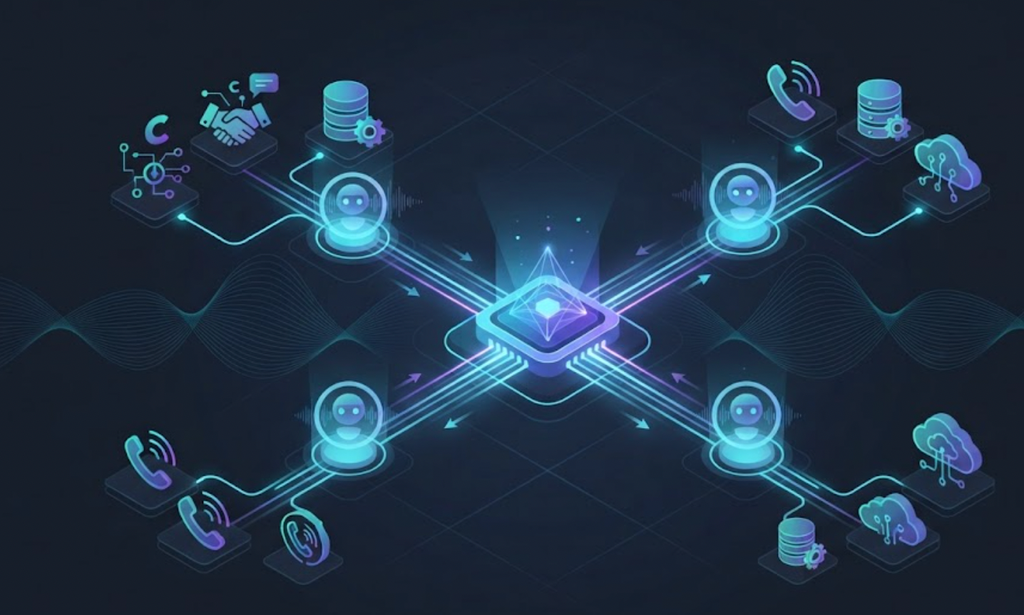
    AI voice agents connected to a central platform, phone systems, and cloud data

    In these distributed architectures, a primary conversational agent manages the dialogue while background reasoning agents simultaneously query inventory databases, check shipping logs, or update account permissions. This division of labor eliminates the latency associated with human agents navigating multiple browser tabs and legacy interfaces. The result is near-instantaneous resolution for complex operational workflows that traditionally required multiple internal escalations.

    Overcoming Linguistic and Regional Operational Barriers

    Global enterprises face significant hurdles when deploying automated support across diverse geographic markets. Linguistic diversity, regional accents, and the common practice of code-switching between languages present severe challenges for standard speech recognition engines. Enterprise support automation must accommodate these linguistic variations without degrading accuracy or forcing users into unnatural phrasing.

    Modern enterprise support systems incorporate advanced multilingual models that can natively understand dozens of languages and regional dialects. These systems process colloquialisms and mixed-language inputs fluidly, ensuring that regional customers and remote employees receive the same high-quality support experience as domestic headquarters staff. This linguistic versatility is essential for maintaining brand equity and operational continuity across international footprints, similar to regional deployments seen in multilingual enterprise voice assistants.

    The Ello Advantage: Autonomous Cognitive Support

    Organizations deploying enterprise-grade support automation require infrastructure that continuously adapts to shifting operational patterns without requiring constant developer intervention. The Ello platform delivers this capability through a proprietary, self-evolving architecture designed specifically for demanding enterprise environments. Ello combines advanced multi-agent cognitive orchestration with an adaptive prompting engine that processes dynamic, non-scripted dialogues, handles interruptions effortlessly, and perceives caller urgency in real time.

    A defining capability of the platform is its self-evolving architecture, which autonomously analyzes conversational data and rebuilds its own prompts after approximately 200 calls. This automated refinement loop drives a 30 percent boost in operational efficiency over time without manual engineering overhead. Furthermore, Ello’s voice-to-action engine executes tasks directly inside enterprise CRMs, ERPs, ATS, and PMS platforms while remaining live on the call. Natively supporting 30 languages with seamless regional code-switching, Ello operates under enterprise-grade SOC 2 compliance, strict hallucination guardrails, and automated adherence to regional regulatory frameworks.

    Frequently Asked Questions

    1) What is helpdesk automation?

    Helpdesk automation uses software, artificial intelligence, and autonomous agents to triage, route, and resolve IT and customer support tickets without human intervention. It streamlines repetitive workflows and accelerates time-to-resolution.

    2) How does voice AI improve enterprise support operations?

    Voice AI enables natural, spoken interactions that instantly interpret user intent and execute complex backend workflows in real time. This reduces average handle times and eliminates the friction associated with traditional text chatbots.

    3) Can automated support systems integrate with existing enterprise software?

    Yes. Advanced support automation platforms feature voice-to-action engines that connect directly to existing enterprise CRMs, ERPs, and ticketing systems to update data in real time and execute tasks.

    4) How do modern support agents handle multiple languages and regional dialects?

    Modern support platforms leverage advanced multilingual models that natively support numerous languages and regional accents. They process colloquial code-switching seamlessly to deliver consistent experiences across global markets.

    5) What security standards should enterprise support automation maintain?

    Enterprise automation platforms must maintain strict security frameworks, including SOC 2 compliance, robust data encryption, hallucination guardrails, and automated adherence to regional calling and data privacy regulations.

    Conclusion

    Reshaping enterprise support requires moving past incremental optimizations to adopt fully autonomous architectures. As ticket volumes scale, organizations that rely on legacy ticketing and static chat tools will continue to face escalating costs and lagging customer satisfaction metrics. Implementing advanced support automation allows enterprises to protect operating margins while delivering frictionless, instant resolutions across every operational channel.

    Ready to transform your enterprise support operations? Get started with Ello today.

  • Conversational AI Agents Explained for Modern Enterprises

    Conversational AI Agents Explained for Modern Enterprises

    Every enterprise support and revenue team eventually hits the same wall: call volume and buyer expectations rise faster than headcount ever can. Legacy IVRs route callers in circles. Web chatbots stall the moment a conversation drifts off script. By 2026, the enterprises that have solved this problem have moved past static scripts and adopted conversational AI agents: systems that reason about intent, hold context across a full conversation, and complete tasks directly inside CRMs, ERPs, and support platforms instead of simply answering questions. That broader shift, often described simply as conversational AI, is reshaping how support, sales, and operations teams work across every channel.

    This blog covers how these systems operate under the hood, where they create measurable value across the enterprise, and what to look for in a conversational AI platform before you sign a contract.

    What Are Conversational AI Agents

    A conversational AI agent is a software system that understands natural language, spoken or typed. It uses that understanding to complete a task on a user’s behalf rather than simply returning an answer. The distinction that matters is agency. A scripted bot matches a query to a pre-written response and stops there. AI conversational agents reason about what the caller is trying to accomplish, decide which system they need to act on, and execute the task directly, often without a human ever joining the conversation.

    Enterprises deploy these systems in two forms. Text-based agents sit inside websites, apps, and messaging platforms. Voice AI agents handle spoken conversations over the phone or inside contact center software, and are commonly called AI voice assistants when deployed for customer-facing calls. Both run on the same reasoning layer; the difference is the input channel and the speech recognition and synthesis required for voice. The wider category, conversational AI solutions, spans both, but the agentic tier described here is where most 2026 buying decisions are concentrated.

    How Conversational AI Agents Work

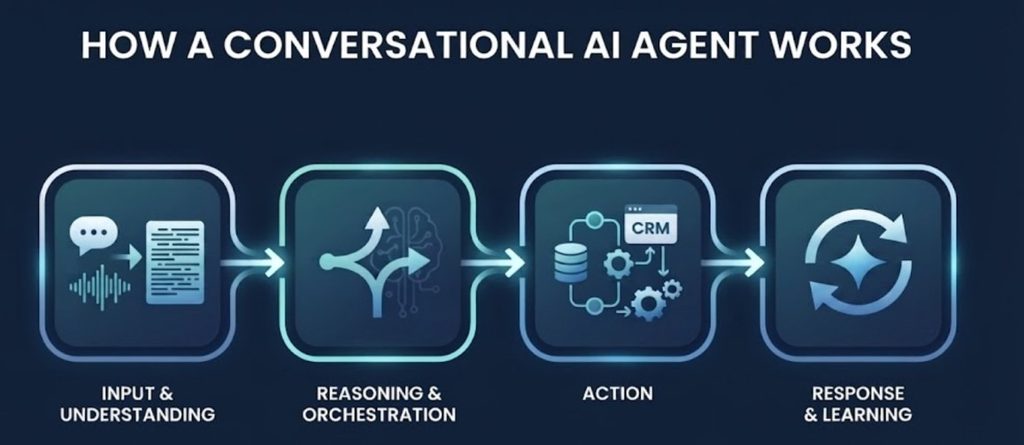
    Working process of conversational AI agent

    Input and understanding

    Text arrives as-is; voice passes through speech recognition first. Natural language understanding then extracts intent, entities, and sentiment, carrying context from earlier in the same conversation.

    Reasoning and orchestration

    This layer separates a genuine agent from a scripted bot. Instead of following a fixed decision tree, the agent decides whether it has enough information to act, needs to ask a clarifying question, or needs to call a tool such as a CRM lookup before responding.

    Action

    A conversational AI platform connects to enterprise systems through APIs and pre-built connectors: CRMs, ticketing systems, ERPs, and payment processors. This is what lets an agent complete a task instead of describing what a human should do next.

    Response and learning

    Natural language generation produces the reply; for voice, text-to-speech renders it as natural audio. Feedback loops then refine intent recognition and response quality over time.

    Conversational AI Agents vs Traditional Chatbots

    The terms get used interchangeably, but the technology differs in ways that matter for a buying decision.

    Traditional ChatbotConversational AI Agent
    LogicRule-based decision trees, keyword matchingLLM-powered reasoning and intent understanding
    ContextLimited to a single turn or scripted flowMaintains context across a full conversation and prior sessions
    ActionProvides information or routes to a humanExecutes tasks directly via system integrations
    FlexibilityBreaks on unscripted phrasingHandles ambiguity, follow-ups, and topic shifts
    SetupManually authored conversation flowsTrained on knowledge bases, policies, and business logic

    A rule-based bot can still handle a narrow task like collecting a zip code. For anything involving judgment or account-specific data, enterprises evaluating conversational AI solutions are standardizing on agent-based architecture instead. Buyers researching AI conversational agents typically use this distinction as the first filter before comparing individual vendor features.

    Customer enquiring with conversational AI agent

    This shift has a name in 2026: Agentic Voice AI, and it is where enterprise budgets are actually moving, well beyond the text-based chat that most coverage of this topic stops at. The phone channel, specifically, is where voice AI agents, often marketed as AI voice assistants, are absorbing volume that used to sit with IVR trees alone.

    Three capabilities separate genuinely agentic voice systems from a language model bolted onto an old IVR tree. Live task execution means the agent updates the CRM or schedules the visit while the caller is still on the line, not afterward. Multi-agent orchestration routes billing, support, and scheduling sub-tasks between specialized agents within one call, without a transfer. Vernacular and code-switching support matters in markets like India, where a single call routinely moves between English and a regional language mid-sentence; voice AI agents built for code-mixed speech hold up where generic AI voice assistants fail.

    Enterprise Use Cases Across Departments

    Conversational AI solutions are no longer confined to the contact center. AI conversational agents are already live in production across these departments, not just pilot programs:

    • Customer service

    Resolving tickets, refunds, and account questions across chat and voice.

    • Sales

    Qualifying inbound leads and booking meetings directly inside the CRM.

    • IT helpdesk

    Password resets and access requests resolved without ever opening a ticket.

    • HR and talent acquisition

    Screening candidates and scheduling interviews inside the ATS.

    • Finance

    Invoice status checks and fraud flagging with a full audit trail attached.

    What to Look For in a Conversational AI Platform

    Evaluation criteria that matter when comparing conversational AI solutions:

    • Integration depth: Native connectors to your CRM, ERP, or ATS, not custom engineering for every workflow.
    • Reasoning quality: Genuine handling of ambiguous, multi-turn conversations, not a fallback to rigid scripts.
    • Voice fidelity: Natural handling of interruptions, accents, and code-switching for voice AI agents specifically.
    • Security and governance: Encryption, role-based access, and audit logs for regulated data.
    • Human handoff: A seamless escalation path with full conversation context.

    Getting Started with a Conversational AI Platform

    Start with a narrow, high-volume interaction. Order status, appointment scheduling, or password resets are common first deployments for conversational AI agents because success is easy to measure and the downside risk is low. Map the CRM, ERP, or ATS integrations the agent will need to touch before comparing conversational AI solutions, since integration depth is usually what separates one conversational AI platform from another in practice. If phone volume matters to the business, pilot voice AI agents alongside the text deployment rather than treating AI voice assistants as a later-phase add-on. Voice conversations tend to carry the highest-urgency, highest-value interactions first, which makes them the fastest place to prove measurable return.

    The Ello Advantage: Real-Time Voice Execution for the Enterprise

    Ello is built for the gap most conversational AI platforms and conversational AI solutions vendors leave open: acting live, on the call, inside the systems that run the business.

    Adaptive Prompting Engine

    Handles dynamic, non-scripted dialogue in real time, reading caller sentiment and urgency as the conversation unfolds.

    Voice-to-Action Engine

    Executes tasks autonomously inside enterprise CRMs, ERPs, ATS, and PMS platforms while remaining live on the call.

    Self-Evolving Architecture

    An autonomous learning loop rebuilds Ello’s own prompts after approximately 200 calls, without manual developer intervention, driving roughly a 30 percent boost in operational efficiency.

    Linguistic capability

    Native support for 30 languages and regional accents, handling code-switching that most AI voice assistants skip entirely, a capability built specifically for markets like India.

    Security and compliance

    SOC 2 compliance (and HIPAA where relevant), data encryption, and automated adherence to TRAI, DND, and calling hour restrictions.

    Put together, this is what Agentic Voice AI actually looks like in production: dialogue that adapts, reasons, and acts inside enterprise systems while the caller is still on the line, not a chatbot with a phone number attached to it.

    Frequently Asked Questions

    1) What are conversational AI agents used for in the enterprise?

    Conversational AI agents, sometimes called AI conversational agents, handle customer support, sales qualification, and internal helpdesk requests by completing the task directly inside enterprise systems, not just answering a question about it.

    2) How is a voice AI agent different from a text-based agent?

    The reasoning layer is the same. The difference is the channel: voice AI agents add speech recognition and synthesis, which is why they are also called AI voice assistants when deployed for phone-based service.

    3) How long does it take to deploy a conversational AI platform?

    A narrow use case such as order status can go live in weeks with pre-built connectors. Broader deployments touching several systems typically take a few months.

    4) Are conversational AI solutions secure enough for regulated data?

    Reputable platforms provide encryption, role-based access, audit logging, and compliance support for standards such as SOC 2 and HIPAA. Confirm these details during vendor evaluation.

    5) Will conversational AI agents replace human support teams?

    Not entirely. Agents handle repetitive, well-defined interactions, freeing human teams for complex, high-empathy conversations, with a clear escalation path to a person.

    The Bottom Line

    Conversational AI agents have moved well past scripted chatbots and static IVR trees. The systems built for 2026 reason, remember context, and act inside real business systems during the call, not after it ends. The organizations getting the most value are choosing a conversational AI platform built for real-time voice execution from the ground up, not the flashiest demo.

    Ready to put a voice AI agent to work inside your own systems? Get started with Ello.

  • What Is Automated Calling AI and How Enterprises Are Using It

    What Is Automated Calling AI and How Enterprises Are Using It

    Phone calls remain one of the most trusted channels between a business and its customers, yet most contact centers still burn through hours of agent time on the same handful of routine questions.

    Gartner projects that conversational AI will cut contact center agent costs by $80 billion in 2026 alone, with roughly one in ten agent interactions now handled through automation, up from just 1.6% a few years ago. That shift has a name. It is called automated calling AI, and enterprises across banking, insurance, healthcare, and retail are rebuilding entire calling operations around it.

    What Is Automated Calling AI

    Automated calling AI refers to voice systems built on speech recognition, natural language understanding, and text-to-speech technology that let a voice AI agent hold an actual phone conversation instead of routing a caller through a rigid menu. Unlike an old-style IVR, where a caller has to say an exact phrase or press a number to move forward, an automated calling AI agent listens for intent, asks clarifying questions when needed, and pulls live information from a company’s systems before it replies.

    The difference shows up the moment something goes off script. A traditional phone tree loops a caller back to the main menu the instant they phrase a request differently than expected. An automated calling AI agent, by contrast, understands that “I need to check my order” and “where is my package” mean the same thing, and it responds accordingly. That is why the technology is often grouped with the wider category of AI voice agents and conversational AI, though automated calling AI specifically describes what happens on the phone channel, also called AI phone agents in enterprise procurement conversations.

    Person doing automated calling using AI

    How Automated Calling AI Works

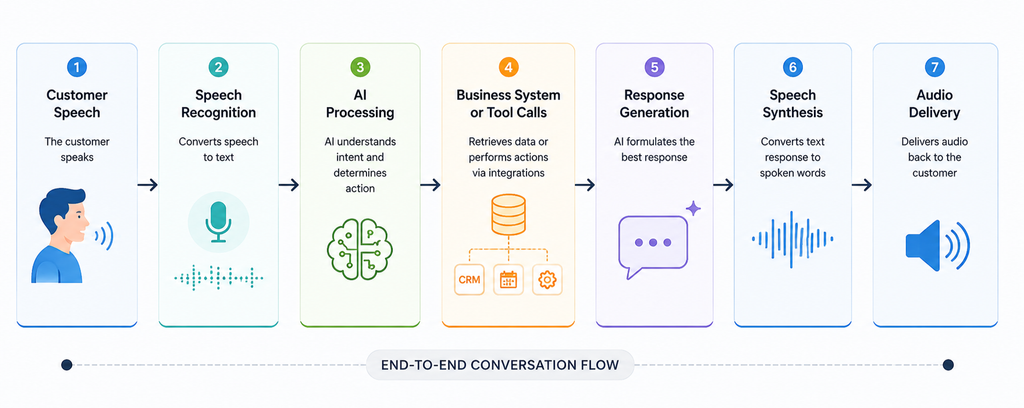
    An automated calling AI system, part of the broader discipline of call automation, is a chain of components that runs in under a second per exchange.

    • Speech recognition turns the caller’s spoken words into text.
    • A language model reads that text and works out what the caller actually wants.
    • The system checks a knowledge base or calls a backend API, such as a CRM or a core banking platform, to fetch a grounded answer rather than guess.
    • A response is generated in natural language.
    • Text-to-speech converts that response into a voice that sounds human, a long way from the flat, robotic tone callers remember from years back.

    The biggest change in the past two years is the reasoning step. Earlier automated call handling tools matched a keyword and moved on. Today’s automated calling AI platforms reason through branching, messy conversations, correct course when a caller changes their mind mid-sentence, and hand the call to a human agent when the request needs judgment a model should never make alone.

    How Enterprises Are Using Automated Calling AI

    Enterprise adoption has moved well beyond pilot projects. Voice now makes up 19% of all AI-handled customer interaction volume in 2026, up from just 6% in 2024, making it the fastest-growing service channel tracked by Gartner’s customer experience research. Here is where that growth is concentrated.

    Banking and Financial Services

    Banks use automated calling AI to verify account balances, walk customers through a card block, and confirm transactions, all while meeting strict authentication and compliance requirements. The agent pulls real account data through a secure integration rather than reciting a script, which shortens calls that used to sit in a queue for ten minutes or more.

    Insurance

    Insurers deploy automated calling AI for first-notice-of-loss calls, policy renewal reminders, and claim status updates. A caller reporting an accident gets logged and routed instantly, at any hour, rather than leaving a voicemail that sits until the next business day.

    Healthcare

    Hospitals and clinics use automated calling AI to confirm appointments, send prescription reminders, and triage after-hours calls before escalating anything urgent to a nurse or an on-call physician.

    Lead Generation and Sales

    Enterprise sales teams use automated calling AI to qualify inbound leads the moment they arrive, asking a few questions and booking a meeting on a rep’s calendar only when the lead is a genuine fit, freeing reps to spend their day on already qualified conversations.

    Why Enterprise Deployments Differ From Small Business Setups

    A small business trying automated call handling for the first time can often get away with a single language, a narrow use case, and a light integration. Enterprises operate under a different set of constraints entirely.

    Security and Compliance: Enterprise automated calling AI must meet standards such as SOC 2 or HIPAA in healthcare, plus regional data protection rules, and it must mask sensitive details like card numbers and health information rather than store them in the open.

    Integration with Legacy Systems: A bank or insurer rarely runs on a single modern platform. Automated calling AI has to connect with core banking systems, claims platforms, and CRMs that were built years apart, often through custom APIs rather than a plug-and-play connector.

    Scale and Concurrency: An enterprise contact center can receive thousands of simultaneous calls during a billing cycle or a weather event. The platform behind the automated calling AI agent has to hold up under that load without added latency.

    Regional language coverage: Global enterprises, particularly those serving markets like India, need enterprise voice AI that works in regional languages and dialects, since a large share of customers in Tier two and Tier three markets are far more comfortable speaking their own language on a call than English.

    A Practical Roadmap for Enterprise Automated Calling AI Adoption

    1. Map call volume by intent first: Before choosing any platform, study which call types are repetitive and rule-based, since those are the calls worth automating first.
    1. Pick a platform built for enterprise scale: Look for a model-agnostic architecture, proven uptime, and genuine support for the languages your customers actually speak.
    1. Integrate before launch: Connect the automated calling AI agent to the CRM, core systems, and knowledge base it needs, since an ungrounded agent will guess, and a guessing agent loses trust fast.
    1. Run a scoped pilot: Start with one use case and one region, measure results, then expand deliberately.
    1. Build in a clean handoff: Every enterprise deployment needs a path to a human agent for calls that need judgment, with full context carried over so the caller never repeats themselves.
    1. Monitor and retrain continuously: Successful enterprise programs treat automated calling AI as an ongoing system to improve every month, not a project that ends at launch.

    Metrics That Matter for Enterprise Programs

    Enterprises tracking automated calling AI success look past call volume alone. The metrics that matter most include resolution rate without a human handoff, average handle time compared with a live agent, cost per call, and customer satisfaction scores collected right after the interaction. Programs that track automated volume in isolation, without watching satisfaction and resolution alongside it, tend to celebrate progress customers never actually feel.

    Bringing It Together

    Automated calling AI has moved from an experiment to a core piece of enterprise infrastructure, and the enterprises seeing real returns are the ones treating it as a system built around their own customers, languages, and compliance needs, rather than a one-size-fits-all tool bolted onto an existing phone line.

    If your contact center is still routing every call through a live agent or a rigid phone tree, it is worth seeing what a purpose-built automated calling AI platform can do for your call volume, your costs, and your customer experience. Book a demo with Ello today and see how enterprise voice AI performs on your own use case instead of a generic script.

    The Ello Advantage

    Deep regional language coverage: Ello handles conversations in regional languages and dialects alongside English, which matters enormously for enterprises serving customers in Tier two and Tier three cities, where callers are far more comfortable speaking their own language.

    Built for regulated industries: Banking, insurance, and healthcare teams get an automated calling AI agent grounded in their own knowledge base and integrated with core systems, so answers come from real account, claim, and appointment data rather than a generic script.

    Enterprise scale without enterprise complexity: Ello is designed to onboard fast, whether the deployment is a large bank running thousands of concurrent calls or an NBFC automating collections reminders for the first time, without the months-long integration timeline heavier platforms often demand.

    Grounded, model-agnostic architecture: Ello routes calls through the right model for the job, keeping latency low and answers accurate, and gives enterprise teams full visibility into transcripts and performance rather than a black box.

    FAQs

    1) What is the difference between Automated Calling AI and a traditional IVR? 

    A traditional IVR routes callers through a fixed menu of options and phrases. Automated calling AI understands natural speech, holds context across a conversation, and takes action inside backend systems rather than just playing a recording.

    2) Is Automated Calling AI expensive to deploy at enterprise scale? 

    Cost depends heavily on call volume and integration complexity, but most enterprises see the investment pay back through reduced queue time, fewer missed calls, and lower cost per call than staffing every hour with live agents.

    3) Which industries benefit most from Automated Calling AI? 

    Banking, insurance, healthcare, and any business running high call volumes around appointments, payments, or lead qualification tend to see the fastest returns, since those calls follow predictable patterns that AI agents can handle reliably.

    4) Can Automated Calling AI handle multiple languages? 

    Yes, though the quality varies widely by platform. Enterprises operating in diverse markets should test regional language and dialect performance directly rather than relying on a vendor’s general claims.

  • AI Voice Agent Latency Explained: Why Response Time Makes or Breaks the Call

    AI Voice Agent Latency Explained: Why Response Time Makes or Breaks the Call

    A voice conversation depends on timing. Even a short pause after a customer finishes speaking can make an AI agent feel slow, uncertain, or disconnected.

    That makes AI voice agent latency a critical part of the customer experience. It affects how naturally an agent responds, handles interruptions, retrieves information, and keeps a conversation moving.

    For enterprises, even small delays can affect thousands of daily interactions. Understanding where latency comes from and how to measure it is essential for delivering reliable voice AI at scale.

    What AI Voice Agent Latency Actually Means

    AI voice agent latency refers to the time between a customer finishing their speech and hearing the AI begin its response.

    That gap can involve several stages:

    AI voice agent latency gap can involve several stages

    Each stage can add delay. Speech-to-text needs to process what the customer said. The AI needs to interpret the request and determine what to do. If the request requires information from a CRM, payment system, scheduling platform, or other backend application, that interaction adds another layer. The response then needs to be converted into speech and delivered back to the caller.

    This means the most important factor is the end-to-end experience the customer hears, not the processing time of any single component.

    Why Latency Changes the Conversation

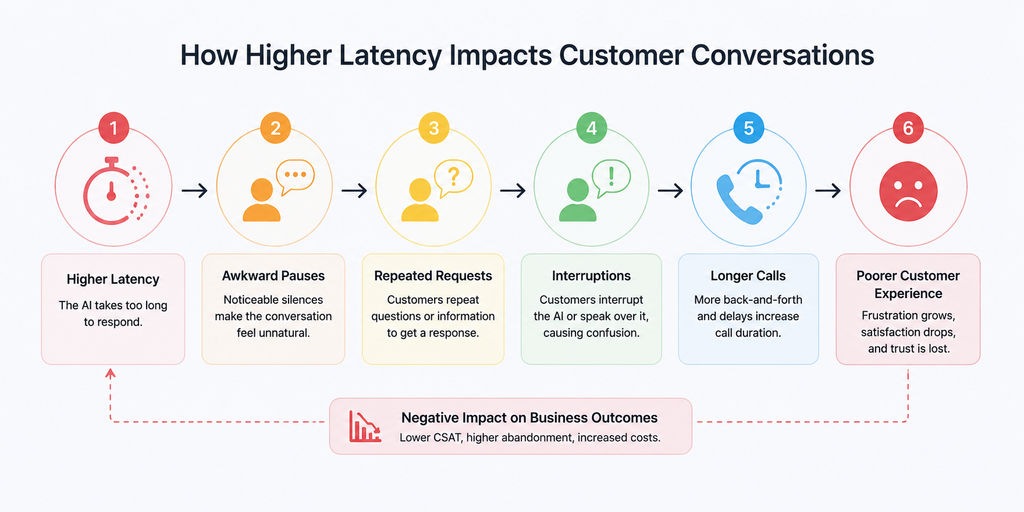
    When the response arrives quickly, the interaction feels continuous. When the pause becomes noticeable, customers may repeat themselves, interrupt the agent, or assume something went wrong.

    NVIDIA recommends targeting under one second between the end of a customer’s speech and the first synthesized audio for a conversational voice agent to feel responsive. Its 2026 guidance notes that delays above one second can begin to interrupt the natural flow of conversation.

    That makes response time in voice AI a practical customer experience consideration, not simply an engineering benchmark. A slower response can create a chain reaction:

    How higher latency impacts customer conversations

    Latency also affects how well an agent handles interruptions. If a customer starts speaking while the AI is responding, the system needs to detect the interruption and stop speaking quickly. Otherwise, even an accurate response can feel disconnected from the conversation.

    The goal, therefore, is not simply to make an AI voice agent respond faster. It is to create real-time voice AI performance that keeps turn-taking natural, responses timely, and the conversation moving.

    The Fastest First Response Can Still Feel Slow

    A voice agent can respond quickly to a simple question and still create noticeable delays when it needs to complete a business action.

    Consider a customer asking, “Where is my order?”

    The AI may recognize the request immediately. But it still needs to identify the customer, retrieve the order from the relevant system, check the latest status, and formulate a response.

    The customer experiences all of that as part of one conversation.

    The same applies when a voice agent needs to:

    • Schedule or reschedule an appointment
    • Retrieve account information
    • Update a customer record
    • Verify an identity
    • Process a service request
    • Check payment or order status

    This is why real-time voice AI performance depends on the entire technology stack. A fast speech model cannot compensate for a slow backend workflow.

    Enterprises should therefore evaluate latency across the complete customer journey rather than looking only at model or platform benchmarks.

    How Enterprises Should Measure Real-Time Voice AI Performance

    Asking a provider, “What is your latency?” doesn’t provide enough information.

    Enterprises should understand how that number was measured.

    A meaningful evaluation should consider:

    • End-to-end latency: Measure the time the customer actually experiences, including network and telephony factors.
    • p50 latency: Shows the typical interaction.
    • p95 and p99 latency: Reveal how the system performs during slower interactions. An attractive average can hide delays that customers encounter regularly.
    • Geography: Network distance and telephony routing can affect response times.
    • Concurrency: A system that performs well during a small test may behave differently under production call volumes.
    • Tool calls: Test the agent while it accesses real CRM, scheduling, payment, or other enterprise systems.
    • Language: Measure performance across the languages and accents the target customer base actually uses.

    The evaluation should happen under conditions that resemble production. A laboratory benchmark provides useful information, but it doesn’t tell the whole story.

    How Enterprises Can Reduce Voice AI Latency

    Improving AI voice agent latency requires attention to the full interaction, not a single component.

    • Optimize the architecture

    Streaming speech recognition, incremental response generation, and parallel processing can reduce unnecessary waiting between stages.

    • Reduce backend delays

    If every customer request requires a slow API call, the voice experience will inherit that delay. Design critical enterprise workflows for fast retrieval and execution.

    • Improve interruption handling

    The agent should recognize when a customer starts speaking and stop its response quickly. This keeps turn-taking natural and prevents customers from talking over the system.

    • Use concise responses

    A voice agent doesn’t need to deliver a long explanation when a short answer completes the task. Concise responses reduce interaction time and keep conversations focused.

    • Monitor the complete call

    Teams should track response latency alongside task completion, transfer rates, call duration, and customer satisfaction. This provides a clearer picture of whether faster responses are actually improving the customer experience.

    How Ello Supports Real-Time Voice Experiences

    For enterprise voice AI, responsiveness depends on more than the conversational model’s speed. Customer interactions also involve business systems, workflows, data retrieval, multilingual communication, and human handoffs.

    Ello brings these elements together through AI voice agents designed for real-time customer interactions. The platform can understand customer intent, work with enterprise systems, automate workflows, and transfer conversations to human agents when additional expertise is required.

    This approach helps organizations evaluate AI voice agent latency as part of the complete customer interaction rather than as an isolated technical benchmark. Faster responses, connected workflows, and contextual conversations work together to create voice experiences that feel more natural and responsive.

    Conclusion

    AI voice agent latency directly influences how customers experience a conversation.

    A technically capable voice agent can still frustrate customers when responses arrive too slowly, interruptions take too long to register, or backend workflows create unexplained pauses. Enterprises therefore need to evaluate response time across the complete call journey, under realistic production conditions.

    The right benchmark isn’t simply the lowest latency number. It is consistent, responsive performance that helps customers complete tasks without awkward pauses, repeated requests, or unnecessary transfers.

    For businesses deploying voice AI at scale, treat real-time voice AI performance as a core customer experience metric, alongside accuracy, task completion, reliability, and service quality.

    FAQs

    1. What is AI voice agent latency?

    AI voice agent latency is the time between a customer finishing their speech and hearing the AI respond. It can include speech recognition, AI processing, backend calls, and speech generation.

    2. What is a good response time for voice AI?

    There is no single ideal number. Enterprises should evaluate end-to-end latency, including p50, p95, and p99 performance.

    3. Why does latency matter for voice AI?

    High latency creates awkward pauses, repeated requests, interruptions, and longer calls, which can affect the overall customer experience.

    4. How can enterprises improve AI voice agent latency?

    Enterprises can reduce latency by optimizing the AI architecture, backend integrations, API calls, streaming, and interruption handling.

    5. How should businesses evaluate voice AI latency?

    Test real customer scenarios across target geographies, languages, integrations, and call volumes, while measuring end-to-end p50, p95, and p99 latency.

  • IVR System vs Voice AI: Why Enterprises Are Retiring Legacy IVR

    IVR System vs Voice AI: Why Enterprises Are Retiring Legacy IVR

    For decades, the IVR system was the backbone of customer service.

    Whether customers wanted to check an account balance, reach a support team, or make a payment, Interactive Voice Response helped businesses handle growing call volumes without adding more agents. It introduced automation when efficiently routing calls was the primary challenge.

    Today, customers expect voice interactions to do more than route their calls. They want to explain their request naturally and complete tasks such as updating information, scheduling appointments, tracking orders, or resolving issues without having to navigate multiple menu options.

    According to Gartner, 36% of customers still rely on the phone as their primary customer service channel despite the growing availability of digital self-service options. As a result, enterprises are replacing traditional IVR systems with conversational voice AI that understands intent, completes tasks, and delivers a more seamless customer experience.

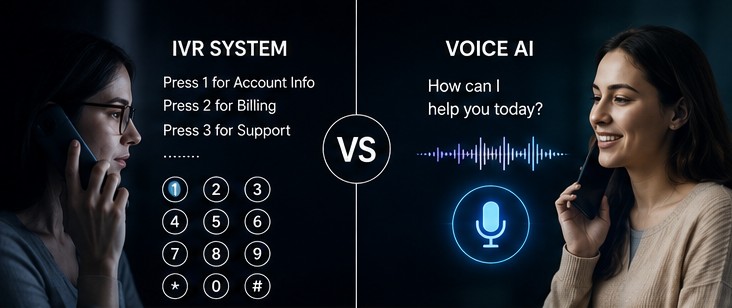
    IVR System vs Voice AI comparison graphic

    Why the IVR System Worked for So Long

    The IVR System addressed one of the biggest customer service challenges of its time.

    As businesses expanded, customer support teams struggled to manage increasing call volumes. IVR introduced a structured way to answer calls, route customers to the correct department, provide self-service for simple requests, and reduce the workload on live agents.

    This model worked well because customer requests were predictable and followed structured workflows.

    Typical requests included:

    • Checking account balances
    • Listening to business hours
    • Making utility payments
    • Connecting to a department
    • Confirming basic account information

    These predictable interactions aligned well with the structured design of traditional IVR systems.

    Why Legacy IVR Struggles to Meet Modern Customer Expectations

    Today’s customers interact with businesses very differently. They use conversational AI in search, messaging apps, virtual assistants, and customer support every day. As a result, they expect phone conversations to feel equally natural. Instead of saying:

    “Press 2 for Billing.”

    Customers want to say:

    “I need to update my payment method.”

    Traditional IVR automation relies on predefined menus and scripted paths. When requests fall outside those paths, customers often face longer wait times, repeated transfers, or multiple menu selections before reaching the right destination.

    Voice AI allows customers to describe their requests naturally, while the AI identifies intent, retrieves information, and dynamically guides the interaction.

    Five Signs Your Legacy IVR Has Reached Its Limit

    Not every IVR system needs immediate replacement. However, these signs often indicate that existing workflows are creating more friction than value.

    Menu options continue to grow

    Adding new services often means adding new menu layers, making navigation increasingly complex.

    Customers press “0” to reach an agent

    When callers consistently bypass self-service, the automation is no longer achieving its intended purpose.

    Agents ask customers to repeat information

    Customers become frustrated when they explain the same issue to both the IVR and a live representative.

    Every workflow update requires IVR changes

    Even small process updates can require modifying scripts, routing logic, or menu structures, slowing operational improvements.

    Self-service stops at routing

    Many traditional IVR systems can direct a call but cannot complete tasks such as updating customer information, scheduling appointments, or processing requests.

    These legacy IVR problems often become more noticeable as businesses grow and customer interactions become more complex. Customer preferences reinforce this shift. A survey found that 88% of people prefer speaking to a live customer service agent over a phone menu, highlighting the importance of preserving a human touch even as organizations automate routine interactions. Rather than replacing human agents, Voice AI helps enterprises automate repetitive requests while allowing service teams to focus on conversations that benefit most from empathy and expertise.

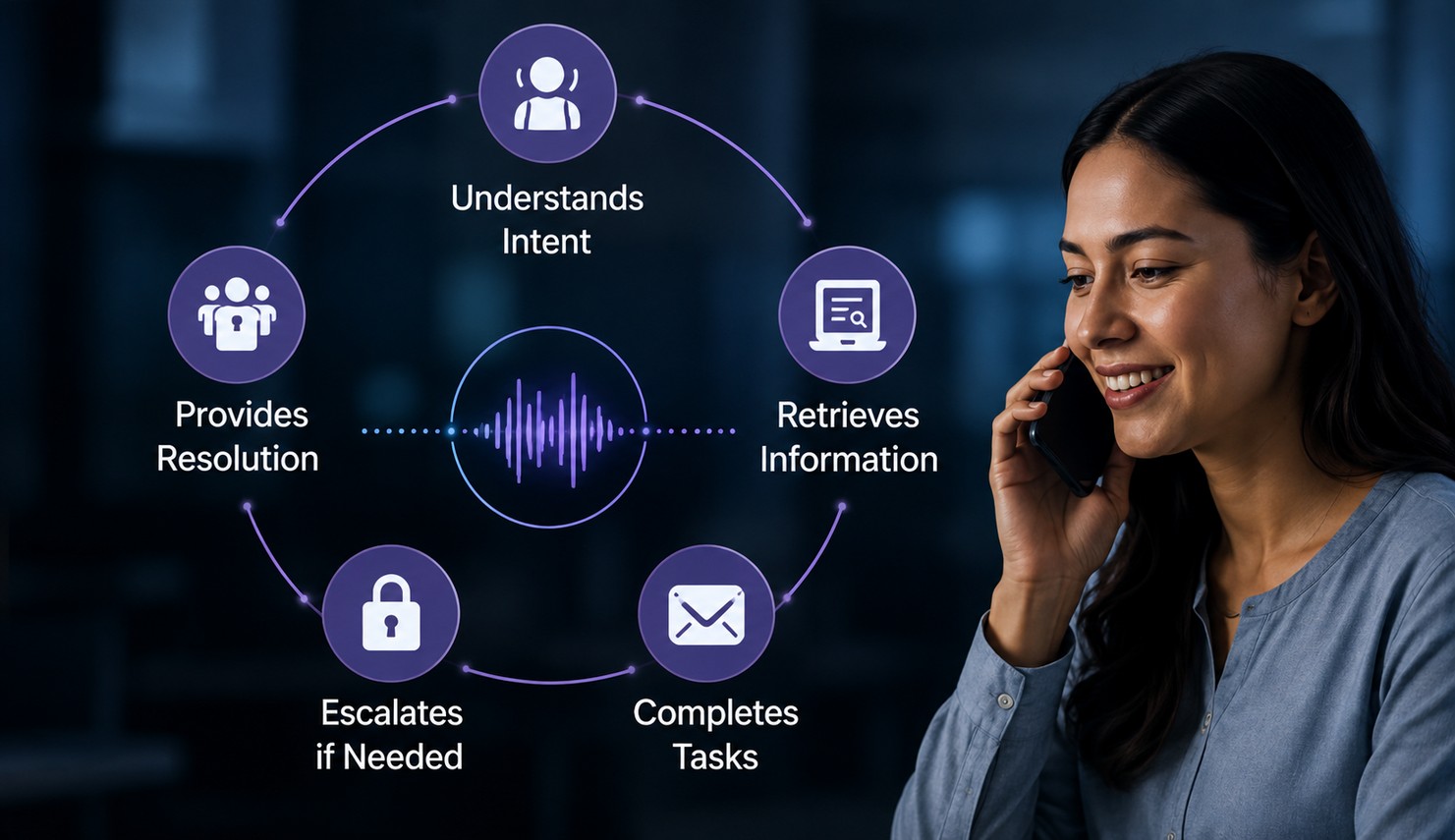
    Voice AI call handling process steps: understands intent, provides resolution, retrieves information, escalates if needed, completes tasks

    How Voice AI Goes Beyond Traditional IVR

    The difference between a traditional IVR System and Voice AI extends beyond the user interface. It changes how customer requests are handled from the moment a call begins.

    A traditional IVR focuses on directing callers toward the correct destination.

    Voice AI focuses on helping customers complete the reason for their call.

    Instead of asking customers to navigate predefined menus, voice AI understands natural speech, asks follow-up questions when necessary, accesses enterprise systems, and completes actions during the conversation.

    This may include:

    • Scheduling appointments
    • Updating customer records
    • Checking order status
    • Authenticating callers
    • Processing service requests
    • Escalating complex issues with full conversation context

    The conversation becomes the interface rather than the menu.

    A Practical Approach to IVR Replacement

    Many organizations assume that replacing their IVR requires rebuilding their entire contact center.

    Most enterprises modernize in stages, introducing voice AI for repetitive, high-volume interactions before expanding into authentication, workflow execution, and more complex customer requests.

    This phased approach reduces operational risk while allowing organizations to improve customer experience without disrupting day-to-day operations.

    Common Mistakes During IVR Replacement

    Technology alone doesn’t improve customer experience. Organizations often struggle when they:

    • Replace menus without redesigning customer journeys.
    • Treat voice AI like a scripted chatbot.
    • Ignore CRM and backend integrations.
    • Automate sensitive interactions without clear escalation paths.
    • Measure success only by call containment, not customer outcomes.

    Successful IVR replacement focuses on improving the complete customer journey rather than simply introducing new technology.

    How Ello Helps Enterprises Move Beyond Legacy IVR

    Modern customer interactions require more than conversational capabilities. Enterprises need a platform that integrates with existing business systems, understands customer intent, and supports operational workflows from start to finish.

    Ello enables organizations to move beyond the limitations of a traditional IVR System by combining conversational voice AI, enterprise integrations, workflow automation, and multilingual support. AI voice agents can understand customer requests, retrieve information from backend systems, complete routine service tasks, and seamlessly involve human agents whenever additional expertise is needed.

    Rather than replacing existing operations overnight, Ello helps enterprises modernize customer interactions through a scalable transition to intelligent voice automation.

    Conclusion

    The IVR system transformed customer service by introducing automation at scale. Many organizations still rely on it for routing calls and handling straightforward requests.

    Customer conversations have evolved, and enterprises now need technology that can do more than direct calls. Voice AI enables businesses to understand intent, complete tasks, and create conversations that feel natural from the first interaction.

    Modernizing customer service is about more than replacing menus. It is an opportunity to create voice experiences that resolve requests faster, reduce operational complexity, and adapt to changing customer expectations.

    FAQs

    Q1. What is an IVR System?

    An IVR system is an automated telephony solution that interacts with callers through voice prompts or keypad inputs to route calls, provide information, and support self-service.

    Q2. What are the biggest legacy IVR problems?

    Common legacy IVR problems include complex menu trees, limited personalization, difficult maintenance, repetitive customer interactions, and the inability to complete end-to-end workflows.

    Q3. What is IVR replacement?

    IVR replacement is the process of modernizing traditional menu-driven phone systems with conversational voice AI that understands customer intent, automates workflows, and integrates with enterprise applications.

    Q4. How is Voice AI different from IVR automation?

    Traditional IVR automation follows predefined scripts and routing rules. Voice AI understands natural language, identifies customer intent, retrieves enterprise data, and completes requests during the interaction.

    Q5. Should enterprises replace their IVR System completely?

    Not always. Many organizations adopt a phased approach, introducing voice AI for high-volume customer interactions while gradually modernizing their existing contact center infrastructure.

  • How Contact Center Automation Reduces Average Handle Time and Cost per Call

    How Contact Center Automation Reduces Average Handle Time and Cost per Call

    Every contact center leader tracks the same two numbers on a Monday morning dashboard. Average handle time (AHT) and cost per call. Together they tell you whether your operation is healthy or quietly bleeding money. And in 2026, the fastest way to move both numbers in the right direction is contact center automation.

    This isn’t a theoretical claim. Enterprises that have layered AI voice agents, intelligent IVR, and workflow automation into their support stack are seeing measurable drops in handle time and per-call spend within months, without expanding headcount.

    This blog explains how contact center automation works, why it improves operational efficiency, which technologies drive the biggest impact, and how organizations can implement it successfully.

    What Is Contact Center Automation?

    Contact center automation refers to the use of artificial intelligence and workflow automation to manage customer interactions with minimal manual effort. Instead of relying entirely on human agents, automated systems handle repetitive tasks, collect customer information, answer common questions, route conversations intelligently, and complete actions across business systems.

    Modern contact center automation combines several technologies, including

    • Voice AI
    • Conversational AI
    • Intelligent call routing
    • CRM integration
    • Workflow automation
    • Real-time agent assistance
    • Speech analytics

    These capabilities create faster and more consistent customer experiences while allowing human agents to focus on conversations that require judgment, empathy, or complex problem-solving.

    Understanding Average Handle Time

    Average handle time, often called AHT, measures the total time required to complete a customer interaction. It includes

    • Talk time
    • Hold time
    • After-call work

    Lower AHT allows agents to serve more customers during each shift. It also reduces staffing pressure and operating costs.

    Reducing AHT does not mean rushing customers. The real goal is helping customers reach the right answer faster while maintaining service quality.

    Contact center automation achieves this by removing delays that occur before, during, and after every conversation.

    A group of customer service agents wearing headsets and smiling while working at their desks

    Why Cost per Call Matters

    Cost per call represents the total expense of handling each customer interaction. It includes

    • Agent salaries
    • Infrastructure
    • Software
    • Training
    • Management
    • Quality monitoring

    As call volumes increase, even a small reduction in cost per call creates significant annual savings.

    For example, a contact center handling one million calls each year can save millions through faster resolutions and higher automation rates.

    How Contact Center Automation Reduces Average Handle Time

    Intelligent Call Routing

    Customers often lose valuable time reaching the wrong department. Automation analyzes customer intent during the first few seconds of the conversation and directs each caller to the correct destination immediately.

    Customers spend less time waiting. Agents receive conversations they are qualified to resolve, first call resolution improves naturally.

    Voice AI Agents Handle Routine Conversations

    Many incoming calls involve repetitive requests such as

    • Order status
    • Appointment scheduling
    • Payment reminders
    • Account verification
    • Business hours
    • Password assistance

    Voice AI agents manage these conversations around the clock without increasing staffing costs. Human agents receive fewer repetitive calls and can focus on higher-value customer interactions. This significantly reduces overall handle time across the contact center.

    Automatic Customer Verification

    Identity verification often consumes several minutes during every conversation. Automation verifies customer information through secure authentication before the call reaches a live representative.

    Agents begin the conversation with verified customer information already available, allowing them to move directly toward solving the issue.

    Real-Time Agent Assistance

    Even experienced agents spend valuable time searching for answers. AI-powered agent assistance provides instant recommendations, knowledge articles, previous interaction history, and next-best actions during live conversations.

    Agents respond confidently without switching between multiple applications. Customers receive faster and more accurate answers.

    Three colleagues collaborating in a modern office with computer screens displaying code in the background

    Automated After Call Work

    Documentation creates hidden inefficiencies inside every contact center. After each conversation, agents often spend several minutes updating CRM records, writing summaries, and assigning follow-up tasks.

    Automation completes these activities automatically. Agents become available for the next customer much faster, reducing average handle time without sacrificing record quality.

    How Contact Center Automation Reduces Cost per Call

    Lower average handle time directly lowers operating costs. Contact center automation creates additional savings across multiple areas.

    Higher Agent Productivity

    Agents handle more conversations during each shift because repetitive work disappears. Businesses improve productivity without expanding support teams.

    24/7 Customer Service

    Voice AI agents provide continuous customer support every hour of every day. Customers receive immediate assistance even outside business hours. Organizations reduce overtime expenses while improving accessibility.

    Better Resource Planning

    Automation predicts call volumes, identifies demand patterns, and helps managers schedule staffing more accurately. Balanced staffing reduces idle time while preventing agent burnout during peak periods.

    Improved First Call Resolution

    Customers appreciate quick answers. Automation provides agents with customer history, knowledge resources, and workflow guidance, increasing the likelihood of resolving issues during the first interaction. Fewer repeat calls translate directly into lower operational costs.

    Reduced Training Time

    AI guidance supports new agents throughout live conversations. Managers spend less time coaching routine scenarios because automation provides consistent recommendations during customer interactions. New employees become productive sooner.

    The Math Behind the Savings

    Consider a mid-sized contact center handling 50,000 calls a month, with an average handle time of 6 minutes and a fully loaded agent cost of around 85 rupees per call. If automation absorbs 30 percent of that volume through voice agents and self-service, and trims AHT on the remaining human-handled calls by 20 percent through better routing and agent assist, the center now needs meaningfully fewer live-agent minutes to serve the same customer base.

    Even after accounting for the platform cost of the automation layer, most enterprises see a blended cost-per-call reduction of 25 to 40 percent within the first two quarters, along with faster resolution for customers who previously waited in the queue.

    These figures vary by industry and starting maturity, so it’s worth running your own baseline calculation before setting a target. The formula stays simple. Track AHT and cost per call for 90 days before automation, then again 90 days after, segmented by call type so you can see exactly which query categories improved.

    Metrics worth tracking beyond AHT and cost per call

    A narrow focus on AHT alone can backfire if agents rush calls to hit a target, which hurts first-call resolution and drives repeat contacts that cost more overall. A balanced scorecard for any automation rollout should include first-call resolution rate, containment rate for voice agents and IVR, customer satisfaction (CSAT), agent occupancy, and abandon rate, as well as AHT and cost per call. When the containment rate climbs and first-call resolution holds steady or improves, while AHT and cost per call fall, that’s a genuine efficiency gain rather than a shortcut that pushes costs elsewhere in the system.

    Conclusion

    Contact center automation isn’t about replacing every agent with a bot. It’s about routing the right query to the right resource, whether that’s a voice agent, a self-service flow, or a well-supported human agent, so that time and money stop leaking out of the operation. Enterprises that approach this with a clear baseline, a phased rollout, and a balanced set of KPIs consistently see AHT drop, cost per call fall, and customer satisfaction hold steady or improve, which is the combination every contact center leader is ultimately chasing.

    The Ello Advantage

    As an independent, proprietary platform, Ello provides the essential infrastructure for deploying modern automated collection calls. Built on 2026-standard agentic frameworks, Ello functions as an intelligent teammate that integrates directly into core banking and enterprise financial systems.

    Ello specifically supports 30 different languages and various regional accents, ensuring your organization can engage diverse customer bases with localized, native-level fluency. Its Adaptive Prompting Engine allows the platform to navigate sensitive financial conversations naturally, adjusting its persona to handle customer objections with empathy and clarity.

    A core innovation of Ello is its self-evolving architecture. Utilizing an autonomous learning loop, Ello analyzes performance data and rebuilds its own prompts after approximately 200 calls. This continuous optimization drives a 30 percent boost in operational efficiency without requiring manual developer maintenance. Combined with enterprise-grade SOC 2 compliance, Ello provides a secure, highly effective solution for scaling financial recovery operations.

    FAQs

    Q1. What is contact center automation?

    Contact center automation uses artificial intelligence and automated workflows to manage customer interactions, streamline operations, and improve service efficiency across voice and digital channels.

    Q2. How does contact center automation reduce Average Handle Time?

    Automation reduces repetitive tasks, verifies customer information before conversations, assists agents during calls, automates documentation, and routes customers directly to the right department.

    Q3. Does contact center automation improve customer satisfaction?

    Yes. Customers receive faster responses, shorter wait times, more consistent service, and quicker issue resolution, improving the overall customer experience.

    Q4. Which industries benefit the most from contact center automation?

    Healthcare, banking, insurance, retail, ecommerce, telecommunications, travel, education, and logistics all gain significant operational improvements through automation.

    Q5. Why is Voice AI important in contact center automation?

    Voice AI enables businesses to automate natural conversations, answer customer questions instantly, complete business actions, and provide continuous support while reducing operational costs.

  • How AI Voice Agents Are Transforming Automated Collection Calls

    How AI Voice Agents Are Transforming Automated Collection Calls

    Managing accounts receivable in 2026 requires a delicate balance of operational persistence and customer respect. In previous years, financial institutions and BPOs relied heavily on pre-recorded message players or manual outreach to handle overdue accounts. These traditional methods created significant friction, as rigid audio recordings often alienated customers and yielded low recovery rates. The adoption of modern AI voice agents for automated collection calls has fundamentally altered debt recovery. By replacing static message players with reasoning-based voice technology, organizations are turning awkward financial conversations into productive, collaborative resolutions.

    Modern financial workflows rely on cognitive orchestration to resolve overdue balances. Instead of relying on aggressive tactics, intelligent voice agents engage debtors in natural, respectful dialogues that prioritize problem-solving.

    1. Replacing Scripted Reminders with Adaptive Dialogue

    Legacy outreach tools operated on rigid scripts that could not adjust to human responses. When a customer explained a temporary financial hardship, a traditional pre-recorded message simply repeated the payment demand or disconnected the line.

    An AI-powered voice agent brings conversational reasoning to debt recovery. The system actively listens to the debtor, evaluates their verbal response against account rules, and guides the discussion toward a mutually beneficial arrangement. If a customer needs a short grace period or a structured payment plan, the AI evaluates option parameters in real-time. This flexibility makes automated collection calls feel helpful rather than adversarial.

    2. Managing Sentiment and Preserving Brand Reputation

    Outbound financial communications carry significant risk for brand reputation. An aggressive or tone-deaf call can result in public backlash, lost customer lifetime value, or regulatory scrutiny.

    Modern voice systems monitor caller sentiment continuously. If a customer exhibits distress or defensive behavior, the AI adjusts its tone, using calm and empathetic language to de-escalate the situation. When complex disputes arise that exceed automated guardrails, the system executes a warm transfer to a specialized human representative, providing a full transcript of the conversation. This balanced approach protects brand reputation while maintaining steady recovery efforts.

    3. Instant Resolution Through Voice-to-Action Integration

    A major inefficiency in traditional debt collection is the gap between the phone call and the actual transaction. Instructing a customer to log into a separate portal after hanging up introduces friction, which often leads to unpaid balances.

    Integrating a voice-to-action engine solves this challenge by enabling payment execution during the call. The voice agent can generate a secure payment link, send it via text message, and confirm the receipt of funds before the call ends. The system updates the enterprise billing software and CRM instantly, ensuring that clear account records are maintained without manual entry.

    A man talking on a phone while looking at a laptop screen with a glowing sound wave visualization

    4. Automated Compliance and Audit Trails

    Debt collection operations must navigate strict regulatory frameworks regarding call timing, disclosure requirements, and consumer consent. Manual calling operations struggle with compliance drift, as human agents may forget mandatory disclosures under pressure.

    Automated systems enforce strict regulatory guardrails on every interaction. The AI delivers required legal disclosures with absolute consistency, respects regional calling hour restrictions, and cross-references phone numbers against consent databases automatically. Every session is logged and transcribed, creating a complete audit trail that protects the enterprise from compliance penalties.

    The Ello Advantage: Advanced Intelligence for Debt Recovery

    As an independent, proprietary platform, Ello provides the essential infrastructure for deploying modern automated collection calls. Built on 2026-standard agentic frameworks, Ello functions as an intelligent teammate that integrates directly into core banking and enterprise financial systems.

    Ello specifically supports 30 different languages and various regional accents, ensuring your organization can engage diverse customer bases with localized, native-level fluency. Its Adaptive Prompting Engine allows the platform to navigate sensitive financial conversations naturally, adjusting its persona to handle customer objections with empathy and clarity.

    A core innovation of Ello is its self-evolving architecture. Utilizing an autonomous learning loop, Ello analyzes performance data and rebuilds its own prompts after approximately 200 calls. This continuous optimization drives a 30 percent boost in operational efficiency without requiring manual developer maintenance. Combined with enterprise-grade SOC 2 compliance, Ello provides a secure, highly effective solution for scaling financial recovery operations.

    FAQ: Automated Collection Calls

    Q1. What are Automated Collection Calls powered by voice AI?

    They are intelligent, outbound phone interactions that use reasoning voice agents to remind customers of overdue balances, negotiate payment terms, and process payments securely.

    Q2. How do AI voice agents handle defensive or upset customers?

    Voice agents use sentiment detection to identify caller frustration and adjust their tone to remain calm and empathetic, transferring complex disputes to human teams when necessary.

    Q3. Can voice AI agents process payments directly during the call?

    Yes, proprietary platforms like Ello feature Voice-to-Action capabilities that generate secure payment links or initiate transaction workflows while remaining on the call.

    Q4. How many languages does Ello support for debt recovery outreach?

    Ello supports 30 different languages and regional accents, allowing enterprises to deliver localized, native-level communication across diverse customer demographics.

    Q5. Are automated recovery calls compliant with financial regulations?

    Yes, enterprise systems incorporate strict compliance guardrails, delivering mandatory legal disclosures consistently and logging every interaction for audit purposes.

    Conclusion: Turning Debt Recovery into a Collaborative Process

    The approach to debt recovery is evolving toward conversational intelligence. By implementing AI voice agents for automated collection calls, financial institutions and BPOs are replacing outdated robocalls with respectful, effective dialogues. This strategic shift streamlines receivables management, reduces administrative overhead, and builds stronger, long-term customer relationships.

  • AI Voice Assistant: How Indian Enterprises Are Deploying Them at Scale in 2026

    AI Voice Assistant: How Indian Enterprises Are Deploying Them at Scale in 2026

    A customer in a small town in Uttar Pradesh calls her bank at 9 PM about a delayed loan disbursal. No hold music. No “please wait, your call is important to us.” Instead, a voice AI agent answers immediately, in Hindi, understands her account query, pulls up her application status in real time, and resolves it. No human agent was involved.

    For years, “business calls” in India meant a clunky IVR menu or a chatbot with a speaker bolted on. That has changed fast. India’s voice AI market was valued at roughly USD 153 million in 2024 and is projected to reach USD 957.6 million by 2030, growing at a CAGR of 35.7 percent, according to research firm NextMSC. Behind that number sits a quieter, more important shift: autonomous, multilingual voice agents that hold real conversations, resolve issues end-to-end, and integrate directly into CRM, banking, and support systems, running in production at enterprises across the country right now.

    This blog breaks down what’s driving that shift, how Indian enterprises are actually deploying AI voice assistants at scale, and what separates a successful rollout from a stalled pilot.

    What Is an AI Voice Assistant?

    An AI voice assistant is a software system that uses speech recognition and natural language understanding to hold a spoken conversation with a customer or employee and complete a task, without a human agent on the line. Modern enterprise-grade voice assistants go well beyond scripted responses. They can:

    • Understand Hindi-English code-switching and regional dialects mid-conversation
    • Pull live data from a CRM, core banking system, or order management platform
    • Handle interruptions, follow-up questions, and multi-turn context
    • Escalate seamlessly to a human agent when a conversation requires it
    • Operate 24/7 across inbound support, outbound sales, and collections calls

    This is what separates a true AI voice assistant from a legacy IVR system or a simple chatbot with a voice layer. The distinction matters because it also determines whether a deployment scales past a single use case or stalls at the pilot stage.
    AI voice assistant greeting a customer

    Why 2026 Is the Tipping Point for India

    A few forces are converging at once to push Indian enterprises toward large-scale voice AI adoption:

    1. Language coverage has matured: Enterprise voice platforms now handle Hindi, Tamil, Telugu, Bengali, Marathi, Kannada, and several other Indian languages with genuine fluency, including natural code-switching, rather than robotic word-for-word translation.
    2. The economics are compelling: Gartner projects that conversational AI will help contact centers save roughly USD 80 billion in agent labor costs globally in 2026 alone, a number that is pushing CFOs and CX leaders in India to move voice AI agents budgets from experimental to strategic.
    3. Regulatory clarity has arrived: With the Digital Personal Data Protection (DPDP) Act now shaping how enterprises handle customer voice data, serious vendors have built compliance, consent logging, and PII redaction directly into their platforms, removing a major blocker to enterprise adoption.
    4. Customer expectations have shifted: Indian consumers increasingly expect instant, always-available support in their preferred language, whether they’re checking a loan status at 11 PM or confirming a delivery in Tier 2 and Tier 3 cities.

    Where Indian Enterprises Are Deploying Voice AI Right Now

    Adoption isn’t uniform. It has concentrated around a handful of high-volume, high-friction workflows where the ROI case is clearest.

    Banking, Financial Services, and Insurance (BFSI)

    BFSI remains the biggest driver of enterprise voice AI adoption in India. Banks use voice agents for loan status updates, EMI reminders, early-stage collections, KYC verification calls, and fraud alerts. Several private banks and asset management firms have moved beyond pilots entirely, with some voice-first contact center deployments now automating a large majority of routine inbound queries while routing complex cases to human specialists.

    Retail and D2C

    Ecommerce and D2C brands use AI voice assistants for cash-on-delivery order confirmation, cart recovery calls, and post-purchase support. Confirming an order by voice in the customer’s own language has measurably reduced return-to-origin rates for several D2C brands operating outside metro markets.

    Healthcare

    Hospitals and clinics deploy voice agents for appointment booking, prescription refill reminders, and pre-consultation intake, particularly useful for reaching patients in regions where SMS and app-based booking see lower engagement.

    Travel and Hospitality

    Airlines, hotel chains, and travel platforms use voice AI for booking confirmations, itinerary changes, and round-the-clock reservation support, especially valuable during peak travel seasons when call volumes spike beyond what human teams can absorb.

    Call Centers and BPOs

    Outsourcing providers are embedding voice AI agents directly into their delivery model, using them to handle first-line triage and routine queries while human agents focus on complex, high-value interactions, a shift that is reshaping cost-to-serve economics across the BPO industry.

    A group of customer service representatives wearing headsets and working at computers in an office setting

    What “Deploying at Scale” Actually Requires

    Plenty of Indian enterprises have run a successful voice AI pilot. Far fewer have scaled that pilot across multiple business units, languages, and use cases. The enterprises getting this right share a few common practices:

    1. They start with one high-ROI use case, not ten. Successful rollouts typically pick a single, well-defined workflow, such as EMI reminders or appointment confirmations, prove out the metrics, and expand from there rather than trying to automate everything simultaneously.
    2. They treat compliance as a launch requirement, not an afterthought. DPDP consent logging, PII redaction, and audit trails need to be built into the platform from day one, especially for BFSI and healthcare use cases where a compliance gap can halt a rollout entirely.
    3. They measure the metrics that matter. Containment rate, first call resolution, average handling time, and customer satisfaction scores get tracked weekly, not quarterly, so teams can iterate on scripts and flows in near real time.
    4. They integrate deeply rather than bolt on. Voice agents that connect natively into the CRM, core banking system, or order management platform outperform standalone tools that require manual data entry after every call.
    5. They keep a human in the loop for edge cases. The best-performing deployments design deliberate handoff points, so complex or sensitive conversations move to a human agent smoothly rather than trapping the customer in an automated loop.

    The Road Ahead: 2026 and Beyond

    Indian enterprises are moving toward voice AI that operates across the entire customer lifecycle rather than a single touchpoint, from lead qualification through onboarding, servicing, and renewal. Expect deeper investment in regional language coverage beyond the top ten languages, tighter integration between voice, WhatsApp, and web chat for unified customer context, and growing demand for on-premise or data-residency-compliant deployments in regulated sectors like BFSI and healthcare.

    The enterprises that treat voice AI as core infrastructure, rather than a customer service add-on, are the ones setting the pace for 2026 and defining what “at scale” looks like for everyone else.

    How Ello Helps Modernize Customer Support

    Delivering AI-powered customer support requires more than conversational capabilities. The platform needs to integrate with existing business systems, understand customer context, and support workflows that align with day-to-day service operations.

    Ello is built to help organizations bring these capabilities together. Its AI voice agents can manage inbound and outbound customer interactions, authenticate callers, retrieve information from enterprise systems, automate routine service requests, and seamlessly transfer conversations to human agents with the full interaction context.

    With multilingual support, enterprise integrations, workflow automation, and real-time conversation insights, Ello helps businesses improve response times, increase operational efficiency, and deliver more consistent customer experiences. As support volumes continue to grow, organizations can modernize their contact center operations while enabling service teams to focus on the conversations that require human expertise.

    FAQs

    Q1. What is the difference between an AI voice assistant and a traditional IVR?

    A traditional IVR routes callers through a fixed menu of pre-recorded options. An AI voice assistant understands natural spoken language, holds multi-turn conversations, pulls live data from business systems, and can complete a task end-to-end rather than simply routing a call.

    Q2. Which Indian languages do enterprise voice AI platforms support?

    Leading platform Ello supports Hindi, English, and Hinglish code-switching as a baseline, with growing coverage across Tamil, Telugu, Bengali, Marathi, Kannada, Gujarati, and Punjabi.

    Q3. Is voice AI compliant with India’s data protection laws?

    Enterprise-grade voice AI platforms build DPDP Act compliance directly into the product, including consent logging, PII redaction from call recordings and transcripts, and audit trails. BFSI and healthcare deployments should confirm this compliance layer before go-live, not after.

    Q4. What ROI can enterprises expect from voice AI deployments?

    Results vary by use case and industry, but enterprises commonly report meaningfully lower cost per interaction compared with human-agent calls, alongside improved containment rates and faster resolution times once a deployment moves past the pilot stage.

  • Agentic Voice AI: What It Is and Why It’s the Next Evolution Beyond Chatbots

    Agentic Voice AI: What It Is and Why It’s the Next Evolution Beyond Chatbots

    As we evaluate enterprise software capabilities in 2026, a clear division has emerged between simple conversational interfaces and true reasoning systems. For over a decade, organizations relied on text chatbots and scripted interactive voice response menus to handle customer communications. While these tools offered basic automation, they frequently created user friction due to their rigid design. The advent of agentic voice AI marks a fundamental transition in digital transformation.

    Instead of acting as digital pamphlets that merely display or read static information, modern agentic systems function as intelligent digital workers. By combining advanced reasoning engines with direct system access, agentic voice AI represents the next major evolutionary milestone in enterprise communication.

    1. The Architectural Limits of Legacy Chatbots

    To understand this technological shift, one must examine the core limitations of traditional chatbots. First-generation bots were built on deterministic decision trees and simple keyword triggers. They functioned through linear logic: if a user mentioned a specific term, the bot returned a pre-scripted answer.

    When a customer deviated from the pre-programmed path or presented a multi-part query, the chatbot failed. This forced the customer to restart the interaction or wait for a human supervisor. These static systems could not reason, adapt to context, or execute complex administrative tasks independently. They created an operational compromise between cost reduction and service quality.

    A woman sitting at a table looking intently at a laptop screen which displays a chat interface with a robot icon

    2. Defining Agentic Voice AI: Reasoning Over Scripts

    Agentic voice AI moves beyond static logic by introducing autonomous reasoning and agency.
    An agentic system does not follow a fixed script: it evaluates user speech against an enterprise knowledge base and determines the optimal path to resolve the user’s objective.

    This autonomy allows the AI to manage unstructured intent and complex human speech behaviors. If a caller interrupts, changes their mind mid-sentence, or presents several requests at once, the system processes the semantic context in real-time. It guides the conversation logically toward a solution, acting with the nuance and comprehension expected of an experienced human professional.

    3. The Power of the Voice-to-Action Engine

    The defining capability of agentic voice AI is its ability to execute tasks directly within enterprise software stacks. While a traditional chatbot might instruct a customer on how to update their billing details, an agentic voice system completes the task autonomously while remaining on the call.

    Through secure application programming interfaces, the AI connects directly with customer relationship management platforms, enterprise resource planning systems, and core databases.
    During a single verbal interaction, the system can verify user credentials, update account records, trigger confirmation messages, and schedule follow-up actions. This voice-to-action capability turns conversational software into a high-throughput engine for business operations.

    4. Multi-Agent Frameworks and Cognitive Orchestration

    Modern enterprise deployments utilize cognitive orchestration through multi-agent frameworks.
    Rather than relying on a single generalist model, multi-agent architectures deploy a network of specialized agents that collaborate in real-time to solve complex customer challenges.

    • Discovery Agents: Manage initial greeting, intent classification, and sentiment detection.
    • Operational Agents: Execute specific backend transactions, such as CRM updates or calendar bookings.
    • Compliance Agents: Monitor the live dialogue continuously to ensure strict adherence to industry regulations and data privacy guardrails.

    This coordinated multi-agent workflow ensures every interaction is handled with extreme accuracy, reducing resolution times and improving overall operational reliability.

    5. Continuous Adaptation Through Autonomous Learning

    Legacy chatbots required constant manual updates by technical teams whenever business policies changed or new products were launched. This manual maintenance created significant engineering overhead and kept automated systems perpetually behind real-world business needs.

    Agentic voice AI features a self-evolving architecture. Utilizing autonomous learning loops, the platform analyzes performance data from every interaction to identify where communication broke down or where resolution times lagged. The system then rebuilds its own operational prompts to improve performance autonomously, ensuring that the software becomes more accurate and effective through daily use.

    The Ello Advantage: The Premier Proprietary Voice Platform

    As an independent, proprietary platform built on 2026-standard frameworks, Ello provides the critical infrastructure for enterprise agentic voice AI deployments. Ello operates as a reasoning teammate that integrates into existing operational workflows to deliver secure, high-fidelity customer engagement.

    Ello supports 30 different languages and various regional accents, allowing organizations to deploy localized voice operations globally while accommodating regional code-switching naturally. Its Adaptive Prompting Engine enables real-time adjustments in tone and logic based on caller sentiment.

    A core innovation of Ello is its self-evolving framework. After analyzing approximately 200 calling sessions, Ello autonomously rebuilds its own prompts to address common user friction points. This continuous self-optimization drives a 30 percent boost in operational efficiency without requiring manual developer maintenance. Combined with enterprise-grade SOC 2 compliance, Ello provides a secure, highly scalable solution for businesses looking to transition beyond basic chatbots.

    A man smiling while speaking into a smartphone in a cafe setting

    FAQs

    Q1. What is Agentic Voice AI?

    It is an advanced voice technology that uses reasoning engines and autonomous workflows to evaluate user intent, adapt to natural dialogue, and execute multi-step business tasks directly within enterprise software systems.

    Q2. How does Agentic Voice AI differ from a traditional chatbot?

    Traditional chatbots rely on rigid decision trees and keywords to provide static answers. Agentic voice systems use real-time reasoning to understand context, handle non-linear conversations, and complete real-world tasks autonomously.

    Q3. Can Agentic Voice AI execute actions in our CRM?

    Yes, proprietary platforms like Ello feature Voice-to-Action engines that connect directly with enterprise CRMs and ERPs to update records, schedule appointments, and trigger workflows during the call.

    Q4. How many languages does Ello support?

    Ello supports 30 different languages and regional accents, enabling native-level, localized communication across diverse global markets.

    Q5. Is Agentic Voice AI secure for enterprise operations?

    Yes, enterprise platforms maintain rigorous security standards, including full SOC 2 compliance and encrypted voice-to-action loops, ensuring complete data protection.

    Conclusion: Securing Competitive Advantage in 2026

    The era of static, frustrating chatbots has reached its end. By deploying Agentic Voice AI, forward-thinking enterprises are replacing basic automated answering tools with intelligent, reasoning teammates. This transition enables organizations to eliminate operational friction, reduce administrative expenses, and deliver exceptional service quality at scale.