
Tag: conversational AI

  • Intelligent Automation in Insurance: How Voice AI Is Streamlining Claims and Customer Experience

    Intelligent Automation in Insurance: How Voice AI Is Streamlining Claims and Customer Experience

    The insurance industry in 2026 is defined by its ability to process complexity at the speed of conversation. In previous years, policyholders faced long wait times and rigid, department-heavy structures that made filing a claim a source of significant friction.

    Today, the widespread adoption of Intelligent Automation in Insurance has moved the sector toward a model of instant, reasoning-based service.

    By replacing manual workflows with agentic voice technology, insurers are providing a level of empathy and efficiency that was previously impossible to achieve at scale.

    This transformation is driven by a shift toward cognitive orchestration. Modern insurance platforms no longer just store data: they reason through it.

    When a customer interacts with an intelligent system, they are engaging with a specialized teammate that understands policy nuances, local regulations, and the urgency of the situation.

    The Evolution of Claims Processing through Agentic Voice

    Claims management has historically been the most significant point of friction for both the insurer and the insured. Intelligent Automation in Insurance has solved this by deploying voice agents that can handle the entire first notice of loss process autonomously.

    When a policyholder calls to report an incident, the AI conducts a cognitive discovery session.

    It does not just record facts: it identifies the sentiment of the caller, recognizes the severity of the damage through descriptive reasoning, and initiates the necessary next steps immediately.

    This zero-latency response ensures that the claim is registered and the validation process begins the moment the call ends.

    By automating these initial stages, insurance firms are reducing their claim cycle times by days, leading to higher trust and better customer retention.

    A man in a blue shirt showing something on a tablet to another person across a table

    Multi-Agent Frameworks for Policy Management

    A defining trend of 2026 is the use of multi-agent frameworks to manage the lifecycle of a policy. This approach utilizes several specialized agents working in coordination to provide a seamless experience for the employee and the customer.

    • The Underwriting Agent: This agent evaluates real-time data and risk profiles to provide instant quotes for policy adjustments.
    • The Compliance Agent: This specialist monitors every interaction to ensure that all voice-based agreements meet the latest regulatory and data privacy standards.
    • The Documentation Agent: As the conversation progresses, this agent structures the dialogue into detailed reports and updates the enterprise CRM automatically.

    This coordinated effort ensures that no information is lost between departments. For the insurance professional, this means moving away from administrative data entry and toward high-value decision-making.

    Enhancing Transparency in the Customer Journey

    Transparency is the foundation of the insurance relationship.

    Intelligent Automation in Insurance provides this by offering real-time status updates through natural, voice-led interactions.

    Instead of navigating a complex portal or waiting for a callback, a customer can simply ask for an update on their claim or policy status.

    The reasoning engine accesses the backend systems to provide a detailed, contextual answer. It can explain why a specific document is needed or provide a precise timeline for a settlement.

    This level of clarity reduces customer anxiety and eliminates the need for repetitive status-check calls, allowing the support team to focus on resolving more complex edge cases that require human empathy and judgment.

    The Ello Advantage for the Insurance Sector

    As an independent, proprietary agentic voice platform, Ello provides the critical infrastructure required for modern insurance operations.

    Built on 2026-standard frameworks, Ello goes beyond simple automation to provide a Voice-to-Action engine that integrates directly with existing insurance stacks.

    Ello features an Adaptive Prompting Engine that allows insurers to deploy intelligent, reasoning agents capable of handling complex policy questions in real-time.

    For global or regional operations, Ello specifically supports 30 different languages and various regional accents, ensuring that policyholders receive clear, native-level support regardless of their location.

    The platform is designed with a self-evolving architecture that learns from every interaction. After approximately 200 calls, Ello analyzes performance data to rebuild its own prompts autonomously, which often results in a 30 percent boost in operational efficiency.

    By providing an enterprise-ready, SOC 2-compliant platform, Ello allows insurance organizations to scale their claims and support services while maintaining a secure, empathetic, and localized touch.

    AI Assist meeting mode interface

    FAQ: Intelligent Automation in Insurance

    What is the primary benefit of Intelligent Automation in Insurance for claims?

    The primary benefit is the immediate, zero-latency registration of claims through reasoning-based voice agents, which reduces processing times and improves customer trust.

    How does voice AI handle complex policy questions?

    Voice AI uses a reasoning engine to access a company’s entire policy knowledge base, allowing it to provide contextual and accurate answers rather than following a rigid script.

    How many languages does Ello support for insurance clients?

    Ello supports 30 different languages and various regional accents, allowing insurers to provide localized service to a diverse global customer base.

    Can Intelligent Automation in Insurance help with fraud detection?

    Yes, modern systems use sentiment analysis and real-time data cross-referencing to identify inconsistencies in claims during the initial conversation.

    Does Ello integrate with existing insurance CRMs?

    Yes, Ello is a proprietary platform designed to integrate directly with enterprise CRMs and ERPs to ensure a seamless flow of data between the AI and the core business systems.

    Conclusion: Driving Human-Centric Innovation

    The shift toward intelligent automation is not about replacing human experts: it is about empowering them.

    By embracing Intelligent Automation in Insurance, companies are removing the technical and administrative barriers that have long slowed down the industry.

    The result is an insurance experience that is faster, more transparent, and ultimately more human. Modernize your claims process. Visit https://getello.ai/in

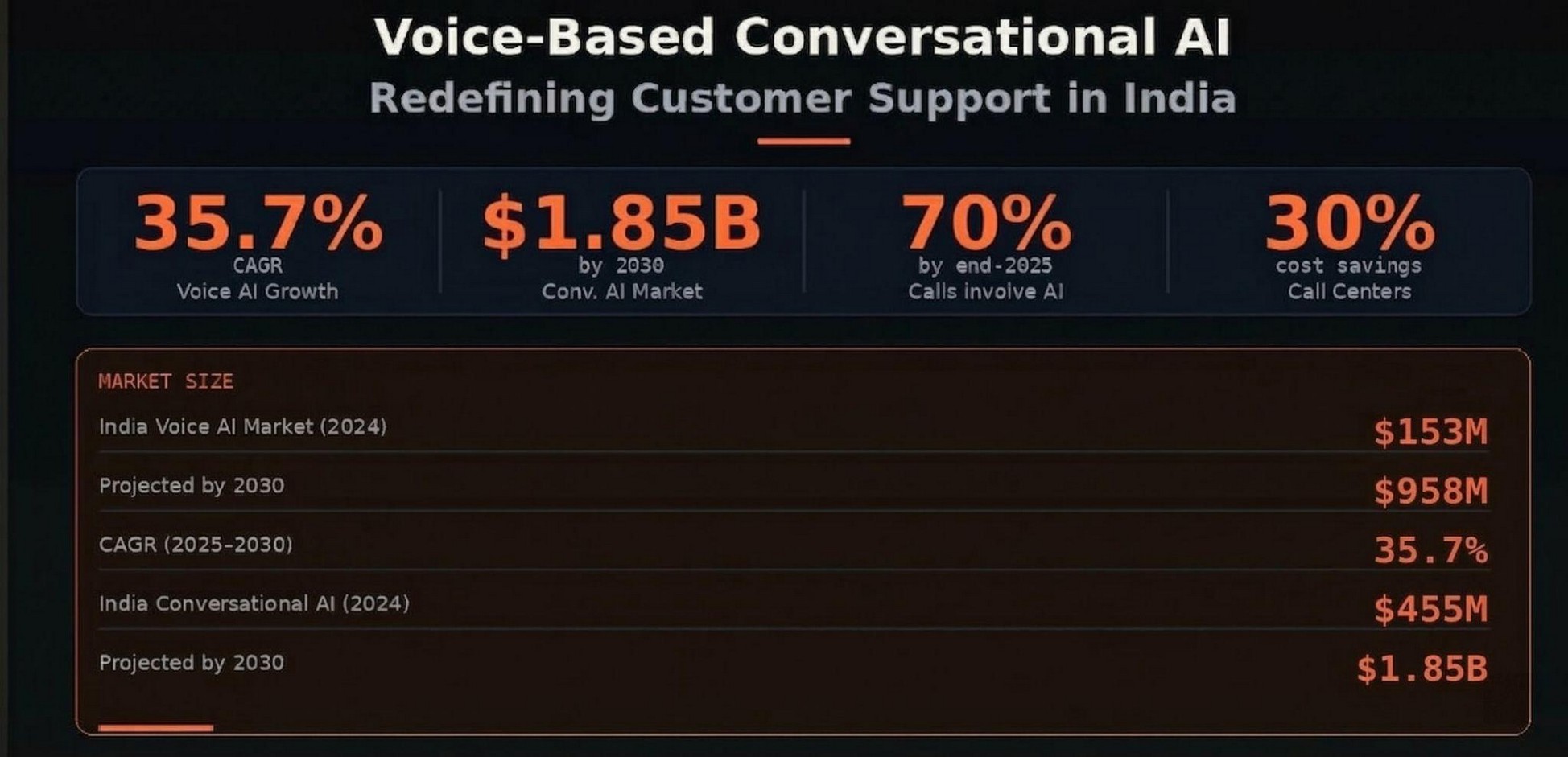
  • How Voice-Based Conversational AI is Redefining Customer Support in India

    How Voice-Based Conversational AI is Redefining Customer Support in India

    India has always been a nation of voices. From the bustling chai stalls of Chandni Chowk to the digital-first startup corridors, conversations drive commerce.

    It was inevitable, then, that artificial intelligence would eventually learn to listen and respond in every accent, dialect, and regional tongue that defines this vast subcontinent.

    Today, voice-based conversational AI is rapidly becoming the bridge between technology and accessibility in India. With millions of users more comfortable speaking than typing, especially in regional languages, voice interfaces are helping businesses reach customers who were previously underserved by digital platforms.

    The Indian Customer Support Problem

    Before understanding the solution, it is essential to appreciate the scale and complexity of the problem. India’s customer support landscape is one of the most demanding in the world. With a population of 1.4 billion spanning rural villages and metropolitan megacities, companies must serve customers across wildly different literacy levels, digital comfort zones, and linguistic preferences.

    Traditional customer support in India relied on massive call centres, and for good reason. Many Indian consumers, particularly those in semi-urban and rural areas, trust voice-based interaction far more than text-based alternatives. They find typing in English cumbersome and typing in regional scripts even harder on smartphones. Speaking, however, feels natural and immediate.

    But human-led call centres come with enormous operational costs, high attrition rates, and an inability to scale during sudden demand spikes, think festivals, IPL seasons, or government scheme launches that trigger millions of simultaneous queries. The industry needed a smarter solution, and voice-based conversational AI arrived at precisely the right moment.

    What is Voice-based Conversational AI?

    Voice-based conversational AI refers to technology that enables machines to understand spoken natural language, process it intelligently, and reply in a way that feels human. Unlike the robotic IVR systems of the early 2000s that frustrated callers into pressing “0” desperately to reach a human agent, today’s voice AI can hold nuanced, context-aware dialogues.

    And in India, where over 19,500 languages and dialects coexist, this technology is not merely a convenience, it is rapidly becoming a necessity.

    Why Voice-Based Conversational AI Fits India Perfectly?

    The Oral Communication Preference

    India has deep oral traditions. Storytelling, instructions, transactions, much of everyday life, especially outside metros, still flow through verbal exchange. When WhatsApp voice notes overtook typed messages in rural India long before they did in Western markets, it signalled something important: Indian users prefer speaking. Voice-based conversational AI aligns perfectly with this cultural reality, meeting users where they naturally are.

    Low Literacy Barriers Are Dissolved

    According to census estimates, India has hundreds of millions of citizens with limited literacy or low digital literacy. For these users, text-based chatbots are essentially inaccessible. Voice-based conversational AI dramatically lowers the barrier to accessing services, whether it is checking a bank balance, filing a complaint about a car service, or inquiring about an insurance plan. The technology democratises access in ways no text interface ever could.

    The Multilingual Imperative

    Perhaps nowhere else in the world does language diversity present as acute a challenge as it does in India. A telecom company serving customers across Gujarat, Tamil Nadu, West Bengal, and Punjab is essentially serving four entirely different linguistic communities. Modern voice-based conversational AI platforms are being trained on massive multilingual datasets to handle not just formal language but colloquial mixing, “Hinglish” (Hindi-English blend), “Tanglish” (Tamil-English blend), and dozens of other combinations that are simply how Indians speak in practice.

    Voice-Based Conversational AI Redefining Customer Support in India

    Sectors Leading the Voice AI Revolution in India

    Banking, Financial Services, and Insurance (BFSI)

    The BFSI sector has become one of the most aggressive adopters of voice-based conversational AI in India.

    Large public and private sector banks are deploying voice AI agents capable of handling account queries, loan status checks, fraud alerts, and even preliminary loan eligibility assessments.

    For a first-time bank account holder in a small town in Jharkhand with little familiarity with app navigation, simply saying “mera balance batao” (tell me my balance) in Hindi and receiving an instant, accurate response is transformative.

    Insurance companies use voice AI to help customers file claims in local languages. This reduces drop-off rates and dependence on human agents for routine tasks.

    As a result, the key benefits are faster claim resolutions, lower operational costs, and customers who feel acknowledged and supported.

    Telecom

    India’s telecom giants handle hundreds of millions of support calls each year. Voice-based conversational AI is now autonomously managing a growing share of queries, including recharge requests, plan comparisons, SIM requests, and complaints, without human intervention. Key takeaway: Voice AI enables telecoms to scale support and improve customer self-service.

    Ecommerce and Quick Commerce

    As ecommerce expands in Tier 2, 3, and 4 cities, supporting customers in their preferred language around the clock is essential. Voice-based AI enables personalized, instant resolution without navigating complex interfaces. For many first-time online shoppers, a voice-first approach reduces anxiety and builds trust.

    Telemarketing

    Telemarketing in India has long relied on thousands of agents making scripted calls, hoping for conversions. Voice-based conversational AI is changing this model. Companies deploy AI-powered outbound voice agents that initiate contextual, personalized conversations at scale, without the fatigue or inconsistency of human teams.

    Beyond outbound selling, voice AI transforms inbound telemarketing, handling product enquiries, eligibility checks, and upselling with a naturalness that keeps prospects engaged. In sectors such as mutual funds, credit cards, insurance, and real estate, where a well-timed conversation can convert a customer, AI-assisted telemarketing is becoming a competitive advantage.

    The Human-AI Partnership Model

    Contrary to fears of mass replacement, the most successful deployments of voice-based conversational AI in India operate on a human-AI collaboration model.

    The Human-AI Partnership in Customer Support

    The AI handles high volumes of routine, repetitive queries autonomously, freeing human agents to focus on complex, emotionally sensitive, or high-value interactions that genuinely benefit from human empathy and judgment.

    Key takeaway: The human-AI partnership increases both operational efficiency and agent job satisfaction.

    When a customer’s voice signals rising frustration or the query involves a sensitive personal situation, such as a bereavement affecting an insurance claim, or a disputed transaction causing financial distress, a well-designed voice AI system recognises the emotional cues and seamlessly transfers the interaction to a human agent, preserving full context.

    This orchestration of AI efficiency and human warmth is where Indian customer support is heading.

    The result is better outcomes across multiple dimensions: faster resolution for most customers, more meaningful work for human agents, lower operational costs for businesses, and a customer support experience that actually feels respectful of the customer’s time and dignity.

    Conclusion

    Voice-based conversational AI is transforming customer support in India, redefining who can access services, in which language, at what hour, and at what cost. For a country that values spoken dialogue, AI that truly listens feels like technology aligning with the people’s needs.

    For businesses in India, the challenge is to deploy voice-based conversational AI quickly and thoughtfully. For millions who struggled due to language barriers or unfamiliar digital interfaces, voice AI offers the promise of being heard.

    How Ello Powers Customer Support?

    Adaptive Prompt Technology: Our agents don’t just follow a script; they rewrite their own playbook in real-time to optimize outcomes, embodying the true spirit of Agentic AI.

    Multi-Agent Networks: Ello utilizes specialized sub-agents to audit and improve conversations at machine speed, ensuring accuracy and continuous learning.

    Low-Latency Infrastructure: We understand that in a voice-first world, speed is trust. Our infrastructure is built for sub-second responses, ensuring conversations feel natural and human.

    Enterprise-Grade Security: With SOC 2 and HIPAA compliance, Ello provides the governance and safety required for the next generation of AI deployment.

    True Multilingual & Dialect Mastery: In a linguistically diverse market like India, businesses traditionally had to hire separate support teams for regional languages. With Ello, you don’t need that. Our agents can switch naturally between languages mid-conversation (e.g., from Hindi to English) just as a native speaker.

    This massive consolidation significantly reduces hiring effort and operational costs, allowing a single AI workforce to serve the entire country.

    FAQs

    1. What is voice-based conversational AI?

    Voice-based conversational AI enables users to interact with systems via spoken language. It uses speech recognition and natural language processing to understand and respond to customer queries.

    2. Why is voice AI important for customer support in India?

    India has diverse languages, and many users prefer speaking over typing. Voice AI helps businesses serve customers in their preferred language and improves accessibility.

    3. How does voice AI improve customer service efficiency?

    Voice AI automates routine queries, gives instant responses, and works 24/7. This reduces wait times and allows human agents to handle complex issues.

    4. Can voice-based AI understand regional languages in India?

    Yes. Modern voice AI systems are trained on multiple Indian languages and dialects, enabling natural interactions across regions.

    5. Which industries benefit the most from voice-based AI in India?

    Banking, healthcare, telecom, e-commerce, and travel benefit most. These industries manage high volumes of customer queries that voice AI can automate.

  • How Voice AI Agents are Modernizing India’s Digital Insurance Ecosystem

    How Voice AI Agents are Modernizing India’s Digital Insurance Ecosystem

    India is currently navigating a pivotal era in its financial history. As we move through 2026, the Insurance Regulatory and Development Authority of India (IRDAI) has set ambitious goals for “Insurance for All” by 2047.

    Achieving this vision requires more than just policy reform; it requires a radical leap in how insurers interact with a population of 1.4 billion people.

    The traditional barriers to insurance adoption in India, such as complex jargon, linguistic diversity, and slow claims processing, are being systematically dismantled by Voice AI for Insurance.

    The ecosystem is shifting from a mobile-first approach to a voice-first paradigm. This transition is driven by the realization that while digital literacy is rising, the most natural way for the Indian consumer to manage their financial security is through conversation.

    Today, agentic voice AI is not just a customer service tool; it is becoming the primary operational engine for India’s digital insurance renaissance.

    The Indian Context: Beyond Traditional Automation

    The Indian insurance market presents unique challenges that legacy automation could never fully address. High linguistic diversity, varying levels of financial literacy, and a deep-seated preference for human-like reassurance have often made static chatbots feel inadequate.

    Bridging the Language Gap

    In 2026, the most significant modernization in India’s insurance sector is the mastery of vernacular speech.

    Voice AI for Insurance has evolved to understand not just the 22 scheduled languages of India, but hundreds of regional dialects.

    This is crucial for penetration into Tier 2 and Tier 3 cities, where consumers may be comfortable with digital payments but prefer discussing life or health coverage in their native tongue.

    Voice AI Bridging the Language Gap in India

    Modern voice agents now utilize advanced Natural Language Understanding (NLU) to handle code-switching, a common practice in India where speakers switch between languages mid-sentence.

    By providing a “human-level” understanding of these nuances, insurers are building the trust necessary to close the protection gap in rural and semi-urban markets.

    The Move to Agentic Reasoning

    Previous iterations of voice technology relied on rigid scripts that often left customers frustrated. In the current 2026 landscape, the industry has transitioned to agentic workflows.

    An agentic system does not just follow a path; it reasons through a problem. If a farmer in Maharashtra calls to inquire about crop insurance after a weather event, the AI understands the context, queries live weather data, and initiates the claim process without needing a human to intervene.

    This ability to reason and execute makes Voice AI for Insurance a formidable tool for operational scale.

    Multi-Agent Frameworks in Policy Management

    One of the most profound shifts in the digital ecosystem is the deployment of multi-agent frameworks. Instead of a single bot trying to do everything, insurance companies now use a coordinated fleet of specialized AI agents.

    The Claims Coordination Agent

    Claims are the “moment of truth” in insurance. A specialized claims agent can now handle the First Notice of Loss (FNOL) via voice, capturing emotional cues and urgent needs. It then coordinates with an evidence-gathering agent that might send the customer a secure link for photo uploads or even pull data from IoT sensors in a connected vehicle or smart home.

    The Underwriting and Risk Agent

    During a voice interaction for a new policy, a specialized risk agent can analyze the data provided by the customer in real-time.

    By the time the conversation ends, the AI has already cross-referenced the customer’s history and external risk databases to provide a personalized premium quote.

    This synergy between different AI agents ensures that the customer experience is seamless while the internal business logic remains rigorous.

    Industry Projections and Economic Impact

    The economic case for Voice AI for Insurance in India is supported by compelling market data. Projections for late 2026 suggest that AI-driven interactions will reduce the cost of customer acquisition for Indian insurers by up to 30%.

    • Increased Penetration: Voice-enabled agents are expected to contribute to a 15% increase in insurance density across rural India by 2027.
    • Reduction in TAT: The Turnaround Time (TAT) for simple health and motor claims has been reduced from days to minutes in organizations that have fully integrated voice-to-action workflows.
    • Fraud Mitigation: AI-driven voice analysis is now a standard part of the Indian fraud detection toolkit, identifying inconsistencies in verbal reports that might be missed in written forms.

    Trust, Transparency, and Regulation

    As the technology becomes more prevalent, the focus has shifted toward ethical AI and data sovereignty. The Indian government’s focus on Digital Public Infrastructure (DPI) has paved the way for secure, interoperable AI systems.

    In 2026, transparency is a mandate. Voice agents are required to be clear about their nature, and data privacy frameworks ensure that the voice biometrics and personal details of Indian citizens are protected under the latest Digital Personal Data Protection (DPDP) standards.

    This regulatory clarity has given insurers the confidence to deploy Voice AI for Insurance at a massive scale, knowing that the guardrails are firmly in place.

    Trust, Transparency and Regulation in Voice AI Insurance

    The Ello Advantage in the Indian Market

    While the broader industry moves toward automation, Ello provides the specific cognitive infrastructure required to excel in India’s complex environment.

    Built on 2026-standard agentic frameworks, Ello goes beyond conversation to provide a Voice-to-Action engine that integrates directly with India’s emerging digital insurance platforms and Bima Sugam portals.

    Its Adaptive Prompting Engine is specifically designed to handle the linguistic diversity and cultural nuances of the Indian consumer, allowing insurers to deploy intelligent agents that don’t just talk, but execute tasks: from real-time policy modifications to complex claims orchestration.

    By providing an enterprise-ready, SOC 2 compliant platform, Ello allows Indian insurers to scale their operations globally while maintaining a local, empathetic touch.

    FAQ: Voice AI for Insurance

    Q1: Can Voice AI for Insurance handle the wide variety of Indian accents?

    Yes. In 2026, advanced speech-to-text engines are trained on massive datasets representing India’s diverse linguistic landscape. This ensures that a speaker from Kerala and a speaker from Punjab receive the same high level of comprehension.

    Q2: Is it possible to file a claim entirely through a voice agent?

    For many routine claims, such as motor glass or certain health benefits, the entire process can be completed via voice. The AI gathers the details, verifies the policy, and triggers the payout workflow autonomously.

    Q3: How does this technology help with the “Bima Sugam” initiative?

    Bima Sugam aims to be a one-stop shop for all insurance needs in India. Voice AI acts as the natural interface for this platform, allowing users to query, compare, and buy policies using simple voice commands in their preferred language.

    Q4: Will voice AI replace local insurance agents in India?

    No. Voice AI for Insurance is a tool for augmentation. It handles the high-volume, routine queries, allowing human agents and advisors to focus on providing deep financial advice and building long-term relationships with their clients.

    Q5: Is voice data secure under the new Indian data laws?

    Yes. Leading platforms utilize end-to-end encryption and adhere to the Digital Personal Data Protection (DPDP) Act, ensuring that voice recordings and transcripts are processed securely and deleted or anonymized according to strict compliance rules.

    Conclusion: A Conversational Future for Indian Insurance

    The modernization of India’s insurance ecosystem is inextricably linked to the evolution of voice technology.

    By moving away from the friction of digital forms and rigid menus, the industry is finally speaking the language of its customers.

    The goal for 2026 and beyond is to make insurance as accessible as a simple conversation, ensuring that every citizen has the protection they need through the power of agentic Voice AI for Insurance.

    Transform your insurance operations today. Visit Ello

  • Ello: The Voice AI for Customer Support of the Future

    Ello: The Voice AI for Customer Support of the Future

    Talking of enterprise operations, scalability has always been limited by the “human bottleneck.” As call volumes spike and customer expectations for 24/7 service become non-negotiable, traditional call centers are hitting a breaking point.

    Voice AI for customer support is no longer a futuristic “nice-to-have”, it is the primary driver of operational resilience in 2026. With the ability to handle thousands of concurrent queries with zero latency and at a fraction of the cost of traditional systems, AI voice agents for customer support are redefining the bottom line.

    It’s time to move past the era of “automated responses” and embrace a future where voice agents execute complex tasks, resolve issues in seconds, and free your human talent for the work that truly requires a heartbeat.

    Let’s take an in-depth look at why voice AI for customer support is positioned as the future of service operations, the measurable impact it delivers, and real-world applications.

    What is Voice AI?

    Voice AI, or Voice Artificial Intelligence, refers to intelligent systems that understand, interpret, and respond to human speech using natural language processing (NLP), machine learning, and speech recognition technologies.

    Unlike traditional automated voice menus or IVR (Interactive Voice Response), modern voice AI can carry out conversations, detect user intent, and even recognize emotional cues.

    When we talk about voice AI for customer support, we mean using voice-enabled AI to handle customer queries, resolve issues, or guide users through conversational interactions that feel natural and human.

    Today, businesses increasingly rely on AI voice agents for customer support to manage large call volumes, automate routine conversations, and deliver faster responses without increasing operational costs.

    How Voice AI Works in Customer Support

    Voice AI in customer support usually uses three main technologies to function effectively:

    Automatic Speech Recognition (ASR)

    ASR converts a customer’s spoken words into text as they are spoken. This allows the voice AI system to understand exactly what the user is saying.

    Modern ASR technology is also the backbone of top AI voice transcription for customer support, enabling businesses to generate precise transcripts for analytics, compliance, and training.

    Natural Language Understanding (NLU)

    NLU helps the system understand the meaning and purpose behind what a customer is saying. It enables the AI to accurately grasp the customer’s request, even when the language is informal or conversational.

    This capability powers a highly responsive AI voice agent for customer support, enabling it to interpret context, intent, and conversational nuance.

    Text-to-Speech (TTS)

    After the AI has understood the customer’s intent, TTS transforms its response back into spoken words that sound natural and close to what a human would say.

    Together, these technologies enable voice AI to have smooth and intelligent conversations, making it a great choice for customer support that values both efficiency and a personal touch.

    Why Voice AI Is the Future of Customer Support?

    The reasons Voice AI is poised to become the future of customer support are multifaceted. From elevated customer experience to business scalability, Voice AI offers advantages that traditional support systems cannot match.

    Why Voice AI Is the Future of Customer Support

    24/7 Availability

    One of the most significant limitations of human-only support is availability. Customers expect answers immediately, regardless of time zones or business hours.

    Voice AI systems operate around the clock, ensuring customers can access support anytime. With AI voice agents for customer support, businesses can deliver instant assistance even during peak demand or outside working hours.

    This continuous availability significantly improves customer satisfaction and trust.

    Scale Without Additional Costs

    Traditionally, scaling customer support requires hiring more agents, increasing infrastructure costs, and managing growing queues. Voice AI eliminates this dependency.

    Whether a business receives 100 or 10,000 calls a day, Voice AI systems can scale automatically without requiring a proportional increase in staffing or resources. It’s this cost-efficient scalability that positions Voice AI as the future of support operations.

    Faster Resolution Times

    Customers don’t want to be kept waiting, nor do they want to repeat themselves to multiple agents. Voice AI can process queries quickly and provide instant or near-instant answers.

    As AI models learn from interactions, the system continuously improves. Over time, AI voice agents for customer support become more capable of handling complex conversations, further reducing resolution times.

    Personalized Conversations at Scale

    Voice AI systems can access customer history, preferences, and account context in real time. This means they can deliver personalized support experiences to new customers as well.

    Voice AI doesn’t just provide scripted responses; it adapts its answers to the customer’s context, creating a personalized experience that traditional automated systems cannot match.

    Reduced Human Error and Consistency

    Human agents are valuable, but they are also prone to fatigue, miscommunication, or inconsistency. Voice AI adheres to the highest standards of accuracy, delivering consistent responses every time.

    Furthermore, voice AI stays up to date with product changes, policy updates, and new service offerings, ensuring customers always receive the latest information.

    Better Data, Better Insights

    Every interaction with Voice AI generates valuable data. Businesses can analyze trends, customer pain points, language patterns, and feedback to optimize products and services.

    Traditional call center data is often unstructured and difficult to interpret. With voice AI for customer support, insights become structured, searchable, and actionable, accelerating business intelligence and decision-making.

    Multilingual Support Without Extra Staff

    Global companies often face language barriers in customer support. Hiring multilingual agents can be expensive and limited in reach.

    Voice AI systems can communicate in multiple languages, dialects, and accents. This allows businesses to expand globally without operational complexity.

    For global brands, AI voice agents for customer support make multilingual service both efficient and cost-effective.

    Real-World Applications of Voice AI in Customer Support

    Voice AI agents are already transforming customer support across industries. Here are some powerful, real-world use cases:

    eCommerce and Retail

    Voice AI handles order tracking, shipping status, return requests, and product recommendations, offering a conversational experience that mimics speaking with a support agent.

    Banking and Financial Services

    In financial support, Voice AI authenticates users, answers balance inquiries, assists with payments, and supports fraud detection, all while maintaining security and compliance.

    Healthcare

    Healthcare providers leverage voice AI to offer appointment scheduling, basic symptom checks, prescription refill reminders, and patient follow-ups, thereby improving patient engagement while reducing staffing burden.

    Telecommunications

    Voice AI resolves network issues, handles bill inquiries, handles plan changes, and resolves service outages, enhancing the customer experience while reducing call center load.

    Travel and Hospitality

    From flight updates to hotel booking queries, Voice AI supports customers at every step of their journey, making travel navigation smoother and more efficient.

    Best AI Voice Agents for Customer Support 2026

    As voice AI adoption accelerates, several platforms are emerging as leaders in the space. Businesses looking to implement intelligent support solutions often evaluate the best AI voice agents for customer support in 2026 based on scalability, conversational accuracy, and integration capabilities.

    Among the leading companies in voice AI customer support, platforms like Ello are gaining strong recognition for their ability to automate complex conversations while maintaining a natural, human-like experience.

    Ello’s voice AI agents are designed to manage inbound and outbound calls, qualify leads, handle support queries, and integrate seamlessly with existing CRM and business systems. By combining conversational intelligence with automation, Ello enables organizations to transform customer support into a scalable and efficient operation.

    The Future: AI and Humans as a “Unified Team”

    The narrative that AI will replace humans is shifting toward one of augmentation. In 2026, we see the rise of the “Super Agent.”When a Voice AI encounters a situation it cannot handle, perhaps a distraught customer or a highly technical legal query, it doesn’t just “drop” the call. It performs a “warm handoff” to a human agent.

    AI and Humans as a Unified Team

    The human receives a real-time transcript and a summary of what has already happened, allowing them to step in with full context. This collaboration ensures that the customer experience remains seamless while empowering human workers to do what they do best: connect emotionally.

    Conclusion

    Voice AI for customer support is more than an upgrade to automated support, it’s a paradigm shift. It improves response times, delivers personalized experiences, and empowers businesses to scale with intelligence.

    As consumers seek faster, smarter, and more conversational support, voice AI will become an essential differentiator for brands. Organizations that adopt solutions from leading companies for voice AI customer support, such as Ello, will gain a competitive edge by delivering faster, smarter, and more efficient customer experiences. Organizations that adopt solutions from leading companies for voice AI customer support, such as Ello, will gain a competitive edge by delivering faster, smarter, and more efficient customer experiences.

    The future of customer support isn’t human-only or robot-only; it’s intelligent, conversational, and powered by voice AI agents.

    How Ello Powers Customer Support?

    Adaptive Prompt Technology

    Our agents don’t just follow a script; they rewrite their own playbook in real-time to optimize outcomes, embodying the true spirit of Agentic AI.

    Multi-Agent Networks

    Ello utilizes specialized sub-agents to audit and improve conversations at machine speed, ensuring accuracy and continuous learning.

    Low-Latency Infrastructure

    We understand that in a voice-first world, speed is trust. Our infrastructure is built for sub-second responses, ensuring conversations feel natural and human.

    Enterprise-Grade Security

    With SOC 2 and HIPAA compliance, Ello provides the governance and safety required for the next generation of AI deployment.

    True Multilingual & Dialect Mastery

    In a linguistically diverse market like India, businesses traditionally had to hire separate support teams for regional languages. With Ello, you don’t need that. Our agents can switch naturally between languages mid-conversation (e.g., from Hindi to English) just as a native speaker.

    This massive consolidation significantly reduces hiring effort and operational costs, allowing a single AI workforce to serve the entire country.

    FAQs

    1. What is Voice AI for Customer Support?

    Voice AI for customer support is an AI-powered system that understands and responds to customer queries via natural-language conversations. It uses speech recognition and natural language processing to deliver real-time assistance.

    2. How is Voice AI different from traditional IVR systems?

    Unlike traditional IVR, which relies on fixed menus and keypad inputs, Unlike traditional IVR, which relies on fixed menus and keypad inputs, voice AI agents understand natural speech and context. It enables dynamic, human-like conversations instead of scripted responses.

    3. Can Voice AI handle complex customer queries?

    Yes, modern voice AI agents can handle multi-step, context-aware conversations. For highly complex issues, they can seamlessly transfer the call to a human agent with full context.

    4. Can Voice AI provide multilingual support?

    Yes, Voice AI systems can support multiple languages and accents. This makes it easier for businesses to serve global customers without expanding large multilingual teams.

    5. How does Voice AI improve customer satisfaction?

    Voice AI reduces wait times, provides instant responses, and delivers consistent service. Faster resolution and personalization significantly enhance the customer experience.

  • How Conversational IVR Turns Calls into Real Conversations in 2026

    How Conversational IVR Turns Calls into Real Conversations in 2026

    For decades, the term “IVR” (Interactive Voice Response) was synonymous with customer frustration.

    The rigid “Press 1 for Sales” menus and the repetitive “I’m sorry, I didn’t get that” prompts created a wall between businesses and their customers.

    However, as we move through 2026, the technology has undergone a fundamental metamorphosis. The legacy, tree-based systems have been dismantled in favor of Conversational IVR.

    This shift represents more than a simple upgrade in voice recognition; it is a total reimagining of the phone-based customer experience.

    Powered by agentic AI and Large Language Models (LLMs), Conversational IVR has moved from being a tool of “call deflection” to a tool of “call resolution.”

    In this new era, the goal is no longer to keep the customer away from a human agent, but to provide a human-like, reasoning interaction that solves problems in real-time.

    What Defines Conversational IVR in 2026?

    In 2026, Conversational IVR is defined by its ability to understand intent, manage context, and execute complex workflows autonomously. It is the voice front-end of a broader agentic ecosystem.

    Conversational IVR Voice Agent

    Beyond Keyword Recognition

    Legacy systems relied on directed dialogue, forcing the user to speak specific keywords. Modern Conversational IVR utilizes “Open-Ended Natural Language Understanding” (NLU).

    When a system greets a caller with “How can I help you today?”, it is capable of parsing complex, multi-intent sentences such as: “I need to check if my refund was processed, and if so, can I use that credit to upgrade my subscription for next month?”

    Real-Time Reasoning and Context Retention

    The hallmark of 2026-standard systems is their memory. If a caller mentions a flight delay at the start of the call, the Conversational IVR maintains that context throughout the interaction.

    It does not treat every turn of the conversation as a new event; rather, it builds a “Cognitive Thread” that allows for follow-up questions and clarification without the caller needing to repeat themselves.

    The Technological Architecture of Modern Voice Agents

    The transition to truly “real” conversations is made possible by the convergence of several high-order technologies.

    High-Fidelity ASR and Neural TTS

    Automatic Speech Recognition (ASR) has reached a plateau of near-perfect accuracy, even in noisy environments or with heavy regional accents.

    Simultaneously, Neural Text-to-Speech (TTS) has evolved to include “Prosody,” the natural rhythm, stress, and intonation of human speech. This allows Conversational IVR to sound empathetic, professional, and indistinguishable from a human in 95% of routine interactions.

    Multi-Agent Orchestration

    In 2026, the IVR is rarely a single monolithic program. Instead, it is a primary agent that orchestrates several specialist agents:

    • The Validator Agent: Handles identity and verification.
    • The Knowledge Agent: Queries internal documentation and FAQs.
    • The Action Agent: Interacts with the ERP or CRM to execute changes.

    By distributing these tasks, Conversational IVR can process information with much higher precision and lower latency than previous generations.

    Agentic Reasoning Layers

    Unlike previous bots that followed “If-Then” logic, modern systems use agentic reasoning.

    They are given a goal, such as resolving a customer’s billing dispute, and the tools to achieve it.

    The AI reasons through the best path to that goal, making decisions in real-time based on the customer’s specific policy and sentiment.

    Market Trends and Projections for 2026

    The adoption of Conversational IVR is accelerating across all major service-heavy sectors. Industry research suggests that the market for intelligent voice agents will grow at a CAGR of 22% through 2030.

    The Rise of “Voice-First” Customer Service

    Projections for 2026 indicate that over 70% of initial customer contacts in the financial and hospitality sectors will be handled by Conversational IVR.

    Businesses are moving away from “Digital-Only” strategies as they realize that voice remains the most efficient medium for resolving complex emotional or urgent issues.

    Closing the “Trust Gap”

    Data from late 2025 shows that customer trust in AI-led voice systems has increased by 40% year-over-year. This is largely attributed to the transparency and speed of Conversational IVR.

    When a system can solve a problem in 90 seconds that used to take a 15-minute hold time, the AI stigma evaporates in favor of utility.

    Conversational IVR Operations

    Best Practices for a Conversational Shift

    Implementing Conversational IVR requires a shift in design philosophy. It is no longer about designing a “flow,” but about designing a “persona” and a “knowledge base.”

    • Prioritize Low Latency: For a conversation to feel “real,” the delay between the user speaking and the AI responding must be under 500ms. In 2026, Edge-AI processing is increasingly used to hit these latency targets.
    • Design for Interruption: Humans interrupt each other. A robust Conversational IVR must support “Barge-in,” where the AI stops speaking the moment the user starts, allowing for a more natural back-and-forth.
    • The “Graceful Handoff”: There will always be edge cases. The system must be able to recognize its own limits and escalate to a human agent with a full transcript and context summary, ensuring a warm transfer.

    Also read: Voice AI for Lead Generation: Converting Calls into Qualified Leads

    Transforming Operations with Ello

    While the potential of Conversational IVR is immense, the challenge for many enterprises lies in the integration with legacy operational systems.

    This is the specific problem Ello was built to solve. As an agentic voice platform designed for the complexities of 2026, Ello doesn’t just provide a voice interface; it provides an “Operational Reasoning Engine.”

    By bridging the gap between digital IT systems and physical OT (Operational Technology) workflows, Ello allows businesses to deploy voice agents that don’t just talk, but actually execute tasks, from booking reservations to triggering industrial maintenance dispatches, all while maintaining a 99% comprehension rate across 100+ languages.

    FAQ: Conversational IVR

    Q1: How does Conversational IVR differ from traditional IVR?

    Traditional IVR is a menu-driven system where callers must follow a fixed path. Conversational IVR is intent-driven, allowing callers to speak naturally and skip menus to get directly to a resolution.

    Q2: Can the AI detect if a caller is angry or upset?

    Yes. Modern systems use sentiment analysis to monitor the caller’s pitch, tone, and vocabulary. If the AI detects high levels of frustration, it can adjust its persona to be more empathetic or trigger an immediate escalation to a human supervisor.

    Q3: Is Conversational IVR secure for sensitive data?

    In 2026, security is a priority. Leading platforms use voice biometrics for authentication and ensure that sensitive data, such as credit card numbers, are tokenized and never stored in the AI’s training logs.

    Q4: How long does it take to train a Conversational IVR on my business?

    With 2026-standard RAG (Retrieval-Augmented Generation) frameworks, you can ground an AI agent on your company’s specific documentation in a matter of days, rather than the months of manual coding required in the past.

    Q5: What happens if the AI doesn’t understand the caller?

    Instead of the dreaded “I’m sorry, I didn’t get that,” Conversational IVR uses clarification loops. It might say, “I’m not quite sure if you mean your checking or savings account; could you clarify that for me?” If it still cannot resolve the issue, it performs a seamless handoff to a human.

    Conclusion: The Strategic Imperative

    The transition to Conversational IVR is not just a technological upgrade; it is a fundamental shift in the customer-brand relationship. In an era where “Speed-to-Resolution” is the ultimate currency, businesses that continue to rely on legacy “Press 1” menus will find themselves losing customers to more agile, AI-integrated competitors.

    The goal for 2026 and beyond is clear: turn every phone call into a real, productive, and intelligent conversation.

  • Conversational AI in Indian Banking: Driving Smarter, Secure Conversations

    Conversational AI in Indian Banking: Driving Smarter, Secure Conversations

    The Indian banking sector is witnessing a tectonic shift- the emergence of conversational AI in banking and fintech. For decades, the industry relied on physical branches and rigid Interactive Voice Response (IVR) systems, “Press 1 for Banking, Press 2 for Loans” loops that frustrated millions.

    Today, driven by the UPI revolution and the expansion of internet access, India has become a digital-first economy.

    Among the most transformative innovations is conversational AI in banking, enabling financial institutions to interact with customers in a natural, human-like voice.

    Conversational AI blends NLP, ML, speech recognition, and Generative AI to create intelligent voice assistants that understand context, intent, and emotion.

    In India, where linguistic diversity, financial inclusion, and high service volumes create unique challenges, Conversational AI is not just enhancing customer experience but redefining how banks operate, scale, and secure their services.

    What is Conversational AI?

    Conversational AI is a type of artificial intelligence that enables machines to interact with humans through natural, human-like conversations via voice. It allows users to speak in everyday language, and the system understands, processes, and responds intelligently in real time.

    Unlike traditional chatbots, it understands intent, context, tone, and language variations, making it central to the broader conversational AI in banking topic, especially as financial services evolve toward intelligent automation.

    The Rise of Conversational Banking in India

    India’s banking ecosystem serves over a billion customers across urban metros, semi-urban towns, and rural regions. Traditional customer service models, such as branch visits, IVRs, and call centers, struggle to scale at this magnitude. This is where conversational AI in banking services bridges the gap by enabling:

    • 24/7 customer assistance
    • Instant query resolution
    • Multilingual communication
    • Automated financial guidance

    Banks are deploying AI assistants across websites, mobile apps, WhatsApp, IVR systems, and smart kiosks to efficiently manage high customer volumes.

    Why Conversational AI Matters in Indian Banking

    Why Conversational AI Matters in Indian Banking

    Massive Customer Volumes

    Public and private banks in India handle millions of interactions daily, from balance checks to loan inquiries. AI assistants scale effortlessly without increasing operational costs.

    Linguistic Diversity

    India has 30+ major languages and hundreds of dialects. Multilingual conversational systems bridge language barriers and improve accessibility for non-English speakers.

    Digital Adoption Boom

    UPI, mobile wallets, and digital lending platforms have created demand for real-time support, strengthening the role of conversational AI in banking and fintech ecosystems.

    Cost & Efficiency Pressures

    Banks must reduce operational expenses while improving service quality, an area where automation excels.

    Conversational AI Use Cases in Banking

    Early chatbots were glorified FAQ engines. Today’s systems are transactional, advisory, and autonomous.

    Below are some high-impact conversational AI use cases in banking, transforming Indian financial institutions:

    Hyper-Personalized Advisory

    Banks are sitting on goldmines of data, but often fail to use them in real time. Advanced AI agents now act as personal financial bankers for the masses. If a customer’s savings account balance exceeds a certain threshold, the AI can proactively nudge them via a voice note or WhatsApp conversation: “You have ₹50,000 sitting idle. Would you like to move ₹20,000 to a flexible FD earning 7% interest?” This shifts banking from reactive (problem-solving) to proactive (wealth creation).

    The Vernacular Advantage

    India speaks in dialects, not just languages. We “code-switch”, mixing Hindi and English (Hinglish) or Tamil and English effortlessly. Standard NLP models trained on Western datasets fail here. Indian banks are deploying purpose-built Large Language Models (LLMs) trained on Indian linguistic nuances.

    • Example: A user might say, “Account block karna hai, please help.” A rigid system might miss this mix. Modern Conversational AI in banking detects urgency and intent (“block account”) regardless of mixed language and executes the protocol immediately.

    Agentic AI: Doing, Not Just Talking

    The future is “Agentic AI.” While a chatbot talks, an agent does.

    • Chatbot: “Here is the link to update your KYC.”
    • Agentic AI: “I can update your KYC right now. Please look at the camera for a quick video verification.” By integrating with KYC APIs and core banking systems, these agents reduce friction, lowering drop-off rates for critical processes like loan applications and onboarding.

    Smart Debt Recovery and Collection

    Debt collection in India has traditionally been a high-friction, manual process prone to compliance risks. Conversational AI in banking is humanizing and automating this sensitive touchpoint.

    • Empathetic Reminders: Instead of aggressive calls, voice AI agents send gentle, conversational reminders via WhatsApp in the customer’s preferred language.
    • Negotiation & Restructuring: Advanced agents can “negotiate” based on pre-set bank parameters. If a customer says, “I can’t pay the full EMI this month due to a medical emergency,” the AI can instantly offer a split payment option or a grace period, maintaining the relationship while securing the bank’s assets.

    Instant Fraud Mitigation & “Card-on-Command”

    In a country where digital payment fraud (like UPI phishing) is a constant threat, speed is the only effective defense. Conversational AI in banking acts as a 24/7 digital bodyguard.

    • Real-time Verification: If a high-value transaction occurs at an unusual time, the AI sends a push notification: “Did you just spend ₹45,000 at an electronics store in Mumbai?” The user can tap ‘No’ to instantly kill the transaction and block the card.
    • Zero-Wait Hotlisting: Traditionally, blocking a lost card involved navigating a complex IVR menu. Now, a user can type “Mera card kho gaya hai, block karo” (I lost my card, block it) to secure their account in just a few seconds.

    Small Business (MSME) Banking Assistant

    India’s 63 million MSMEs often lack dedicated accounting teams. Banks are now using Conversational AI to turn the banking app into a “Virtual CFO” for small business owners.

    • Automated GST & Invoice Tracking: A shopkeeper can ask the voice AI agent, “Last month kitna GST pay kiya?” or “Show me pending invoices from Supplier X.” The AI fetches this from integrated GST portals and the bank’s transaction history.
    • Working Capital Alerts: The AI can predict cash flow crunches. It might nudge the owner: “Your balance will be low by the 5th due to rent and salaries. Would you like to activate a pre-approved overdraft of ₹2 Lakhs?”

    Conversational AI in Indian Banking

    Conclusion

    Conversational AI in banking is no longer a futuristic concept, it is a present-day competitive necessity.

    As customer expectations shift toward instant, personalized, and conversational experiences, banks must evolve beyond traditional service models.

    From voice assistants to autonomous AI agents, conversational technologies are transforming how banks engage, serve, and secure their customers.

    They reduce costs, improve efficiency, strengthen fraud prevention, and expand financial inclusion across India’s diverse population.

    However, success depends on responsible deployment balancing innovation with privacy, compliance, and ethical AI governance.

    How Ello Powers Smarter Indian Banking Conversations

    While many platforms are playing catch-up, Ello was architected with these 2026 trends as foundational pillars.

    Adaptive Prompt Technology

    Our agents don’t just follow a script; they rewrite their own playbook in real-time to optimize outcomes, embodying the true spirit of Agentic AI.

    Multi-Agent Networks

    Ello utilizes specialized sub-agents to audit and improve conversations at machine speed, ensuring accuracy and continuous learning.

    Low-Latency Infrastructure

    We understand that in a voice-first world, speed is trust. Our infrastructure is built for sub-second responses, ensuring conversations feel natural and human.

    Enterprise-Grade Security

    With SOC 2 and HIPAA compliance, Ello provides the governance and safety required for the next generation of AI deployment.

    True Multilingual & Dialect Mastery

    In a linguistically diverse market like India, businesses traditionally had to hire separate support teams for regional languages. With Ello, you don’t need that. Our agents can switch naturally between languages mid-conversation (e.g., from Hindi to English) just as a native speaker.

    This massive consolidation significantly reduces hiring effort and operational costs, allowing a single AI workforce to serve the entire country.

    FAQs

    How can banks in India use Conversational AI?

    Banks can use it for balance inquiries, fund transfers, loan applications, EMI reminders, fraud alerts, and customer support. It also assists in onboarding, KYC processes, and personalized product recommendations.

    Can Conversational AI support regional languages in India?

    Modern AI platforms support multiple Indian languages like Hindi, Telugu, Tamil, and Bengali. This helps banks serve rural and non-English-speaking customers more effectively.

    How does Conversational AI in banking improve customer experience?

    It offers instant, 24/7 responses without wait times. Customers get faster resolutions, personalized assistance, and seamless omnichannel support.

    What is the future of Conversational AI in Indian banking?

    The future includes voice-first banking, autonomous AI agents, hyper-personalization, and deeper fraud prevention. It will play a key role in financial inclusion and digital banking growth.

  • Conversational AI for Sales: Turning Conversations into Conversions

    Conversational AI for Sales: Turning Conversations into Conversions

    Sales has always been about conversations. From face-to-face meetings and phone calls to emails and live chat, meaningful dialogue sits at the heart of every deal closed. But the way buyers want to engage with businesses has changed dramatically.

    Today’s prospects expect instant responses, personalized recommendations, and seamless experiences across channels, whether they’re browsing a website at midnight or comparing vendors during work hours.

    Unfortunately, traditional sales models struggle to meet these expectations at scale. Missed chats, delayed follow-ups, and manual qualification often lead to lost opportunities.

    This is where conversational AI for sales is redefining modern selling.

    By combining artificial intelligence, natural language processing (NLP), and automation, conversational AI enables businesses to engage, qualify, nurture, and convert prospects through intelligent, human-like conversations 24/7.

    It ensures that no lead is ignored, no question goes unanswered, and every interaction moves buyers closer to conversion.

    In this blog, we’ll explore how conversational AI transforms sales conversations into measurable revenue outcomes.

    What is Conversational AI for Sales?

    Conversational AI for Sales refers to technologies such as virtual assistants, intelligent chatbots, and voice AI agents that use Natural Language Processing (NLP) and Machine Learning (ML) to engage prospects in real time. Unlike traditional rule-based bots that rely on “if/then” logic and rigid decision trees, Conversational AI is dynamic. It uses three critical pillars:

    1. Natural Language Understanding (NLU): To decipher what the user actually means, even if they use slang or have a typo.
    2. Dialogue Management: To maintain the context of a conversation over multiple exchanges.
    3. Natural Language Generation (NLG): To formulate responses that feel empathetic, professional, and human.

    In a sales context, this technology acts as a 24/7 digital concierge. It identifies who a visitor is, understands their pain points, and guides them to the next step in the buyer’s journey, whether that’s a product recommendation, a white paper, or a booked meeting with a human account executive.

    When implemented strategically, conversational AI for sales and marketing aligns both teams around one goal, turning engagement into revenue.

    Conversational AI Sales Bot

    Why Sales Teams Need Conversational AI

    The modern sales landscape is plagued by two major issues: lead decay and administrative burnout.

    The Response Time Gap

    Human sales teams, regardless of how efficient they are, cannot be “on” 24/7. Conversational AI ensures that every “hand-raiser” receives an immediate, intelligent response, effectively eliminating the “black hole” where leads go to die.

    High Volume, Low Value Tasks

    The average sales representative spends only about 33% of their day actually selling. The rest is swallowed by data entry, lead scrubbing, and chasing prospects for a meeting time. Conversational AI takes over the “drudge work,” allowing humans to focus on high-stakes negotiations and relationship building.

    The Expectation of Personalization

    Today’s B2B and B2C buyers expect a personalized experience. They don’t want a generic sales pitch; they want a solution to their specific problem.

    AI can instantly pull data from a CRM (Customer Relationship Management) system to greet a returning visitor by name and reference their previous industry or interests, creating an immediate sense of rapport.

    How Conversational AI Turns Conversations into Conversions

    The magic of Conversational AI lies in its ability to move beyond passive interaction into active conversion optimization. It does this through several sophisticated mechanisms:

    Reducing Friction in the Buyer Journey

    Friction is the enemy of conversion. When a prospect has to fill out a 10-field form to see a demo, they often bounce. Conversational AI replaces these forms with a “choose-your-own-adventure” style dialogue. By asking questions one by one in a natural flow, the AI can gather the same data (and more) without the prospect feeling interrogated.

    Real-Time Intent Detection

    Conversational AI can distinguish between casual visitors and high-intent buyers. By analyzing reply speed, keywords, sentiment, and behavioral signals, voice AI agents can “hot-route” high-value prospects to human agents while they are still engaged. This capability is especially powerful in conversational AI for sales outreach, where timing and intent detection can significantly increase response and conversion rates.

    Overcoming Objections on the Fly

    Many sales are lost because a small doubt wasn’t addressed clearly. An AI trained on your company’s knowledge base can instantly handle common objections, such as “Is this compatible with Salesforce?” or “Do you offer a monthly billing option?”, keeping the sale’s momentum alive when a human isn’t available.

    Key Use Cases of Conversational AI in Sales

    How exactly does this look in practice? Here are the most impactful ways sales teams are deploying AI today:

    • 24/7 Lead Qualification: The voice AI agent engages visitors, asks about their budget, authority, need, and timeline (BANT), and labels them as “Qualified” or “Unqualified” before a human ever touches the record.
    • Automated Meeting Scheduling: Instead of the “When are you free?” email message, the voice AI agents link directly to a sales representative’s calendar and schedule the meeting instantly in the chat window.
    • Intelligent Outreach & Nurturing: Voice AI agent doesn’t just wait for people to come to the site. It can manage multi-channel sequences (Email, SMS, LinkedIn) that respond to prospect replies in real-time to keep the conversation moving.
    • Sales Enablement (Real-Time Coaching): For live calls, “Agent Assist” tools listen to the conversation and display “battle cards” or technical specs on-screen the moment a competitor or specific feature is mentioned.
    • CRM Automation: After a conversation, the voice AI agent automatically summarizes the chat, updates the deal stage, and logs the activity in the CRM, ensuring data integrity without manual effort.

    Benefits of Conversational AI for Sales Teams

    The implementation of Conversational AI isn’t just a “nice-to-have” tech upgrade; it delivers measurable ROI across the organization.

    Benefit Impact on Sales
    Increased Pipeline By capturing leads that would have otherwise bounced, teams see a 20-30% increase in qualified pipeline.
    Higher Win Rates Real-time objection handling and faster response times lead to higher close ratios.
    Reduced CAC Cost-per-Acquisition drops as expensive human labor is reserved for the funnel’s final stages.
    Improved Morale Sales reps are happier (and more productive) when they aren’t doing manual data entry or chasing dead leads.
    Scalability You can handle a 500% spike in web traffic during a product launch without hiring a single extra person.

    Conversational AI Sales Team

    Conversational AI Across the Sales Funnel

    To truly turn conversations into conversions, the AI must be mapped to every stage of the buyer’s journey:

    Top of the Funnel: Instant Lead Qualification

    The moment a prospect interacts with your brand, whether via your website, WhatsApp, or a voice-activated assistant, the clock starts ticking. Research shows that responding within five minutes increases the odds of qualifying a lead by 21 times compared to waiting just 30 minutes.

    Conversational AI acts as a 24/7 digital concierge. It asks the right discovery questions: What is your budget? What is your timeline? What specific problem are you trying to solve?

    By the time a human sales rep enters the picture, they aren’t “cold calling”, they are stepping into a “hot” conversation with a lead whose intent and profile are already verified.

    Middle of the Funnel: Hyper-Personalized Nurturing

    Generic drip campaigns are no longer enough. Conversational AI analyzes CRM data, prior interactions, and behavioral signals to dynamically tailor messaging.

    If a prospect has previously expressed concern about integration costs, the AI can proactively share relevant case studies or ROI calculators that address that exact issue.

    This alignment of sales conversations with marketing data is what makes conversational AI for sales and marketing a powerful revenue engine.

    Bottom of the Funnel: Frictionless Closing

    The “Decision” stage is where most deals stall due to minor friction. AI voice agents and chatbots can now handle:

    • Objection Handling: Instantly pulling data to counter competitive comparisons.
    • Automated Scheduling: Eliminating the “back-and-forth” email chain to find a meeting time.
    • Real-time Assistance: Helping a customer navigate the checkout or contract signing process without leaving the chat interface.

    Best Practices for Implementing Conversational AI for Sales

    Turning conversations into conversions requires more than just “turning on” a bot. It requires a strategy built on data and trust.

    1. Define Your Voice: Your AI shouldn’t just be a tool, it’s an extension of your brand. Does it sound professional and authoritative, or friendly and helpful? Consistency across text and voice is key.
    2. Integrate Your Stack: For AI to be effective, it needs context. It must “live” inside your CRM. If the AI doesn’t know a customer just spent $5,000 with you yesterday, it will fail the conversation today.
    3. The “Human-in-the-Loop” Escalation: Never trap a customer in an “AI loop.” Ensure there is always a clear, fast path to a human for complex negotiations or sensitive issues.
    4. Continuous Training: Treat your AI like a new hire. Review its “transcripts,” identify where it lost a lead, and refine its knowledge base.

    Conclusion

    Conversational AI is no longer a futuristic concept, it is the standard for high-performing sales organizations in 2026.

    By treating every interaction as a meaningful conversation rather than a data-collection exercise, businesses can build trust faster, qualify leads better, and ultimately drive higher revenue.

    The goal isn’t to replace the salesperson, but to supercharge them. When you remove the friction of the “wait” and the boredom of the “form,” you create a space where human relationships can thrive.

    In the end, sales have always been about conversation, voice AI allows those conversations to happen at a scale we never thought possible.

    Why Ello.ai is Built for 2026

    While many platforms are playing catch-up, Ello.ai was architected with these 2026 trends as foundational pillars.

    Adaptive Prompt Technology: Our agents don’t just follow a script; they rewrite their own playbook in real-time to optimize outcomes, embodying the true spirit of Agentic AI.

    Multi-Agent Networks: Ello utilizes specialized sub-agents to audit and improve conversations at machine speed, ensuring accuracy and continuous learning.

    Low-Latency Infrastructure: We understand that in a voice-first world, speed is trust. Our infrastructure is built for sub-second responses, ensuring conversations feel natural and human.

    Enterprise-Grade Security: With SOC 2 and HIPAA compliance, Ello provides the governance and safety required for the next generation of AI deployment.

    True Multilingual & Dialect Mastery: In a linguistically diverse market like India, businesses traditionally had to hire separate support teams for regional languages. With Ello.ai, you don’t need that. Our agents can switch naturally between languages mid-conversation (e.g., from Hindi to English) just as a native speaker.

    This massive consolidation significantly reduces hiring effort and operational costs, allowing a single AI workforce to serve the entire country.

    FAQs

    What is Conversational AI for Sales?

    Conversational AI for Sales refers to AI voice agents that automate and enhance sales conversations. They engage prospects, qualify leads, recommend solutions, and book meetings in real time.

    How does Conversational AI improve sales conversions?

    It engages leads instantly, personalizes interactions, and removes delays in follow-ups or scheduling. This keeps prospects engaged and moves them through the sales funnel faster.

    How does Conversational AI qualify leads automatically?

    It asks discovery questions such as requirements, company size, budget, and purchase timeline. Based on responses and behavior, it scores and routes leads to sales or nurturing workflows.

    Can Conversational AI integrate with CRM systems?

    Yes, it integrates with CRMs to log conversations, update lead data, and trigger follow-ups. This ensures sales teams have complete context before engaging prospects.

    Is Conversational AI available 24/7 for customer interactions?

    Absolutely. It operates round the clock, engaging website visitors and inbound inquiries even outside business hours, ensuring no opportunity is missed.

  • Voice AI for Lead Generation: Converting Calls into Qualified Leads in 2026

    Voice AI for Lead Generation: Converting Calls into Qualified Leads in 2026

    Voice AI for Lead Generation: Converting Calls into Qualified Leads in 2026

    Looking at the sales landscape today, the “leaky funnel” has become the primary adversary of the enterprise sales organization.

    For decades, the methodology for capturing interest remained largely static: a prospect would discover a solution, fill out a web form, and wait for a human Sales Development Representative (SDR) to initiate a callback.

    However, as we navigate 2026, this friction-heavy model has become unsustainable.

    The modern consumer, both in B2B and B2C sectors, now operates with an “instant-gratification” mindset.

    The delay between an inquiry and a response, often referred to as “lead decay,” has reached a critical threshold.

    Organizations are no longer fighting just for market share; they are fighting for the rapidly diminishing window of prospect attention.

    This environment has catalyzed the rise of Voice AI for lead generation. By shifting from passive capture to active, intelligent engagement, businesses are finally able to achieve “Zero-Latency Funnels.”

    This article explores the industry research, psychological shifts, and technological projections defining the future of AI-driven lead qualification.

    Voice AI Lead Generation Psychology

    The Psychology of the “Zero-Latency” Consumer

    Industry studies from late 2025 indicate a profound shift in how prospects perceive digital interactions.

    Research by the Global Institute of Sales Innovation suggests that the “expectation of response” has dropped from 24 hours in 2020 to under 90 seconds in 2026.

    The Cognitive Load of Forms

    Psychological research into “Form Friction” has shown that the abandonment rate of web forms increases by 15% for every additional field required.

    Prospects view forms as a “promise of future work” rather than a solution. In contrast, a voice interaction is perceived as a “service event.”

    When a prospect uses Voice AI for lead generation, they are engaging in a low-friction, high-reward activity.

    The cognitive load required to speak a requirement is significantly lower than the effort required to type it into a structured form.

    This shift in the “input method” is driving a 30% increase in initial engagement rates for top-of-funnel inquiries.

    The “Always-On” Global Expectation

    With the globalization of mid-market SMEs, the 9-to-5 operating model is no longer viable.

    Projections for 2026 suggest that over 40% of leads are generated outside of standard business hours in the prospect’s local time zone.

    Businesses relying on human-only SDR teams for initial qualification are essentially “turning off” their revenue engine for 16 hours a day.

    How Voice AI for Lead Generation is Redefining Qualification

    In 2026, lead generation is no longer synonymous with “contact collection.” It is now defined by “Intent Verification.”

    The technological evolution of Natural Language Understanding (NLU) has moved Voice AI for lead generation from simple transcription to complex reasoning.

    Beyond BANT: The Rise of Contextual Qualification

    Historically, qualification followed the BANT (Budget, Authority, Need, Timeline) framework. However, modern sales cycles are more nuanced. Voice AI agents are now capable of conducting Contextual Discovery.

    • Sentiment Analysis: AI can now detect the “urgency” in a prospect’s voice, prioritizing leads not just by their budget, but by the severity of the pain point they are describing.
    • Latent Intent Detection: Through advanced NLU, AI can identify when a prospect mentions a competitor or a specific integration requirement, flagging these as “High-Value Intent” markers that a standard form would miss.

    Closing the “Speed-to-Lead” Gap

    Data from 2025 demonstrates that the odds of qualifying a lead drop by 80% if the first contact occurs more than five minutes after the inquiry.

    In the current 2026 landscape, that window is frequently cited as the “Golden Minute.” Voice AI for lead generation allows for an instantaneous transition from a web-based click to a verbal conversation, ensuring that the lead is engaged at the peak of their interest.

    Market Projections: The Economic Impact of AI-Driven Sales

    The economic shift toward AI-mediated sales development is significant. Financial analysts project that by 2028, the market for AI-led sales agents will exceed $15 billion globally.

    Reduction in Customer Acquisition Cost (CAC)

    For the average mid-market enterprise, the cost of a human-led SDR team accounts for a significant portion of the CAC.

    By automating the “discovery” and “qualification” phases, organizations are reporting a 25-40% reduction in CAC. This allows businesses to reallocate their high-value human talent toward the “closing” and “relationship management” phases of the cycle.

    Revenue Recovery

    It is estimated that the average enterprise loses 20% of its potential revenue to “unresponsive leads.” Voice AI for lead generation acts as a safety net. Projections suggest that “Automated Persistence”, where AI agents follow up with non-responsive leads at optimal times, could recover billions in lost revenue across the SaaS, Insurance, and Real Estate sectors by the end of 2026.

    Best Practices for Implementing Voice AI in the Sales Funnel

    As the technology matures, industry leaders have identified three core pillars for successful implementation.

    Seamless Multi-Channel Continuity

    A lead might start on a mobile ad, move to a WhatsApp chat, and end in a voice call. In 2026, the AI must maintain “Shared Context.” If the prospect has already provided their company name in a chat, the voice AI should not ask for it again. This continuity is the difference between a “robotic” interaction and an “intelligent” one.

    The “Warm Handoff” Protocol

    The most successful AI deployments are those that recognize their limits. When a lead is identified as “High-Potential” or “High-Urgency,” the Voice AI agent must execute a seamless escalation to a human Account Executive. This requires real-time integration with team calendars and VOIP systems to ensure the transition is frictionless for the prospect.

    Data-Driven Feedback Loops

    The data generated by Voice AI for lead generation is a goldmine for marketing teams. By analyzing the common questions and objections raised during AI-led qualification calls, marketing can adjust their messaging in real-time to address prospect concerns before they even pick up the phone.

    Compliance, Ethics, and the Trust Factor

    In today’s regulatory environment, trust is a non-negotiable asset. The rise of AI-driven outreach has been met with stricter TCPA (Telephone Consumer Protection Act) and GDPR guidelines.

    Transparency

    Leading practices dictate that AI agents must identify themselves as such when asked, or proactively disclose their nature in the introduction.

    Data Sovereignty

    Prospects are increasingly sensitive about where their voice data is stored. Secure AI implementations now utilize “Zero-Retention” models for sensitive audio data, processing the intent and then deleting the raw recording to ensure privacy compliance.

    Solving the Implementation Gap with Ello

    While the theoretical advantages of AI-driven lead generation are clear, the challenge for most SMEs is the technical barrier to entry.

    This is where Ello.ai provides a critical advantage. As an agentic voice platform built for 2026 standards, Ello bridges the gap between digital marketing and physical sales execution.

    Its Adaptive Prompting Engine allows businesses to deploy intelligent, multilingual agents that don’t just read scripts, but conduct genuine discovery calls.

    By integrating directly with existing CRM stacks, Ello ensures that Voice AI for lead generation is a “plug-and-play” reality for organizations that handle high call volumes but lack the resources to scale a 24/7 human SDR team.

    Voice AI FAQ

    FAQ: Voice AI for Lead Generation

    1. How does Voice AI handle prospects who are reluctant to talk to a “bot”?

    The key is value. In 2026, the sentiment has shifted; prospects are generally willing to interact with an AI if it results in an immediate solution or a faster booking. If the AI is helpful and reduces the prospect’s wait time, satisfaction scores remain high.

    2. Can Voice AI for lead generation distinguish between a “tire-kicker” and a serious buyer?

    Yes. Through “Scoring Algorithms,” the AI evaluates the prospect’s answers against historical “ideal customer” data. Factors like specific pain point descriptions, timeline mentions, and budget ranges allow the AI to assign a “Lead Score” in real-time.

    3. Is it possible to maintain brand voice with an AI agent?

    Absolutely. Advanced platforms allow for the customization of the AI’s “Persona”, from the tone and vocabulary to the actual vocal characteristics, ensuring that every interaction feels like a natural extension of the company’s brand.

    4. What is the average “Speed-to-Lead” for an AI-powered system?

    In most implementations, the speed-to-lead is under 10 seconds. As soon as a digital trigger is fired (e.g., a form submission or an inbound call), the AI can initiate the engagement.

    5. How does this technology integrate with traditional CRMs like Salesforce or HubSpot?

    2026-era Voice AI is API-first. It doesn’t just “log” a call; it extracts the key data points from the conversation and populates the CRM fields automatically, ensuring the human sales team has a perfectly structured lead profile for their follow-up.

    The Strategic Path Forward

    The adoption of Voice AI for lead generation is no longer a matter of “if,” but “when.” As the technology moves into the mainstream, the competitive divide will grow between those who offer instant, intelligent engagement and those who cling to the friction-heavy methods of the past. The goal of the modern sales organization is to be “always-on, always-intelligent, and always-human-ready.”

    Experience the future of sales engagement. Visit https://getello.ai/in

  • Conversational AI in Insurance: Transforming Customer Engagement End to End

    Conversational AI in Insurance: Transforming Customer Engagement End to End

    The insurance industry has always been built on trust, timely communication, and accurate information.

    Yet for decades, insurers have struggled with slow response times, complex processes, and fragmented customer experiences.

    Policyholders often find themselves navigating IVRs, waiting on hold, repeating information across touchpoints, and struggling to get simple answers when they need them most.

    This is where Conversational AI is fundamentally changing the game.

    From policy discovery and onboarding to claims processing and renewals, Conversational AI is enabling insurers to deliver faster, smarter, and more human-like interactions at scale.

    Banking, Financial Services, and Insurance (BFSI) was the top voice AI adopter in 2025, accounting for over 35% of the total market share.

    Let’s explore how Conversational AI is transforming end-to-end customer engagement in insurance.

    What Is Conversational AI in Insurance?

    Conversational AI refers to the use of AI-powered systems, such as voice AI agents and virtual agents, that can understand natural language, interpret intent, maintain context, and respond intelligently through text or voice.

    In insurance, Conversational AI goes far beyond basic chatbots that answer FAQs. Modern solutions combine:

    • Natural Language Processing (NLP)
    • Speech recognition and voice AI
    • Machine learning and intent detection
    • Backend integrations with policy, CRM, and claims systems

    The result is an intelligent conversational layer that can engage customers in real time, resolve queries autonomously, and seamlessly hand off to human agents when required.
    Conversational AI in Insurance

    Why Traditional Insurance Engagement Falls Short

    Insurance interactions are often high-stakes and emotionally charged, especially during claims or emergencies. However, traditional engagement models suffer from key limitations:

    • Long call wait times and IVR frustration
    • Manual data collection and verification
    • Siloed systems leading to repeated questions
    • Limited availability outside business hours
    • High operational costs for support teams

    These gaps directly impact customer satisfaction, retention, and operational efficiency.

    End-to-End Customer Engagement: Where Conversational AI in Insurance Makes an Impact

    Policy Discovery and Pre-Sales Engagement

    The customer journey often begins with questions:

    • What policy suits my needs?
    • How much coverage do I need?
    • What’s included and excluded?

    Conversational AI acts as a digital insurance advisor, guiding prospects through policy options based on their inputs, preferences, and risk profile. Key capabilities include:

    • Interactive policy comparisons
    • Personalized recommendations
    • Instant premium calculations
    • Lead qualification and routing

    Instead of static forms or long brochures, customers get conversational guidance, increasing conversion rates and reducing drop-offs.

    Seamless Onboarding and Policy Issuance

    Once a customer decides to buy, onboarding becomes critical. Traditional onboarding often involves paperwork, follow-up calls, and delays.

    Conversational AI simplifies this by:

    • Collecting customer information conversationally
    • Guiding users through KYC and documentation
    • Answering questions in real time
    • Providing instant status updates

    Voice AI-based onboarding reduces friction and ensures customers complete the process without confusion, while insurers benefit from cleaner data and faster policy issuance.

    24/7 Policy Servicing and Support

    After onboarding, customers expect quick answers to everyday questions:

    • What does my policy cover?
    • When is my renewal due?
    • How can I update nominee details?

    Conversational AI Policy Servicing

    Conversational AI enables always-available self-service, allowing customers to get instant responses without waiting for an agent.

    Common servicing use cases include:

    • Policy details retrieval
    • Coverage explanations
    • Address or contact updates
    • Premium payment reminders
    • Renewal notifications

    Because Conversational AI maintains context, customers don’t have to start from scratch each time they interact, leading to smoother, more satisfying experiences.

    Claims Initiation and Processing

    Claims are the most critical moment of truth for insurers. Customers expect empathy, clarity, and speed, yet claims are often slow and stressful.

    Conversational AI transforms claims engagement by:

    • Guiding customers through the claim initiation step-by-step
    • Collecting incident details via voice or chat
    • Uploading documents and photos seamlessly
    • Providing real-time claim status updates

    Fraud Detection and Risk Signals

    Conversational AI also plays a role behind the scenes. By analyzing language patterns, inconsistencies, and behavioral signals during conversations, AI can flag potential fraud risks early.

    While human investigators make final decisions, AI-driven conversations help:

    • Identify suspicious claims faster
    • Reduce false positives
    • Improve overall risk assessment

    This enhances both customer fairness and insurer profitability.

    Proactive Engagement and Customer Retention

    Engagement shouldn’t be reactive. Conversational AI enables insurers to proactively reach out to customers with timely, relevant messages such as:

    • Renewal reminders
    • Missed payment alerts
    • Coverage gap notifications
    • Personalized upsell or cross-sell suggestions

    Instead of generic blasts, conversations are contextual and personalized, making customers feel understood rather than sold to.

    The Role of Voice AI in Insurance Conversations

    While chat-based AI is powerful, voice AI is particularly impactful in insurance, especially in regions where voice is preferred over text or during emotionally sensitive moments.

    Voice AI enables:

    • Natural, human-like phone conversations
    • Faster issue resolution without IVRs
    • Multilingual support across regions
    • Accessibility for elderly or less tech-savvy users

    Voice-based Conversational AI can handle complex insurance conversations end-to-end without sounding robotic, making it ideal for support, claims, and renewals.

    Human + AI: Not Replacement, but Augmentation

    A common misconception is that Conversational AI replaces human agents. In reality, it augments human teams.

    AI handles repetitive, high-volume interactions, while human agents focus on:

    • Complex cases
    • Emotional conversations
    • High-value customers

    With intelligent handoffs and shared context, agents are better equipped to resolve issues quickly, improving both productivity and job satisfaction.

    The Future of Conversational AI in Insurance

    The future is moving toward agentic AI systems, where Conversational AI doesn’t just respond but takes action autonomously.

    Emerging capabilities include:

    • End-to-end automated claims settlement
    • AI-driven policy recommendations based on life events
    • Multimodal conversations (voice, chat, documents, images)

    As AI becomes more contextual and emotionally aware, insurance interactions will feel less transactional and more relationship-driven.

    Why Ello.ai is Built for 2026

    While many platforms are playing catch-up, Ello.ai was architected with these 2026 trends as foundational pillars.

    • Adaptive Prompt Technology: Our agents don’t just follow a script; they rewrite their own playbook in real-time to optimize outcomes, embodying the true spirit of Agentic AI.
    • Multi-Agent Networks: Ello utilizes specialized sub-agents to audit and improve conversations at machine speed, ensuring accuracy and continuous learning.
    • Low-Latency Infrastructure: We understand that in a voice-first world, speed is trust. Our infrastructure is built for sub-second responses, ensuring conversations feel natural and human.
    • Enterprise-Grade Security: With SOC 2 and HIPAA compliance, Ello provides the governance and safety required for the next generation of AI deployment.
    • True Multilingual & Dialect Mastery: In a linguistically diverse market like India, businesses traditionally had to hire separate support teams for regional languages. With Ello.ai, you don’t need that. Our agents can switch naturally between languages mid-conversation (e.g., from Hindi to English) just as a native speaker.

    This massive consolidation significantly reduces hiring effort and operational costs, allowing a single AI workforce to serve the entire country.

    FAQs

    What is Conversational AI in insurance?

    Conversational AI in insurance uses voice AI agents to interact with customers in natural language. It automates conversations across policy queries, onboarding, claims, and support.

    How does Conversational AI improve customer engagement for insurers?

    It provides 24/7 support, instant responses, personalized recommendations, and proactive reminders.

    Can Conversational AI handle insurance claims processing?

    Yes. It can guide customers through claim initiation, collect details, assist with document uploads, and share status updates, while escalating complex cases to human agents when needed.

    Will Conversational AI replace human insurance agents?

    No. It handles repetitive queries and routine interactions, allowing human agents to focus on complex, sensitive, and high-value customer conversations.

    Empower Your Policyholders with Agentic Service

    If your insurance firm handles thousands of calls a month, the traditional manual model is likely your biggest bottleneck. AI in insurance is the key to unlocking speed, accuracy, and customer loyalty.

    Ello.ai is the partner you need to navigate this transition. From FNOL automation to proactive risk management, we help you build AI agents that align perfectly with your brand and regulatory requirements.

    Get a FREE DEMO. Visit https://getello.ai/in

  • AI in Insurance: From Automation to Intelligent Voice Interactions

    AI in Insurance: From Automation to Intelligent Voice Interactions

    The insurance industry has long been defined by its complexity, vast amounts of paperwork, and traditionally slow response times.

    However, as we move through 2026, a massive transformation is underway. The integration of AI in insurance has evolved from basic backend automation to sophisticated, “agentic” voice interactions that are fundamentally changing the relationship between carriers and policyholders.

    In the past, “digital transformation” in insurance meant digitizing forms or implementing basic chatbots.

    Today, the focus has shifted toward Agentic AI workflows. These systems don’t just process data; they reason through claims, verify coverage in real-time, and handle complex customer interactions with a level of empathy and precision that was previously only possible for human adjusters.

    According to recent 2026 industry benchmarks, insurance companies leveraging advanced voice AI have seen a 40% improvement in claims processing speed and a 25% increase in customer retention rates.

    For an industry built on the promise of “being there when things go wrong,” AI is the technology finally allowing that promise to be kept at scale.

    The Evolution: Beyond Simple Automation

    To understand the current state of AI in insurance, we must look at how the technology has matured. We have moved through three distinct phases:

    1. Phase 1: Robotic Process Automation (RPA): Basic bots handling data entry and “if-this-then-that” tasks.
    2. Phase 2: Conversational AI: Chatbots and IVRs that could answer simple FAQs but struggled with complexity.
    3. Phase 3: Agentic Voice AI (2026): Intelligent agents that can navigate entire workflows, like filing a dynamic claim after a car accident autonomously and via natural speech.

    This third phase is where the real value lies. By combining Generative AI with deep integration into core insurance platforms (like Guidewire or Duck Creek), AI agents can now perform “thinking” tasks that were once the sole domain of human experts.

    Key Use Cases for AI in Insurance

    The application of AI in insurance is broad, but four areas stand out as the primary drivers of ROI and customer satisfaction in 2026.

    Intelligent Claims First Notice of Loss (FNOL)

    AI Insurance FNOL Process

    The moment an accident happens is the most critical touchpoint in the insurance lifecycle.

    AI in insurance has turned the FNOL process from a 20-minute phone interrogation into a supportive, 3-minute conversation.

    • Real-Time Empathy: Voice AI agents detect the stress in a caller’s voice and adjust their tone to be supportive rather than robotic.
    • Instant Data Extraction: As the claimant speaks, the AI identifies key details, such as location, date, parties involved, and populates the claim file instantly.
    • Proactive Instruction: The AI can immediately send a link for photo uploads or dispatch a tow truck based on the verbal description of the damage.

    Policy Servicing and Hyper-Personalization

    Modern policyholders expect their insurance to be as flexible as their lifestyle. AI agents now act as “Personal Risk Advisors.”

    • Coverage Clarification: Instead of digging through a 50-page PDF, a customer can simply ask, “Am I covered if a tree falls on my fence?” and get a definitive, policy-specific answer.
    • Dynamic Adjustments: AI can suggest policy updates in real-time. For example, if a customer mentions they are starting a home-based business, the AI can proactively explain the need for an endorsement.
    • Seamless Renewals: AI agents reach out to customers before expiry, explain premium changes, and handle the renewal process entirely through voice.

    Underwriting Support and Risk Assessment

    Underwriting is becoming faster and more accurate thanks to multi-agent AI frameworks.

    • Data Synthesis: AI agents can pull and analyze data from thousands of sources, including IoT sensors, weather records, and historical claims, to provide underwriters with a comprehensive risk profile in seconds.
    • Fraud Detection: During a voice interaction, AI can analyze behavioral cues and inconsistencies that might indicate a fraudulent claim, flagging it for human review before a payout is even considered.

    Proactive Loss Prevention

    In 2026, the best insurance is the one you never have to use. AI in insurance is moving toward a “Predict and Prevent” model.

    • IoT Integration: AI agents monitor data from smart home devices. If a leak is detected, the AI can call the homeowner immediately, walk them through turning off the water, and pre-emptively book a plumber.
    • Weather Alerts: AI systems proactively call policyholders in the path of a storm to provide specific advice on protecting their property, reducing the eventual volume of claims.

    Why Ello.ai is the Strategic Choice for Insurers

    Deploying AI in insurance requires a platform that understands the high-stakes nature of the industry. Ello.ai provides the enterprise-grade infrastructure necessary to turn voice interactions into a competitive advantage.

    Adaptive Prompting for Complex Policies

    Insurance policies are full of “ifs” and “buts.” Ello.ai’s adaptive prompting engine ensures that voice agents can navigate these nuances. The AI doesn’t just read a script; it understands the underlying logic of the policy, ensuring that every piece of advice or information given is accurate and compliant.

    Secure, HIPAA-Grade Infrastructure

    Personal information is the lifeblood of insurance. Ello.ai protects that data with:

    • SOC 2 & HIPAA Compliance: Ensuring medical and personal data is handled with the highest security.
    • Voice Biometrics: Using the caller’s unique voice print to authenticate identity, reducing the risk of social engineering fraud.

    Ello.ai Security Infrastructure

    End-to-End Encryption

    Protecting every interaction from the moment the call starts until the data is synced with your CRM.

    Seamless Human-in-the-Loop Integration

    Ello.ai knows when a situation requires a human touch. In complex or high-value claims, Ello performs a “Warm Handoff.”

    It transfers the caller to a human adjuster and provides that adjuster with a full transcript and summary of what has already been discussed, ensuring the customer never has to repeat themselves.

    Looking Ahead: The Future of Agentic Insurance

    As we look toward 2030, the role of AI in insurance will only deepen.

    We are moving toward “Invisible Insurance,” where AI agents manage your risks in the background, only surfacing to provide advice or confirm an automated resolution.

    The winners in this new era will be the carriers that prioritize the “Human-AI Hybrid” model, using AI for the heavy lifting of data and routine interactions, while empowering their human teams to provide high-level strategic empathy and complex problem-solving.

    FAQ: AI in Insurance

    Yes. Platforms like Ello.ai are trained on vast datasets of insurance terminology and legal frameworks. Through Retrieval-Augmented Generation (RAG), the AI cross-references the customer’s specific policy in real-time to provide 100% accurate information.

    Q2: Is it safe to pay premiums or deductibles over a Voice AI system?

    Absolutely. Ello.ai integrates with PCI-compliant payment gateways. The AI agent never “sees” the full credit card details; instead, it facilitates a secure session where the data is encrypted and passed directly to the payment processor.

    Q3: Does AI in insurance lead to more claim denials?

    No. In fact, AI often leads to faster approvals. Because the AI can verify data and coverage instantly, routine claims that used to take weeks for a human to review can now be approved in minutes.

    Q4: How does Ello.ai handle regional accents or dialects?

    Ello.ai supports 100+ languages and is specifically trained on diverse global accents. It can maintain high comprehension levels even in noisy environments or when a caller is speaking quickly.

    Empower Your Policyholders with Agentic Service

    If your insurance firm handles thousands of calls a month, the traditional manual model is likely your biggest bottleneck. AI in insurance is the key to unlocking speed, accuracy, and customer loyalty.

    Ello.ai is the partner you need to navigate this transition. From FNOL automation to proactive risk management, we help you build AI agents that align perfectly with your brand and regulatory requirements.

    Get a FREE DEMO. Visit https://getello.ai/in